

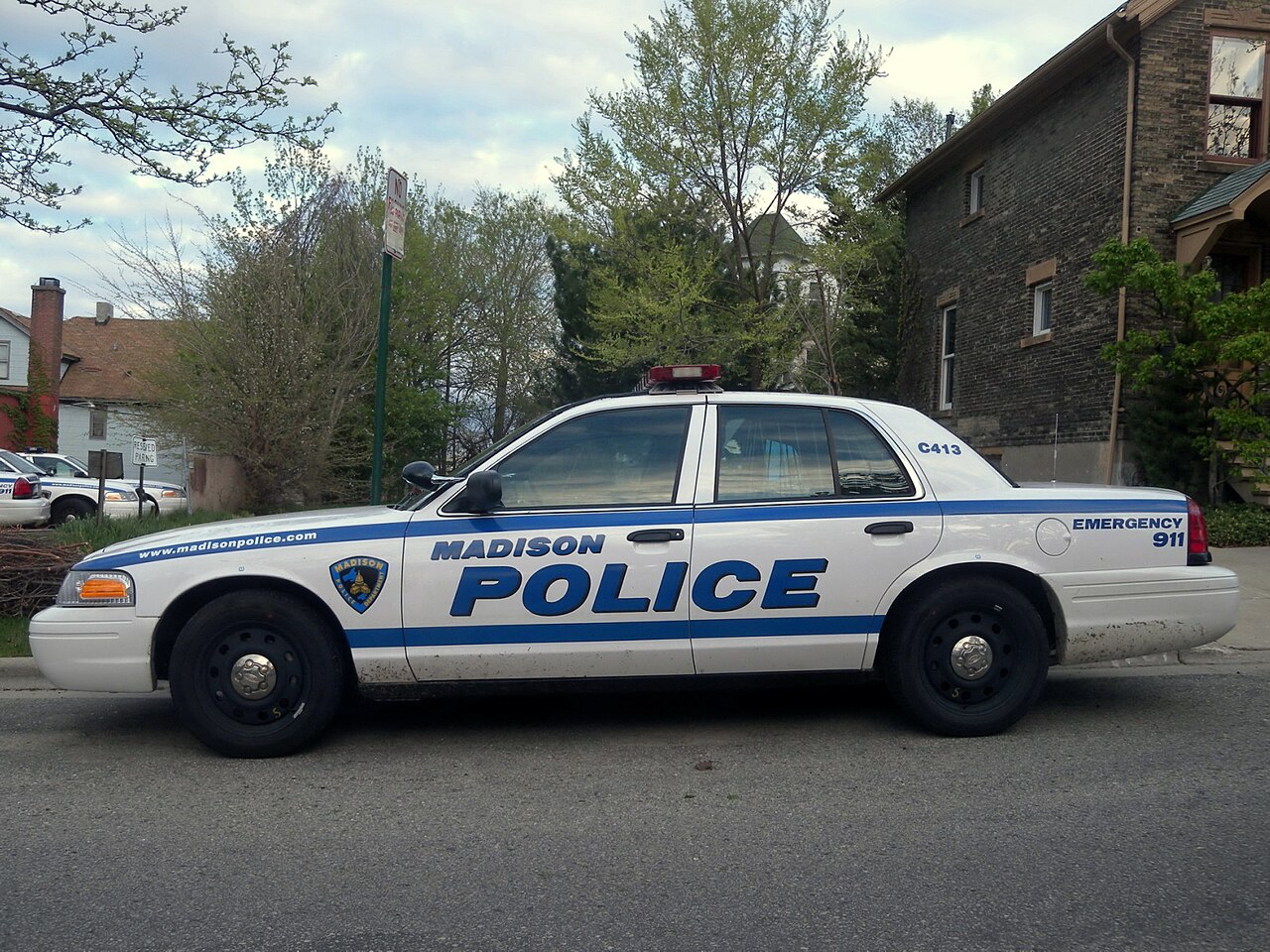
Police use-of-force cases continue to draw national scrutiny, especially when video emerges before investigators release full findings. In Madison, Wisconsin, that scrutiny has centered on the July 22 police shooting of 38-year-old Corey Ruiz at Williamson and South Baldwin streets. The case has become both a state investigation and a local debate over police tactics, oversight, and the daily impact on one family living nearby.
Madison police shot Corey Ruiz after a Taser attempt, with state investigators now reviewing the killing
Madison police said officers were dispatched to the Marquette neighborhood on July 22, 2026, after reports of someone stealing bicycles and checking vehicle doors, according to the department’s incident report. Police said officers re-encountered Ruiz at Williamson and South Baldwin streets around 1:35 p.m., where he either fell or was pulled from a bicycle and a struggle followed. The department stated that Ruiz pulled a fixed-blade knife during that struggle, injured one officer, and that a Taser was used but was unsuccessful before the injured officer fired his gun.
The Madison Police Department confirmed that only one of four officers at the scene fired a weapon, and all officers involved were placed on administrative leave after the shooting. The Wisconsin Department of Justice’s Division of Criminal Investigation is handling the outside review because the shooting involved Madison officers, and AP reported on August 11 that the officer who fired was Kiel Baitinger-Peterson, a white officer with nearly 11 years of law-enforcement experience.
Video reviewed by ABC News showed the confrontation lasted about 28 seconds from the time Ruiz fell from the bicycle to the shooting. ABC’s analysis found that one officer warned Ruiz had a knife, officers then appeared to deploy Tasers, and Ruiz was shot three times at close range seconds later. Madison Alder John Duncan wrote the day after the shooting that one officer attempted to use a Taser, that it was unsuccessful according to Police Chief John Patterson, and that Ruiz was shot three times at point-blank range.
The local impact has extended beyond the investigation file and into the Marquette neighborhood where the shooting happened. Ruiz’s family said he died only a couple of blocks from his 13-year-old daughter’s home, and ABC News reported that her mother, Marjorie Ann Aliomar, said the girl will have to walk past that exact spot every time she goes to school. That detail has made the location itself part of the continuing fallout in Madison.
What is confirmed publicly is the intersection, the date, the number of officers present, and the existence of multiple bystander videos. Police have not publicly released a full investigative timeline beyond the initial incident report, and AP reported there is no timeline for when the state Justice Department investigation will conclude. Authorities also have not publicly detailed the extent of the knife injury to the officer who fired, though police said a second officer was injured as well.
The city also still lacks one piece of evidence common in many other departments: body-camera footage. AP reported Madison officers do not wear body cameras, meaning the public record so far has relied on cellphone video, police statements, and the ongoing state investigation. That absence has intensified attention on what other footage exists and what investigators eventually conclude.
The immediate cause described by police is a street-level struggle during an attempted detention in which Ruiz was armed with a knife and a Taser did not stop the encounter. But the broader context in Madison is a longstanding debate over what tools, policies, and oversight the city should rely on when force is used. Duncan, in his city post, said he had asked for more detail about what made the Taser attempt a failure and how much time passed between the Taser deployment and the gunfire.
ABC News cited former police officer and police-tactics instructor John Cohen, who said investigators will likely examine why officers physically engaged Ruiz as they did and why officers did not appear to disengage when the Taser was announced. Those questions do not answer whether the shooting was legally justified, but they frame the tactical issues likely to be reviewed by state investigators and later by Dane County District Attorney Ismael Ozanne.
The shooting has also renewed Madison’s body-camera debate. City records show Madison approved a body-worn-camera pilot in earlier years, and city budget and oversight documents show continued tension over how to fund cameras alongside the Office of the Independent Monitor and the Police Civilian Oversight Board. For residents, the practical reality is that the official account will continue to depend on the state investigation, video already in circulation, and prosecutorial review before any charging decision is made.