

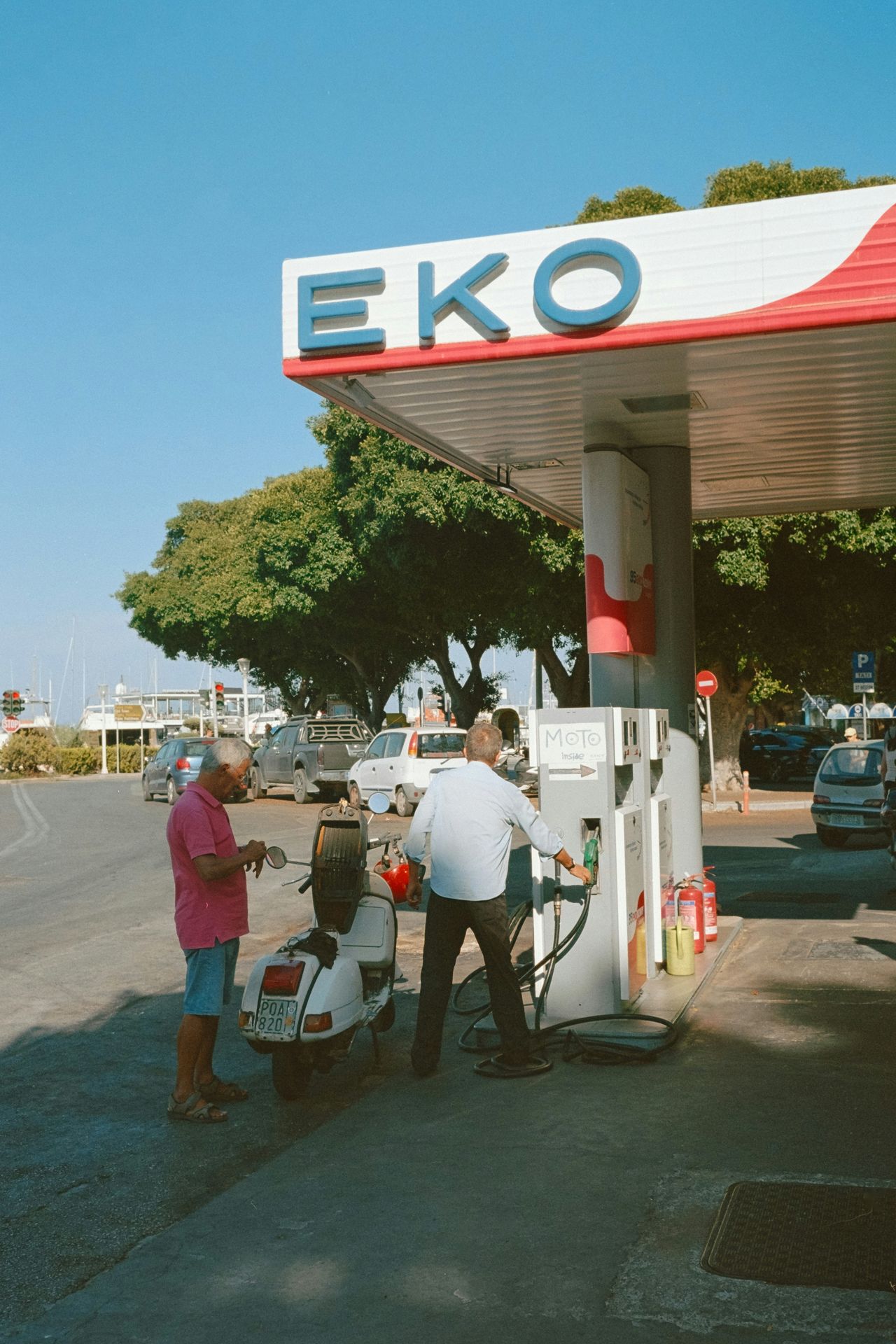
The summer travel season is opening with a familiar contradiction. Americans still want a getaway, but the cost of getting there is forcing many families to redraw the map.
A holiday travel boom meets a painful reality at the pump

Memorial Day has long marked the unofficial start of summer travel, and in 2026 demand remains remarkably strong. AAA says nearly 45 million Americans are expected to travel at least 50 miles from home between Thursday, May 21, and Monday, May 25, a figure that underscores just how resilient leisure travel has become even when household budgets are under pressure. Road trips still dominate that picture, with more than 39 million travelers expected to drive, while millions more are flying, taking trains, or booking buses for long weekend escapes.
Yet the mood around those trips is very different from the carefree optimism that usually accompanies the holiday. AAA said Memorial Day weekend gas prices are the highest they have been in four years, a sharp reversal from the lower fuel-cost backdrop Americans enjoyed heading into Memorial Day 2025. The organization warned that rising gasoline demand and the prolonged closure of the Strait of Hormuz are likely to keep pump prices elevated as the broader summer season gets underway. That means travelers are not just paying more for one tank of gas; they are confronting the possibility that every summer mile will cost more than expected.
The squeeze is not limited to drivers. Higher fuel costs ripple across the entire travel economy, pushing up airfare, rental car rates, cruise operating costs, and even hotel prices in places where supply is already tight. The result is a broader affordability problem that changes behavior even among people who remain determined to take a trip. According to the Associated Press, families are increasingly swapping weeklong vacations for shorter breaks, picking closer destinations, and looking for practical savings such as cooking some meals themselves or using buses and trains where possible.
Airports are still busy, which shows that travel demand has not collapsed. In fact, the Transportation Security Administration’s recent holiday forecasts and staffing posture point to another high-volume travel season. But strength in aggregate demand can hide a more complicated reality underneath: travelers are still moving, just more cautiously. This is shaping up to be a summer of substitutions, compromises, and constant recalculation rather than carefree splurging.
How households are rewriting vacation budgets without giving up travel

The most important shift this year is not that Americans suddenly stopped traveling. It is that many are editing their plans in real time. Bank of America’s 2026 Summer Travel Outlook found that around 30% of respondents said higher gas prices would not change their summer travel plans, but that left a large share making some kind of adjustment, whether by taking fewer trips, trading down on accommodations, or cutting discretionary spending around the vacation itself. That distinction matters because it suggests travel demand is bending, not breaking.
In practice, budget rewrites are happening in dozens of small ways. Families that once planned a seven-night beach stay may now book four nights. Travelers who would have chosen a resort may settle for a midscale hotel, a short-term rental with a kitchen, or a stay with relatives. More households are driving to regional destinations instead of boarding a flight to a marquee vacation spot. That kind of behavior does not always show up as a canceled trip, but it changes where money flows and which businesses benefit from summer demand.
There is also a strong psychological component to the pullback. Gasoline is one of the most visible prices consumers face, posted in giant numbers on every roadside sign. Even families that can still afford a vacation often interpret a sudden rise in fuel prices as a warning that other travel costs may also climb. That can make people more conservative in the planning stage. They may set a lower spending cap, avoid peak dates, or decide that a long weekend feels safer than committing to a two-week itinerary that could blow through the household budget.
Polling and consumer research reinforce the idea that Americans are feeling broadly defensive about discretionary spending. Quinnipiac polling reported that many voters say they have cut back on vacation spending, dining out, and driving. Those choices fit the broader travel story: a household trimming restaurant meals at home is often the same household trying to preserve enough room in the budget for at least one modest summer escape. Travel, in other words, is increasingly being protected as a priority experience, but only after other tradeoffs have been made.
The rise of the “nearcation” and the search for value close to home

One of the clearest outcomes of higher gas prices is the rise of what might be called the nearcation economy. Travelers are still leaving home, but they are often staying within a manageable driving radius. Coastal towns within a few hours of major metros, state parks, lakeside destinations, cabin rentals, and second-tier beach communities all stand to benefit as travelers look for experiences that feel like a break without requiring a punishing fuel bill. This is not merely nostalgia for the road trip; it is economics reshaping geography.
The Associated Press captured that shift through the story of a Rhode Island family that has traded expensive Florida stays and annual Disney World visits for local beaches, bike rides, and hiking trails closer to home. Their revised plans still included a shorter getaway to Martha’s Vineyard, but even that came with sticker shock: more than $400 for the ferry carrying the family and car, plus roughly $800 a night for each of the two hotel rooms they needed. Another family reportedly backed out after seeing the cost. The example is telling because it shows how even scaled-back travel can remain expensive, pushing households toward ever tighter circles of affordability.
Value hunting is becoming more sophisticated as a result. Travelers are checking dates more carefully, avoiding Friday departures, and shifting trips to shoulder periods when possible. They are comparing the all-in cost of driving with the price of budget airfares, especially on shorter routes where airline competition can produce deals. AAA has noted that while gas prices are higher than last Memorial Day, average ticket prices for flights are lower than a year ago in some cases, which complicates the old assumption that driving is always the cheapest option.
Mastercard Economics Institute has described the current travel market as one defined by adaptability. Consumers are reorienting destinations, timing, budgets, and priorities rather than abandoning travel altogether. That helps explain why some lower-cost international or domestic flights may still attract bargain-conscious travelers, even as traditional road trippers wince at the pump. The search for value is no longer just about choosing a cheaper destination. It is about calculating the total trip cost with much more precision than travelers used to apply.
Why the burden is falling unevenly across income groups

The headline numbers can make the travel market look healthy, but they conceal a widening divide in who can absorb higher costs. Bank of America says lower-income households are much more likely to have no summer travel plans at all, with nearly 40% in that category, while card data shows their travel-related spending is down year over year so far in 2026. By contrast, middle- and higher-income households have shown stronger travel spending. Analysts increasingly describe this dynamic as a K-shaped market, where one group continues to spend and another scales back sharply.
That divergence matters because travel has always been partly discretionary and partly symbolic. For higher-income households, a jump in gas prices may be annoying but manageable. They may compensate by trimming a restaurant splurge, booking a slightly cheaper room category, or simply absorbing the cost. For lower-income households, the same increase can make the trip impossible. When fuel, lodging, food, and admission tickets all rise together, there is often no single line item left to cut. The entire vacation falls out of reach.
This unevenness is changing the kinds of destinations that will thrive this summer. Premium resorts, cruise lines, and international gateways may continue to post solid demand because affluent travelers are still willing to pay. But budget motels, value restaurants, roadside attractions, and lower-cost regional destinations may see a more mixed picture, depending on whether they can capture families trading down from more expensive vacations. The challenge is that even “budget” travel has become materially more expensive than many consumers expect once transportation and lodging are added together.
There is a broader economic implication as well. Travel has been one of the most durable areas of consumer spending in recent years, often outperforming expectations even as other discretionary categories weakened. If more households are now protecting travel only by cutting back elsewhere, that can redirect spending away from retail, dining, and entertainment at home. In that sense, high gas prices do not just influence where Americans vacation. They alter how money moves through the wider economy during the most important leisure season of the year.
What the summer ahead could look like for travelers and the travel industry

The early Memorial Day pattern suggests the summer of 2026 will not be defined by mass cancellations. It will be defined by a more tactical traveler. Americans still want memories, breaks, reunions, and time away, but they are approaching summer with spreadsheets instead of impulse. That means more comparison shopping, more late-stage itinerary changes, and more pressure on travel companies to justify every extra dollar. Businesses that understand this mood stand the best chance of winning share.
For travel brands, the lesson is straightforward: value has to be visible. Hotels that bundle parking, breakfast, or resort fees into transparent pricing may appeal more than properties that advertise a lower nightly rate only to stack charges at checkout. Airlines that preserve low promotional fares can still attract travelers who are willing to fly if the all-in price beats a long drive. Destination marketers may also need to shift their message, emphasizing drivable access, free activities, and practical affordability rather than pure indulgence.
For travelers, flexibility is becoming the ultimate money-saving tool. Leaving a day earlier, choosing a weekday return, booking lodging with kitchen access, or selecting a destination 90 minutes closer can meaningfully change the total bill. The difference between a trip that feels reasonable and one that feels reckless may now come down to a handful of planning choices. In a season shaped by elevated gas prices, the smartest travelers will not necessarily be the ones spending the least. They will be the ones who understand their full cost profile before they leave.
That is the deeper story behind this Memorial Day moment. Americans have not lost the desire to travel. What they are losing, at least for now, is the margin for spontaneity. Summer 2026 is still likely to be busy, crowded, and full of movement, but it is also becoming a test of who can adapt fastest to a pricier reality. The open road remains part of the national imagination. It is just getting more expensive to reach.