

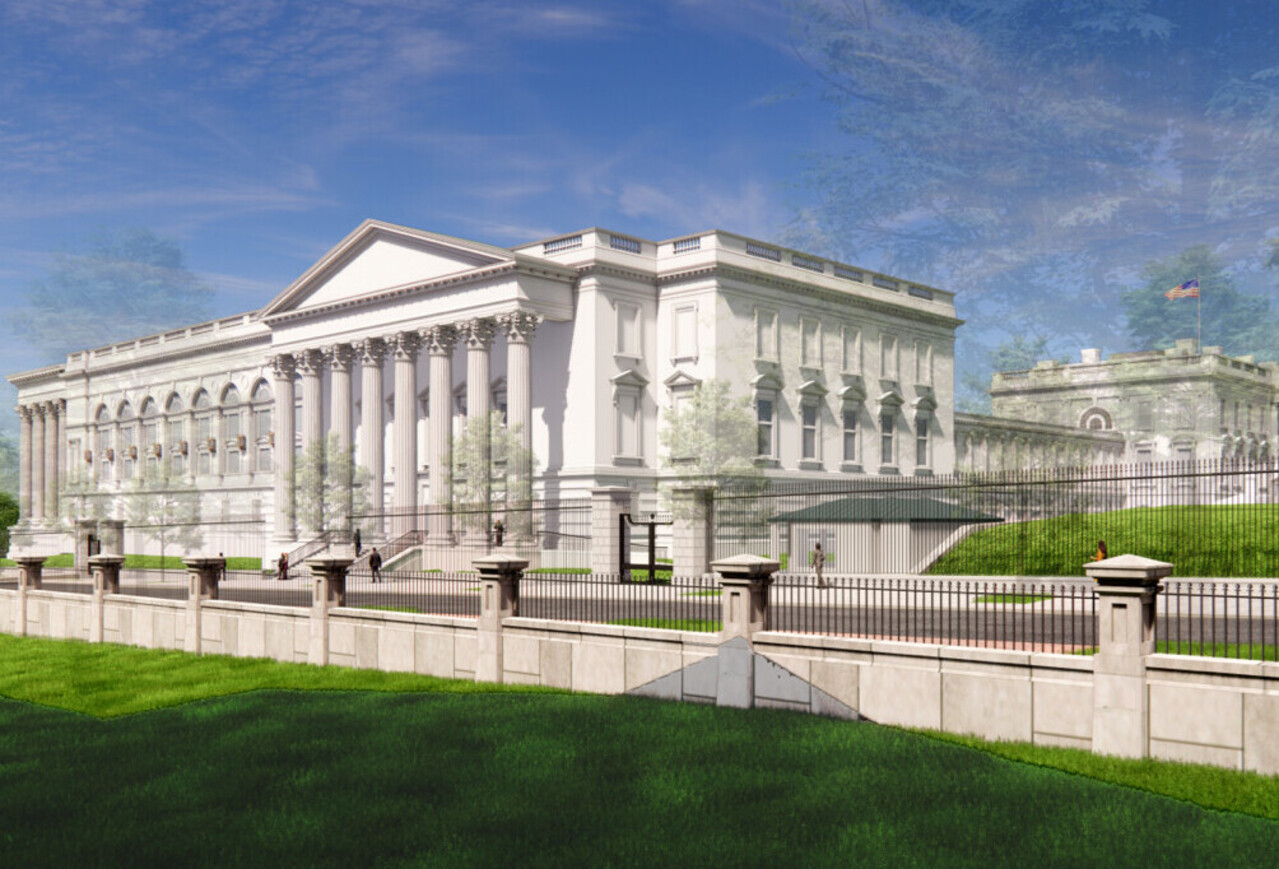
A new legal fight over presidential power and historic preservation is now centered on one of the most visible construction projects at the White House. On August 7, a federal appeals court ruled that the Trump administration is unlawfully building a new ballroom on the White House grounds, halting work on the project and setting up a likely Supreme Court appeal in Washington.
Appeals court stops work on the $400 million project
The U.S. Court of Appeals for the District of Columbia Circuit ruled Friday that President Donald Trump’s administration cannot continue construction of the planned $400 million ballroom without approval from Congress, according to the Associated Press and earlier court filings in the case. The project was planned for the former site of the East Wing and was described in prior court records as a 90,000-square-foot addition designed to host as many as 999 people. The lawsuit was brought by the National Trust for Historic Preservation after the administration demolished the East Wing in October 2025 and moved ahead with construction.
The ruling follows months of litigation in federal court. U.S. District Judge Richard Leon had already concluded in March that the administration lacked legal authority to proceed unilaterally, according to Reuters. A temporary appeals court order later allowed work to continue while the case was reviewed, but Friday’s decision reversed that course and blocked further construction.
Trump said after the ruling that the administration would ask the Supreme Court to intervene, according to Axios and AP. The White House has argued throughout the case that the ballroom project is tied to broader security upgrades and modernization work at the executive mansion.
The direct impact is in Washington, D.C., where the construction site sits on White House grounds next to the executive residence. What is confirmed is that the appeals court ordered the administration to stop the project unless and until Congress authorizes it, according to AP. What remains unclear is how much of the structure has already been completed, what specific preservation steps may now be required at the site, and whether any new stabilization work will be needed while the legal fight continues.
Court filings previously showed the administration argued that stopping work would create security and safety concerns because the East Wing had already been demolished and the site substantially altered, according to Reuters. But judges were not persuaded that those risks justified continued construction without legal authority.
That point echoes language used earlier in the case by Judge Leon, who wrote that the existence of a large excavation beside the White House was “a problem of the President’s own making,” according to The Washington Post’s report on the March ruling. The administration has not released a full public breakdown of next steps for the site while the injunction remains in effect.
The central issue in the case is not the design of the ballroom, but who has authority to build it. Judges and lower-court rulings found that no existing federal statute gives the president unilateral power to undertake a major new White House construction project of this scale without Congress, according to Reuters and AP. The National Trust argued that routine maintenance and alteration authorities do not extend to demolishing a historic wing and replacing it with a large events structure funded by outside donors.
The administration said the ballroom should be viewed as part of a broader package of White House improvements, including security-related work, according to court filings summarized by AP and Reuters. Government lawyers also argued that halting the project after demolition had already occurred would create practical and security complications.
The appeals court rejected that reasoning, finding that the administration could not create urgency by beginning a project first and seeking legal justification later. For residents and visitors, the immediate takeaway is straightforward: construction is blocked for now, the legal dispute is likely headed to the Supreme Court, and any permanent future for the site will depend on either congressional authorization or a higher court reversing the order.