

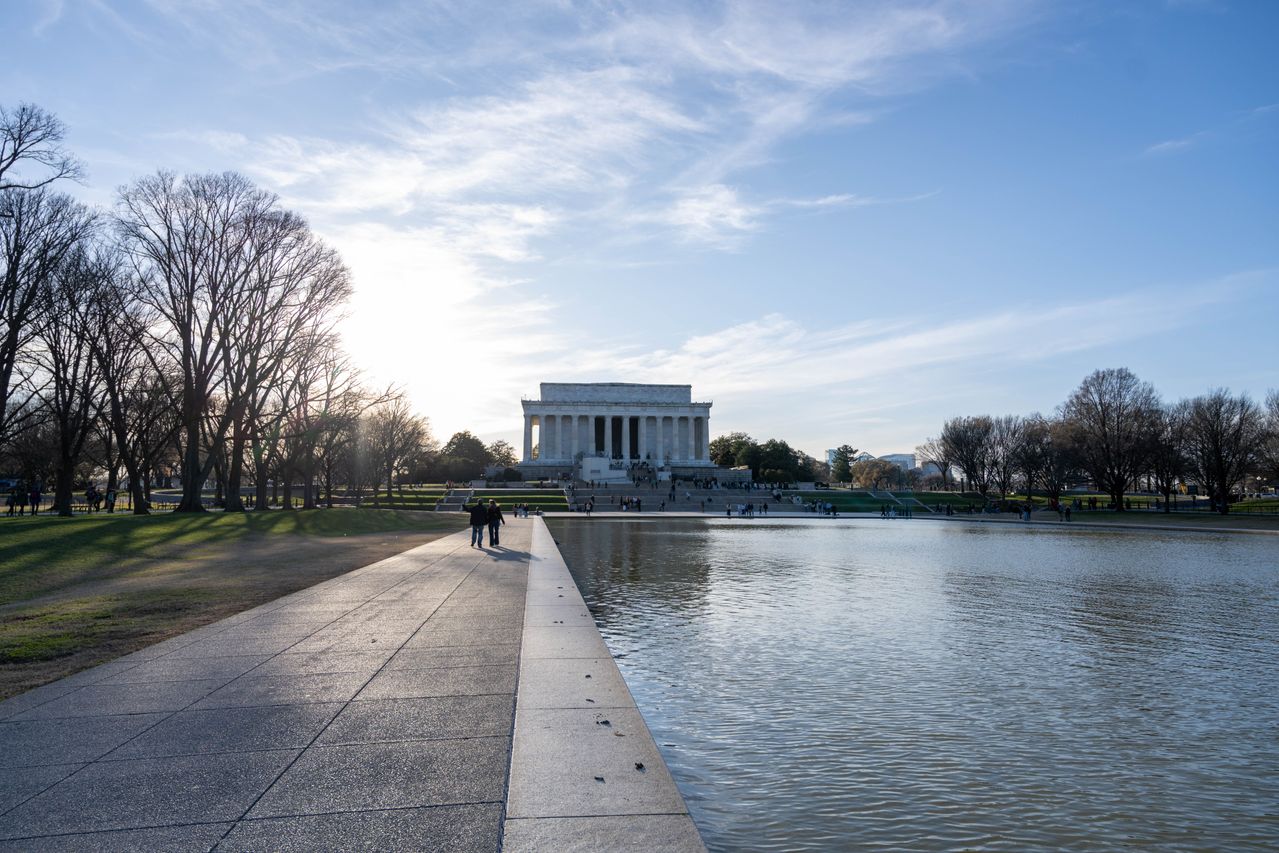
A high-profile federal case tied to a major public works project on the National Mall shifted sharply at the end of July. In Washington, the Justice Department said the Lincoln Memorial Reflecting Pool damage at the center of the case was linked to construction problems, not clear-cut vandalism. The reversal came after weeks of scrutiny over the Trump-backed renovation and the prosecution of former Olympian David Hearn.
DOJ reverses course in David Hearn prosecution
The Justice Department on July 31 moved to dismiss its criminal case against Hearn, a 67-year-old Bethesda resident and former Olympic canoeist who had been charged with felony property destruction after a June 19 encounter at the Reflecting Pool. According to an Associated Press report citing a 20-page court filing from U.S. Attorney Jeanine Pirro, prosecutors said newly provided Interior Department records showed the damage was tied to a “flawed installation by the contractor” and “the rush to complete the project” before America 250 events around Independence Day 2026.
That filing marked a major change from the government’s earlier position. Hearn had pleaded not guilty in July after prosecutors accused him of damaging the pool’s new liner, a charge carrying a potential prison term of up to 10 years. The AP reported that prosecutors now said the new information made it difficult to attribute the widespread damage to vandalism, much less prove that theory beyond a reasonable doubt.
The renovation itself had involved significant federal spending. Earlier reporting from The Washington Post said Virginia-based Atlantic Industrial Coatings received a $14.7 million contract to repaint and waterproof the pool’s concrete floor, while Ohio-based Green Water Solutions received a $1.7 million contract to install a water-purification system. The case had become one of the most visible controversies surrounding the troubled renovation project.
Because the project and the prosecution were both centered in the District of Columbia, the immediate local impact is in Washington’s federal courts and on management of one of the city’s most visited public spaces. What is confirmed is that the government asked D.C. Superior Court to dismiss the felony case and stated in court papers that contractor work and schedule pressure played central roles in the damage. What is not yet publicly clear is whether any contractor, subcontractor, or federal official will face separate administrative, civil, or legal scrutiny tied to the renovation.
The government also has not released a full public accounting of the total repair scope that may still be needed at the Reflecting Pool. Public reporting has described earlier concerns about liner failures, peeled coating, and algae problems soon after the project’s reopening, but federal agencies have not published a comprehensive itemized estimate of any new remediation costs since the dismissal filing.
For Washington residents and visitors, the episode keeps attention on the condition of a nationally significant site that also functions as a major civic and tourist landmark. The Reflecting Pool sits at the center of the National Mall’s public event landscape, and the filing suggests the underlying dispute was as much about project execution as law enforcement.
The government’s explanation points to two core factors: workmanship and timing. According to the court filing described by the AP, records obtained after the indictment showed a flawed contractor installation, while prosecutors also cited a rush to complete the work before America 250 programming in the weeks around Independence Day 2026. That places the reversal within a broader pattern familiar in public infrastructure projects, where compressed deadlines can collide with construction quality and oversight.
The case also unfolded in a politically charged environment. Earlier AP and Washington Post reporting said Trump administration officials had publicly emphasized vandalism allegations as damage at the pool drew attention. Hearn and his lawyers, meanwhile, argued that he had only touched already peeled material during a bike ride stop and that the prosecution should never have been brought.
For residents, the practical takeaway is narrower than the politics surrounding the case. The criminal case against Hearn is now being abandoned by prosecutors, but questions about the renovation’s management, final repair costs, and any next steps for the Reflecting Pool itself remain unresolved in public view. As of July 31, the clearest new fact is the government’s own statement that the project damage was linked to a rushed and flawed installation rather than a prosecution-ready vandalism theory.