

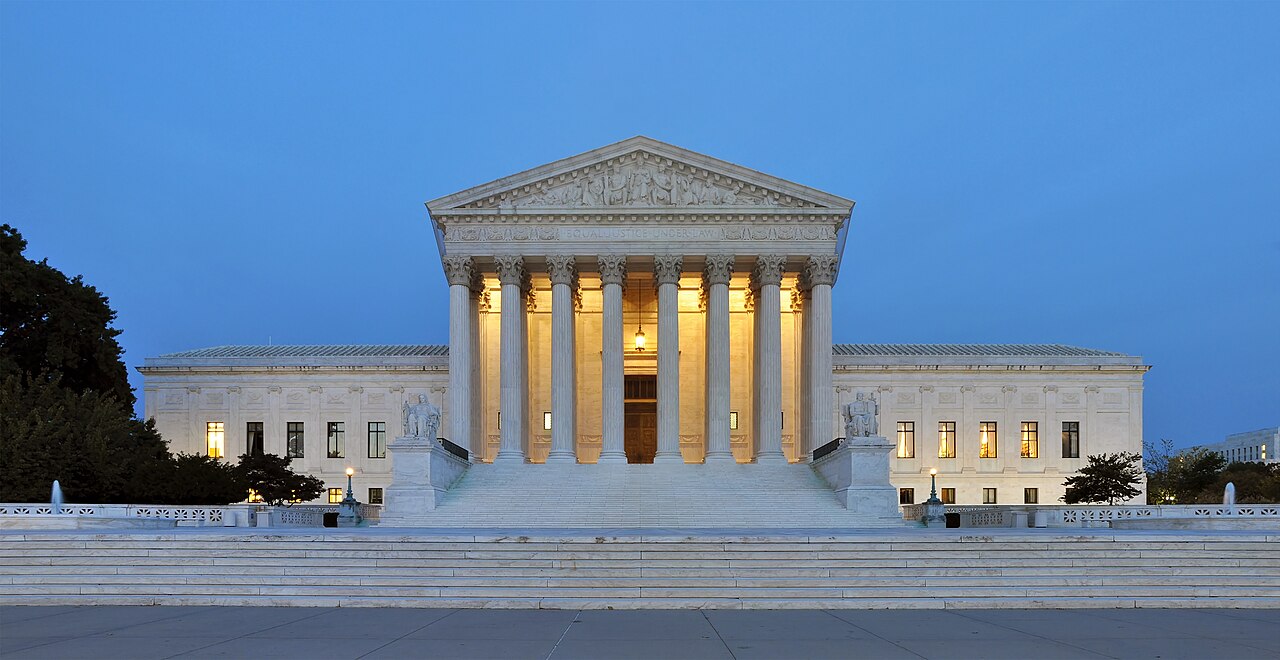
As federal election fights intensify ahead of the November 3, 2026 midterms, the Justice Department’s push to obtain state voter registration data has become one of the most closely watched legal battles in the country. That fight sharpened after a series of courtroom setbacks for DOJ and renewed warnings from senators that the dispute could ultimately reach the U.S. Supreme Court. The controversy centers on how far the federal government can go in demanding access to voter rolls that states say contain sensitive personal information.
Courts keep rejecting DOJ voter roll demands
The Justice Department has filed lawsuits against dozens of states seeking access to full voter registration records, arguing that federal law allows those demands, according to DOJ press releases and court filings. But federal judges have repeatedly rejected that position, and a Reuters report published June 24, 2026 said the U.S. Court of Appeals for the Sixth Circuit upheld an order blocking DOJ from obtaining Michigan’s voter rolls. That appellate ruling added to a growing list of losses in lower courts and reinforced a pattern that critics in Congress have highlighted for months.
Associated Press reporting on May 21 said judges in Maine and Wisconsin also dismissed DOJ lawsuits seeking voter list records. AP reported that judges had already rejected similar efforts in Arizona, California, Massachusetts, Michigan, Oregon and Rhode Island, while a Georgia case had earlier been dismissed on procedural grounds before being refiled. That means the department’s legal strategy has faced setbacks across multiple regions and before judges appointed by presidents of both parties.
Senate Democrats have used those rulings to argue that DOJ’s legal theory is failing. In a June 8 letter led by Sen. Alex Padilla of California and joined by several colleagues, lawmakers wrote that the department’s “ongoing voter roll lawsuits are failing across the country” and warned that the litigation could be used as a pretext for broader election interference. The exact “22 straight” figure cited in political messaging was not independently confirmed in the court records reviewed for this article, but the broader string of losses is well documented.
The immediate impact has been felt state by state, because election administration remains largely in state hands and each lawsuit has targeted local election systems and records. In Michigan, the June 24 appellate ruling meant the state did not have to turn over its voter rolls to DOJ, according to Reuters. In Rhode Island, Sen. Jack Reed said after an April 17 court ruling that the state’s existing disclosure practices already protected voter privacy while complying with election law.
In Maine and Wisconsin, the judges’ dismissals left state election officials in control of their current voter file practices, according to AP. In other states, including Oregon and California, officials have argued that DOJ is seeking data beyond what federal law requires and that the requests could expose private voter information. Public records reviewed for this article show that states have not adopted a uniform response, and there is no single comprehensive federal court tally released by DOJ listing every live case and outcome.
That leaves uncertainty for election offices and voters alike. What is confirmed is that multiple courts have blocked or dismissed DOJ efforts to compel broader disclosures. What is not yet known is whether appellate courts outside the Sixth Circuit will line up behind that reasoning, or whether the Supreme Court will be asked to settle the question before or after the midterm election cycle moves deeper into litigation.
The underlying dispute is about competing readings of federal election law and the balance of power between Washington and the states. DOJ has cited the Civil Rights Act of 1960, the National Voter Registration Act and the Help America Vote Act in arguing that it can demand voter list materials to evaluate list maintenance and election integrity. State officials and Democratic senators have countered that those statutes do not authorize a national database of full, unredacted voter records.
That broader context has only widened as the administration has pursued related election measures. Reuters reported on June 22 that a federal judge blocked the administration from using a revamped immigration database for voter-roll checks, while AP reported that the administration has also promoted federal eligibility-checking efforts that critics fear could wrongly flag eligible voters. Senators including Padilla, Dick Durbin and Chris Van Hollen have said those steps, taken together, raise concerns about inaccurate purges and federal overreach.
For residents, the practical effect is that voter registration systems remain under state control for now, even as legal pressure continues. No court ruling reviewed here changes existing voter registration requirements by itself, and several key disputes remain active or open to appeal. If the administration continues pressing its legal theory in higher courts, the next major milestone could come from another federal appeals ruling or a Supreme Court filing tied to the 2026 election calendar.