

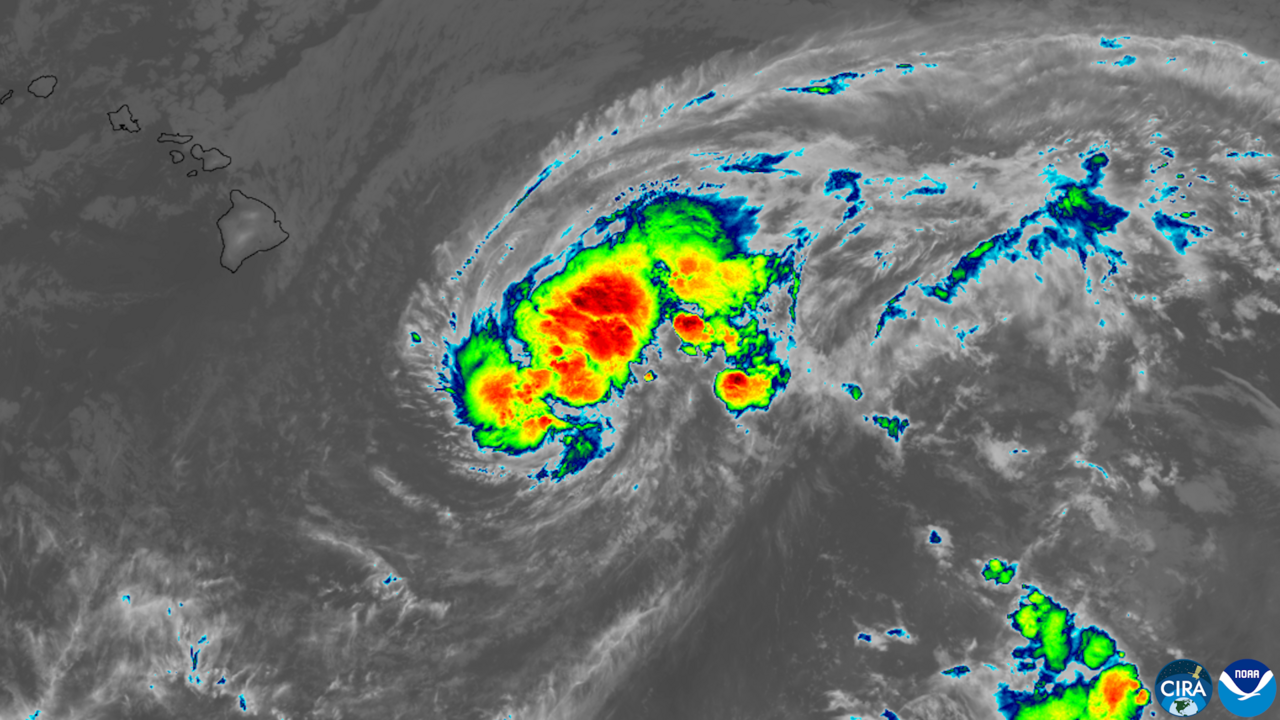
Tropical systems rarely threaten a direct hit on Hawaii, but airlines and emergency officials routinely adjust operations when a storm is forecast to bring heavy rain, damaging winds and flooding. In Hawaii on Friday, Aug. 14, carriers began canceling dozens of flights as Tropical Storm Lala closed in on the Big Island and forecasters warned it could strengthen to a hurricane before reaching the state. The disruptions centered on Hawaii Island and interisland travel as local officials opened shelters and prepared for deteriorating weather.
Airlines begin cancellations and loosen change rules
Airlines serving Hawaii started scaling back schedules on Friday as Tropical Storm Lala moved toward the islands. The Associated Press reported that officials and residents were bracing for the storm on Aug. 14, while Alaska and Hawaiian said travelers whose flights are canceled can be moved to the next available flight or request a refund under the carrier’s changed-or-canceled policy. Those airline terms were posted on Hawaiian’s travel advisory page.
The exact systemwide cancellation count was not released in a single statewide public bulletin by Friday afternoon, and airlines had not published a comprehensive breakdown by airport. Still, public reporting and airline advisories made clear that dozens of flights had already been scrubbed from Hawaii schedules, especially on shorter interisland routes that are more vulnerable to weather-related operational changes.
The storm threat was serious enough that the National Hurricane Center said Lala was expected to reach hurricane strength before approaching the Big Island early Saturday. AP reported the storm had maximum sustained winds of 60 mph late Friday morning and was located about 340 miles east-southeast of South Point, Hawaii. That forecast window gave airlines limited time to reposition aircraft, crews and passengers before conditions worsened.
The most immediate aviation impact was tied to Hawaii Island, where Ellison Onizuka Kona International Airport and Hilo International Airport serve as the Big Island’s main commercial gateways. AP reported a hurricane warning was issued for the Big Island, while a tropical storm warning covered Maui County, immediately raising the risk of delays and cancellations for flights touching those markets.
What remained unclear Friday was the full airport-by-airport list of canceled departures and arrivals. Neither the Hawaii Department of Transportation’s airports division nor the major airlines had released a single comprehensive public list covering every affected Hawaii flight at the time of reporting. That meant passengers often had to rely on direct notifications from carriers rather than a unified statewide tally.
The broader local impact extended beyond travelers. County officials said some parts of the Big Island could receive up to 25 inches of rain, according to AP, and shelters were opened ahead of the storm. For residents, that combination of shelter activity, flood risk and flight disruptions pointed to a transportation system shifting from routine operations to storm response.
Forecasters tied the cancellations to the storm’s projected track and intensity, not to any single airport closure order. AP, citing the National Hurricane Center and the National Weather Service in Honolulu, reported that Lala was expected to bring heavy rain capable of destructive flooding, along with strong winds that could worsen wildfire risk in dry areas. Officials stressed that a direct landfall was not required for serious impacts.
That context matters in Hawaii, where weather can disrupt flights even when runways remain technically open. Aircraft scheduling, crew duty limits, visibility, crosswinds and ground handling all become more difficult as conditions deteriorate. In practice, airlines often cancel flights in advance to avoid stranding aircraft or passengers on islands where weather windows can close quickly.
For customers and residents, the practical takeaway was that disruptions were expected to continue into the weekend, particularly on routes involving the Big Island and interisland connections. Hawaiian’s published policy said passengers on canceled flights could be rebooked or refunded, while emergency officials focused on shelter openings and storm preparations. As of Friday, the central forecast message remained that Lala was likely to strengthen before its closest approach to Hawaii.