

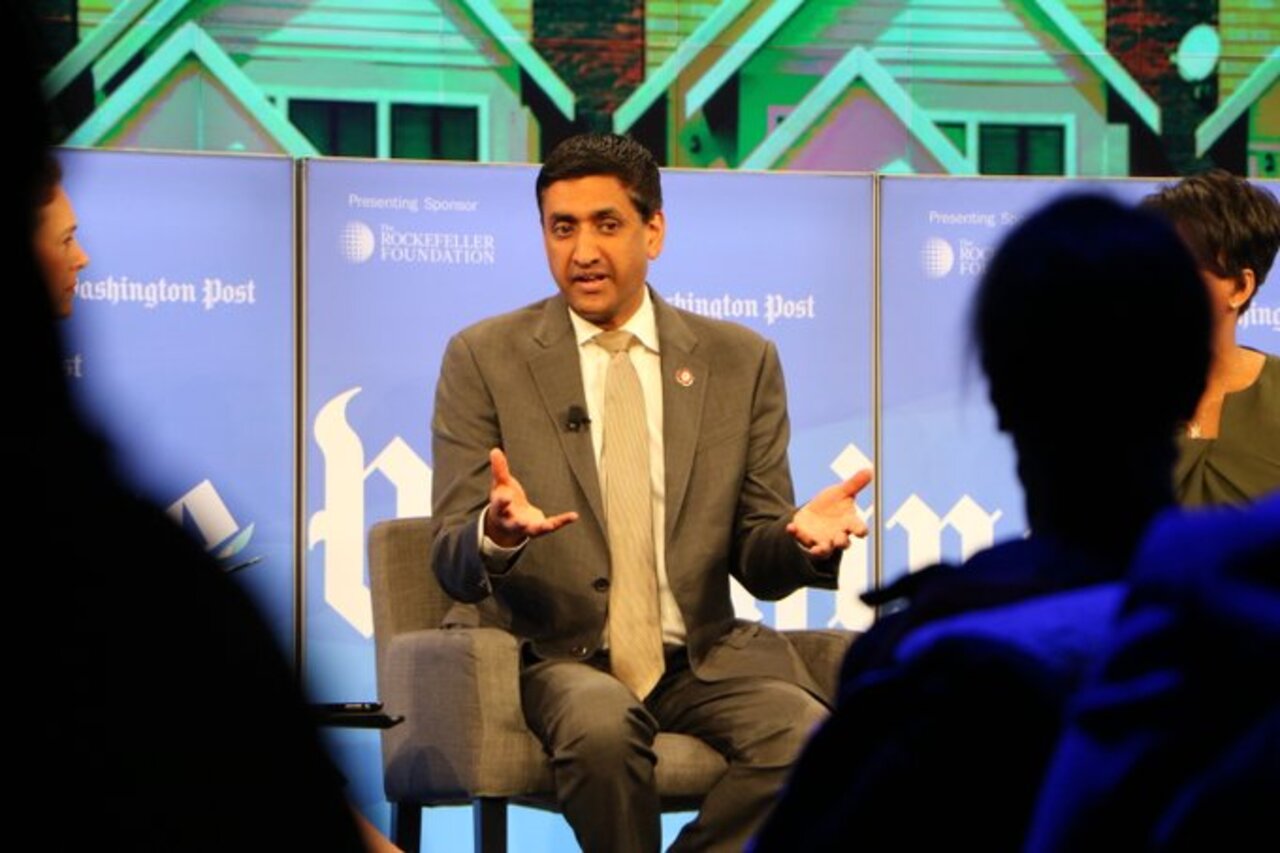
As divisions over Israel and Gaza continue to reshape Democratic politics nationally, a new break has emerged between two figures often seen on the same side of the party’s progressive debates. That split sharpened in New York after Mayor Zohran Mamdani said his administration was reviewing whether it could arrest Israeli Prime Minister Benjamin Netanyahu if he visits the city in September for the United Nations General Assembly. Rep. Ro Khanna of California, who has aligned with Mamdani on some pro-Palestinian issues, said Netanyahu should face justice at the International Criminal Court rather than be detained by New York authorities.
Khanna Draws a Clear Line
The immediate event centers on Mamdani’s renewed public discussion of whether New York City could detain Netanyahu during a possible September trip. The Washington Post reported on July 18 that Mamdani said there was an “active conversation” with his legal department about whether ordering the NYPD to arrest Netanyahu would be lawful if the Israeli leader comes to the United Nations. In the same report, Mamdani said he believes Netanyahu belongs in The Hague, where the International Criminal Court is based.
Khanna’s break became public on July 19, when Fox News posted video of the California Democrat discussing Netanyahu and the broader Israel debate. According to Fox’s summary of the segment, Khanna said Netanyahu “defies” U.S. presidents, while separate coverage from Jewish Telegraphic Agency reported that Khanna said Netanyahu “can come to the U.N.” That marked a notable departure from Mamdani’s position because Khanna has also been sharply critical of Netanyahu’s government and Israel’s conduct in Gaza.
The scale of the disagreement is political more than procedural, but it is significant because both men have appealed to the Democratic Party’s anti-war and pro-Palestinian base. Mamdani has kept the issue alive by saying city lawyers are still examining the question ahead of the U.N. gathering. The United Nations’ provisional schedule says the 2026 General Assembly general debate is set for Sept. 22 to Sept. 26, with an additional day on Sept. 28, putting New York at the center of the coming dispute.
The local impact is specific to New York City because Mamdani’s comments concern the authority of city government and the NYPD, not a federal prosecution. His remarks were tied to a potential Netanyahu appearance in Manhattan for the annual U.N. General Assembly session, one of the city’s largest recurring diplomatic events. The mayor has not announced any operational plan, and City Hall has not released a legal memorandum explaining what authority, if any, the city believes it may have.
What is confirmed is that Mamdani publicly said his staff is reviewing the matter. What is not yet known is whether city lawyers believe an arrest would be legally supportable, whether state or federal officials would have any role, or whether Netanyahu will in fact attend the September meetings in person. Netanyahu’s office, according to multiple published reports, has dismissed Mamdani’s comments and said the visit plans would not change.
For New Yorkers, the issue reaches beyond foreign policy and into how the city handles diplomacy, policing and security during high-profile international gatherings. The annual U.N. meetings already bring road closures, demonstrations and heavy police deployment around Midtown. Any dispute over a visiting head of government would likely raise questions about jurisdiction and coordination, but no city agency has publicly detailed contingency steps tied specifically to Mamdani’s comments.
The broader context is the International Criminal Court’s November 21, 2024 decision to issue an arrest warrant for Netanyahu, a move cited by Mamdani as the basis for his view that the Israeli leader should face justice. The warrant has remained a flashpoint in U.S. politics, with both Democratic and Republican leaders criticizing the court at different times even as anti-war lawmakers have intensified pressure over Gaza. The Washington Post also noted that 103 House Democrats recently voted for an effort to cut military aid to Israel, though the amendment failed.
Khanna’s position underscores how Democrats can agree on criticism of Netanyahu while diverging on enforcement. Khanna has been outspoken about Palestinian rights and was recently in the news after saying armed Israeli settlers detained him during a West Bank visit in July. Even so, his view that Netanyahu should be handled through international legal mechanisms rather than by New York City draws a limit that some other progressives have not embraced.
For residents, the practical takeaway is that no arrest action has been announced and no legal authority has been publicly confirmed. What exists now is a political and legal debate playing out ahead of a major September diplomatic event in New York. Unless City Hall or other agencies release formal guidance, the next concrete development is likely to come from whether Netanyahu’s travel plans for the U.N. session are confirmed and whether Mamdani’s legal review produces a public conclusion.