

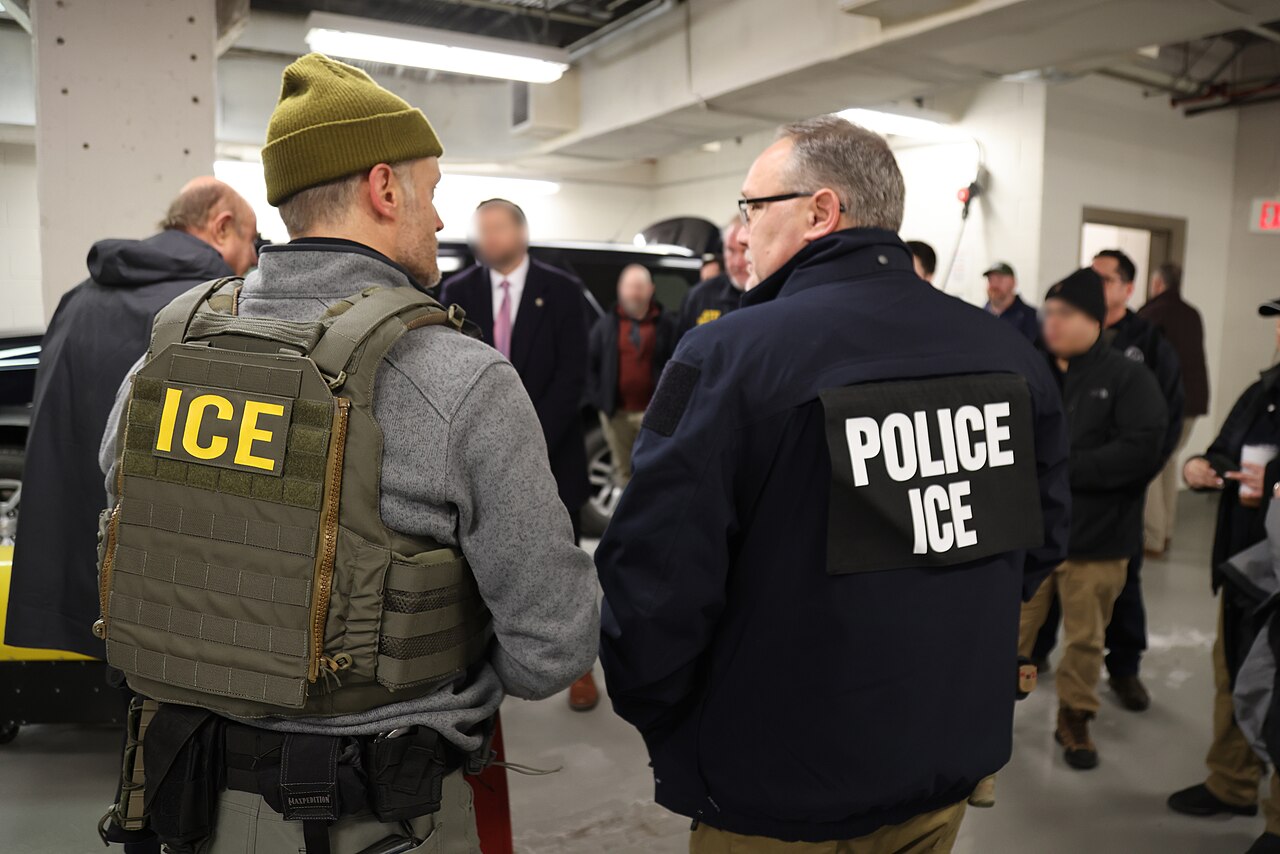
Federal immigration enforcement has expanded sharply in recent months as the Trump administration pushes more interior arrests and larger multi-agency operations nationwide. In New York, that broader strategy came into focus on September 1, when federal officials said a monthlong effort called Operation Rotten Apple resulted in 2,197 arrests statewide. The operation has already intensified scrutiny over how federal officers are working in New York communities, courthouses and workplaces.
ICE details the scale of Operation Rotten Apple
Homeland Security Secretary Markwayne Mullin announced on September 1 that immigration officials had arrested 2,197 people across New York State during what The New York Times described as a monthlong crackdown called Operation Rotten Apple. State ICE leaders, including New York City field office director Kenneth Genalo, appeared with Mullin at the announcement, according to the report. Federal officials presented the operation as a major escalation in immigration enforcement in one of the country’s largest immigrant destinations.
ICE has not, in the public material reviewed for this article, released a comprehensive case-by-case roster of the 2,197 arrests. That means the full mix of administrative immigration arrests, criminal histories, pending charges and final detention outcomes has not been publicly broken out in a single statewide document. ICE’s public statistics page says enforcement arrests can include people with criminal convictions, pending criminal charges and other immigration violators, but it does not itself provide the operation-specific New York breakdown cited at the announcement.
The scale of the New York operation stands well above smaller recent city enforcement actions that ICE has separately publicized. An ICE fact sheet earlier in 2026 said 41 people were arrested in a New York-area operation targeting what the agency called criminal aliens, illegal re-entrants and immigration fugitives. By contrast, the 2,197 total described for Operation Rotten Apple reflects a statewide campaign over several weeks, not a single-day raid.
What is confirmed is that federal officials said the arrests happened across New York State, not only in New York City. Coverage by The New York Times and the Times Union said the operation reached multiple parts of the state, while Reuters has separately documented other recent ICE activity in New York, including courthouse arrests in Manhattan and raids in upstate communities. That reporting supports a picture of enforcement dispersed across urban and rural areas rather than concentrated in one borough or county.
What is not yet known publicly is the full location list. Federal officials have not released a comprehensive accounting of which counties, towns, neighborhoods, workplaces or court facilities were involved in all 2,197 arrests. They also have not publicly issued a full demographic breakdown, nor a statewide list distinguishing people arrested on civil immigration grounds from those with criminal convictions or outstanding warrants.
That lack of granular data matters in New York because state and local cooperation rules vary by jurisdiction. Reuters reported earlier in 2026 that a city audit found federal immigration arrests in New York City had risen more than 70% under the Trump administration. At the same time, disputes over detention at 26 Federal Plaza and over raids in places such as Cato and Fulton have shown how enforcement tactics can differ from one New York community to another.
Federal officials tied the operation to the administration’s broader immigration enforcement posture and to conflicts over New York’s limits on cooperation with ICE. The Times Union reported that federal officials said Operation Rotten Apple was a response to a new state law that restricts how local police agencies may collaborate with federal immigration enforcement. The Trump administration has also made larger interior enforcement a central policy priority, as Reuters and AP have reported in separate coverage of arrests, courthouse actions and workplace raids.
ICE’s own public materials frame such operations around public safety, immigration fugitives and enforcement of removal orders. AP reported in earlier New York enforcement coverage that ICE officials say they prioritize people with criminal records but can also arrest others they encounter who lack legal status. Civil liberties groups and immigrant advocates, cited by AP and Reuters in separate reports on New York raids, have argued that broad sweeps can capture people beyond primary targets and can deter witnesses or victims from engaging with authorities.
For New York residents, the immediate effect is continued uncertainty about where enforcement will occur next. Federal officials have said immigration enforcement in New York will continue even after Operation Rotten Apple ended, according to the Times Union. Until ICE releases a fuller public accounting, residents can confirm the headline number and the statewide scope, but many of the operation’s local details remain undisclosed.