

Immigration enforcement has remained a central national policy fight in 2026, with federal officials expanding targeted operations in states and cities that limit cooperation with ICE. In New York, Homeland Security Secretary Markwayne Mullin announced Tuesday, September 1, that ICE had completed a monthlong operation called Operation Rotten Apple, describing it as a statewide effort that resulted in more than 2,100 arrests.
DHS details the New York operation and arrest total
The Department of Homeland Security said Operation Rotten Apple ran from July 27 through August 29 and resulted in 2,197 arrests across New York, according to the department’s September 1 announcement and remarks delivered at a New York City press conference. Mullin said the operation involved ICE and federal partners and characterized those arrested as people with criminal histories that included murder, rape, drug trafficking and assault, according to DHS. AP and ABC7 New York separately reported the same 2,197 figure from Tuesday’s announcement.
DHS also released a list of examples of people arrested during the operation, identifying individuals from Ukraine, Colombia, Mexico, India, Venezuela, Cambodia, the Dominican Republic, Sierra Leone, Honduras and Vietnam. In that statement, DHS said those examples included people with prior convictions or arrests tied to kidnapping, murder, rape, burglary and narcotics offenses. Bloomberg Law reported that federal officials did not provide a fuller public breakdown Tuesday of how the 2,197 arrests were distributed by charge category.
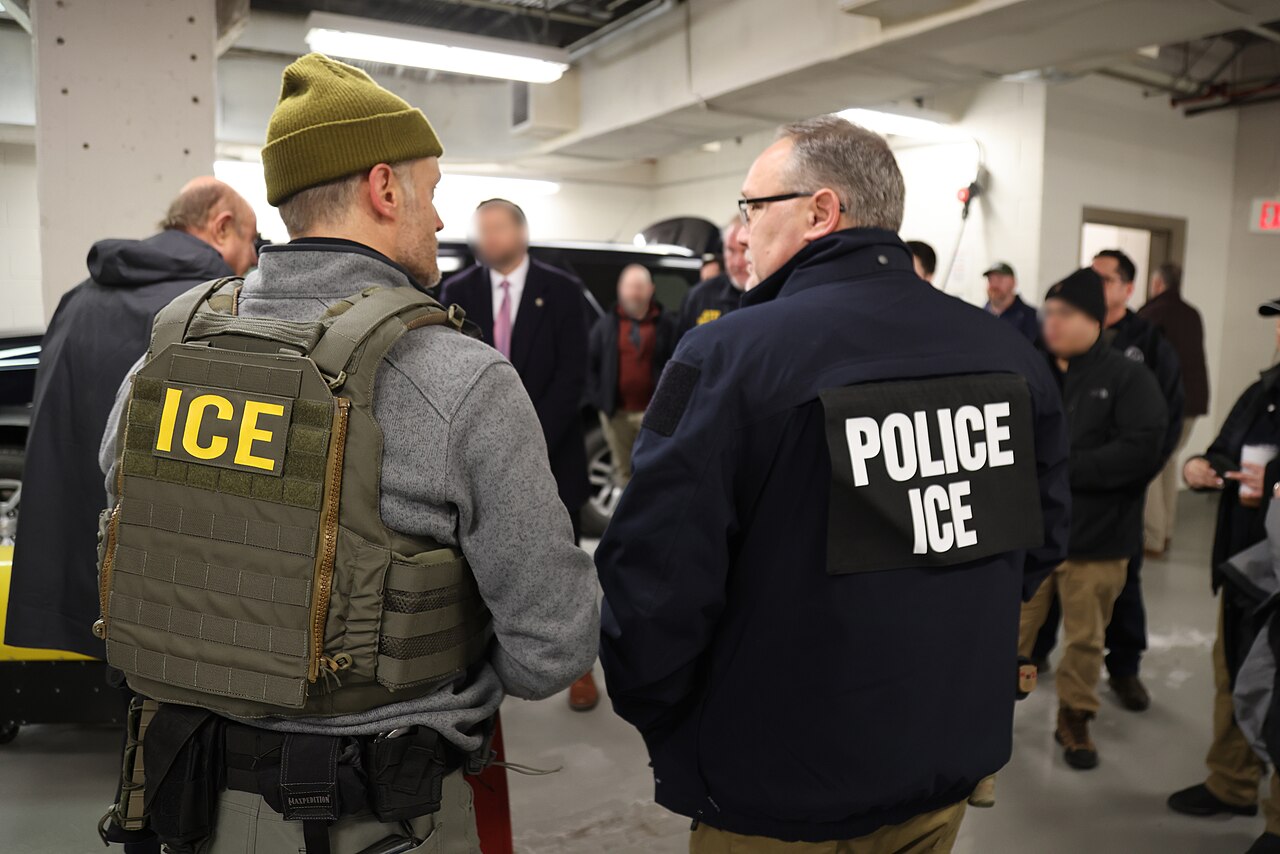
The announcement was made in New York City on September 1. Reuters photos from the event showed Mullin and ICE officials at the Lower Manhattan press conference where they described the operation’s results.
What is confirmed so far is the statewide scope. DHS said the arrests occurred “across the state of New York,” and television and regional reports on Tuesday described the operation as affecting multiple jurisdictions rather than a single city or county. That makes the announcement directly relevant to New York City, Long Island, the Hudson Valley, western New York and upstate communities, even though federal officials have not yet publicly issued a county-by-county tally.
What is not yet known is how many arrests occurred in each local jurisdiction, how many of those arrested were living in New York City versus elsewhere in the state, and how many cases involved transfers from local custody as opposed to street arrests. DHS had not, as of Tuesday, released a comprehensive public spreadsheet or locality list detailing where each arrest occurred.
That lack of local granularity matters for residents trying to understand whether the operation had a concentrated impact in one part of the state. Newsday, ABC7 New York and AP-focused coverage all reported the statewide total from federal officials, but none of those reports included a complete local breakdown from DHS on affected New York counties or city neighborhoods.
Federal officials tied the operation directly to New York’s limits on cooperation with ICE. In its statement, DHS said state and city policies had contributed to the release of 13,621 people it described as criminal noncitizens from jails in New York, and Mullin used Tuesday’s announcement to criticize Governor Kathy Hochul and Mayor Zohran Mamdani. ICE officials Kenneth Genalo and Philip Rhoney also said in the department’s statement that reduced coordination with local authorities increases operational risk and complicates transfers to federal custody.
Those explanations reflect the Trump administration’s broader immigration enforcement posture in 2026. Bloomberg Law described the arrests as part of a larger dispute between federal officials and New York leaders over whether local governments should more closely assist with immigration enforcement. AP similarly reported that Mullin framed the operation as a response to New York officials’ lack of cooperation.
For New York residents, the practical takeaway is that DHS has signaled more enforcement activity may follow. ABC7 New York and other local reports said federal officials used Tuesday’s event not only to announce the completed operation but also to defend continuing immigration enforcement in the state, while DHS said ICE would continue to enforce federal law in New York.