

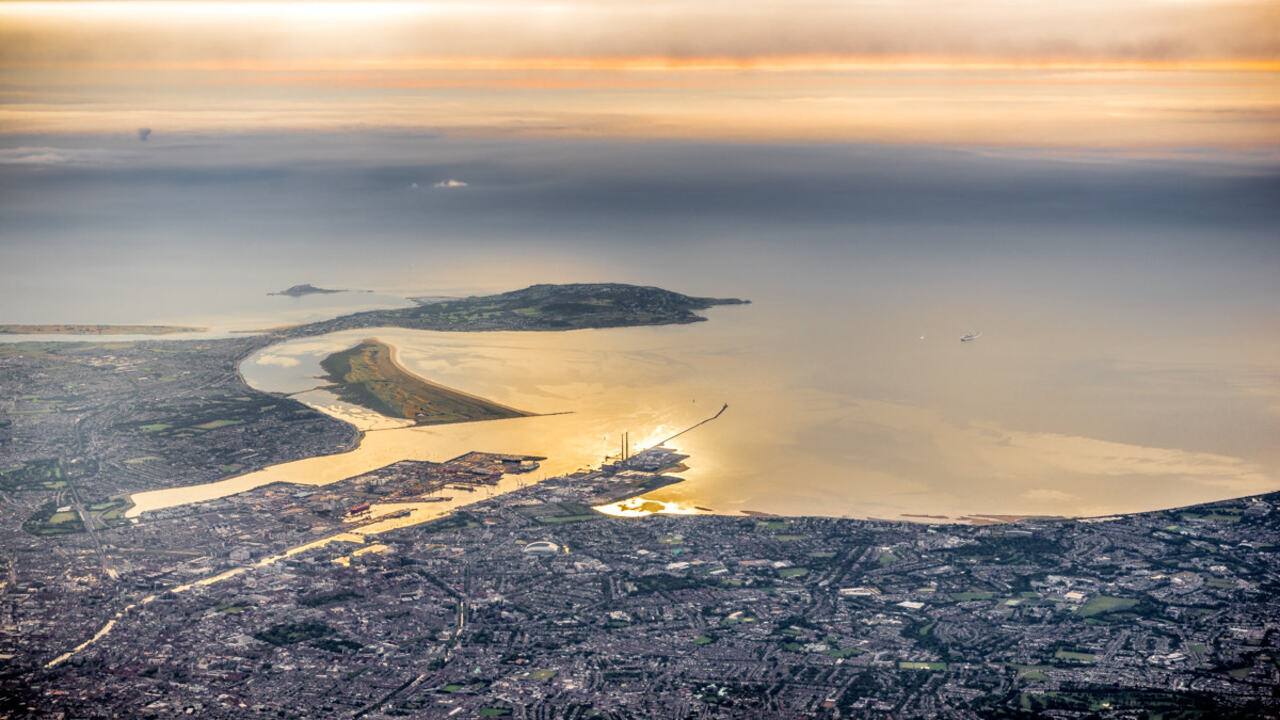
As security and demonstrations often accompany high-profile presidential travel, President Donald Trump’s September 2026 trip to Ireland drew both formal preparations and visible public protest. In Dublin Bay, that opposition took the form of a large sand artwork spelling out “NO KINGS – GAZA IRAN ICE” ahead of his arrival. The display added a local, highly visible protest to wider demonstrations planned around Trump’s stop in Dublin before he continued west to Doonbeg.
Sand message placed on Dublin Bay beach before arrival
A large sand artwork protesting Trump’s visit appeared on a beach in Dublin Bay on September 10, 2026, according to RTÉ, which reported that the words “NO KINGS – GAZA IRAN ICE” were carved into the sand by the campaigning organization Uplift. RTÉ said the installation was created on a beach in the bay and was intended as a statement against the U.S. president’s visit to Ireland. The message used the phrase “No Kings,” which has also been associated with anti-Trump protests in the United States.
Additional reporting identified the work as a large-scale installation designed to be visible from above. Al Jazeera reported that environmental artist Sean Corcoran, working with three others, spent about five hours carving the message into the sand. IrishCentral also said the installation was created on September 10 and quoted Uplift executive director Siobhán O’Donoghue describing the beach setting as part of the statement organizers wanted to make ahead of Trump’s arrival.
Trump arrived in Dublin on Saturday, September 12, 2026, according to the Associated Press, for meetings with Irish leaders before traveling to his golf resort in Doonbeg. That timing made the sand installation an early and deliberate protest set in place before the official visit began. The wording tied Trump’s visit to criticism of his administration’s actions on Gaza, Iran and immigration enforcement, reflecting the specific causes cited by organizers in public statements.
The protest’s immediate local impact was centered on Dublin, where Trump’s visit began and where authorities were already preparing for demonstrations and road restrictions. RTÉ reported that An Garda Síochána said peaceful protest would be facilitated in Dublin city center while traffic management measures were put in place during the presidential stop. That means the sand artwork was one part of a broader protest picture in the capital, rather than a standalone action.
What is confirmed is that the beach installation appeared in Dublin Bay and that additional demonstrations were scheduled in the city on the day Trump arrived. RTÉ and The Irish Times reported that a coalition of groups planned a “No Welcome for Trump” protest in Dublin, including anti-war, rights and political organizations. Public officials and organizers also said demonstrations would take place near the Garden of Remembrance on Saturday morning.
What is not publicly clear is how many people directly viewed the sand message in person, how long it remained fully visible before tides altered it, or whether Trump himself saw it during his approach into Dublin. Organizers said the message was meant to be seen from the air, but there has been no official confirmation from the White House or Irish authorities on whether it was visible to the president. The company or agency responsible for presidential flight routing also did not publicly address that question.
Organizers explicitly connected the artwork to opposition to Trump’s policies and to the Irish government’s handling of the visit. RTÉ reported that Uplift created the display as a protest against Trump’s presence in Ireland, while IrishCentral quoted O’Donoghue saying the group wanted to send a message that Trump was not welcome. The wording on the sand itself identified the issues organizers wanted to foreground: Gaza, Iran and ICE.
The broader protest campaign in Ireland also reflected criticism of official hospitality around the trip. The Irish Times reported this week that protest organizers accused the Irish government of appeasing Trump and objected to what they described as a red-carpet approach to the visit. RTÉ separately reported criticism from opposition figures who said there should be no ceremonial welcome and that Ireland should show visible public dissent.
For residents and visitors in Dublin, the immediate effect was increased security, organized protest activity and public attention around the president’s arrival. Authorities said peaceful protest would be accommodated while security operations continued, and AP reported that Trump’s Ireland schedule included meetings in Dublin before he headed to the west of the country. The sand artwork’s practical significance was symbolic, but it also underscored that the president’s visit opened in a capital where organized opposition was already on display.