

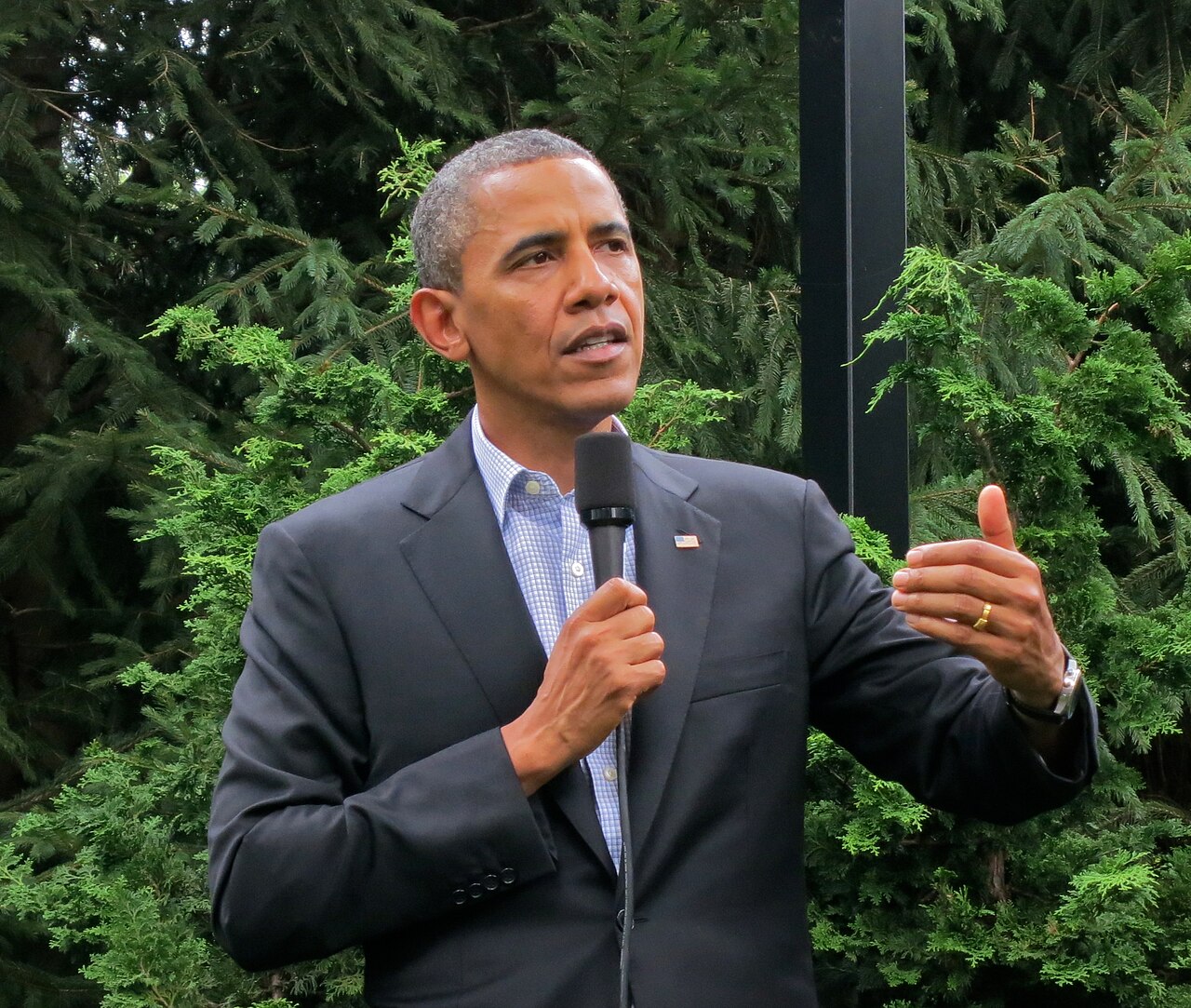
Former President Barack Obama is again stepping into the national debate over the health of American democracy as the country moves through another polarized election season. On September 19, he pointed to changes in political behavior and public tolerance for those changes, saying some developments in Washington would have been hard to imagine during his own time in office. The comments focused national attention on how far the boundaries of accepted political conduct have shifted.
Obama’s remarks centered on White House press access and democratic norms
Obama made the remarks on September 19, saying his “imagination could not foresee” some of what is happening now and asking what the reaction would have been if he had tried to push Fox News out of White House access, according to video circulated by RealClearPolitics and widely repeated in subsequent coverage. He said such a move would have been “unimaginable” in his presidency and argued that the reaction today shows a weaker shared understanding of democratic rules.
The former president tied that example to a broader concern about public acceptance of government behavior that once would have drawn bipartisan condemnation. In the same remarks, he said a segment of the country appears comfortable with conduct that he suggested falls outside long-standing democratic expectations. That framing made the comments more than a media dispute; it placed them within his larger argument about democratic erosion.
The scale of the issue Obama described is national rather than numerical, and no official government tally is attached to his statement. Still, the dispute he referenced involves one of the most visible institutions in federal politics: daily White House press access and the administration’s relationship with major national news organizations. By invoking Fox News specifically, Obama used a recognizable point of comparison from his own administration to make the contrast clear.
Obama did not tie his comments to a single state or local jurisdiction, and no state-specific policy change was announced alongside his remarks. What is confirmed is that he used a national platform to describe a change in the country’s civic standards, with the White House press corps and media access serving as his example. What remains unclear is whether his warning will translate into any concrete legislative or institutional response at the state level.
For residents across the country, including local readers trying to understand practical consequences, the most direct impact is informational. A fight over which outlets receive access to the White House affects how national decisions are covered, how questions are asked in public, and how quickly disputes over federal policy reach local communities. Those are real effects, even when no immediate state order or court filing is involved.
There is also no comprehensive official list of press access changes or any public state-by-state accounting attached to Obama’s statement itself. His remarks were interpretive and political, not administrative. That means readers should distinguish between what he said is happening to democratic norms and what federal agencies have formally documented or changed in writing.
The context for Obama’s statement is a broader set of recent warnings about institutional guardrails, information systems and public accountability. In recent days, Reuters reported that Obama had also urged Democrats to take artificial intelligence seriously, warning in private remarks that technology moving quickly in private hands could become dangerous without stronger oversight. That message, while focused on AI, reflects the same concern with whether democratic institutions are keeping pace with fast-moving change.
Obama has also been warning for years that democracy depends not only on elections but on norms, civic habits and a broadly shared commitment to rules that apply across party lines. His September 19 remarks continued that line of argument by focusing on tolerance for conduct he said would once have been disqualifying or politically explosive. In that sense, the press access example was a case study in a larger critique.
For the public, the practical meaning is limited but concrete. Obama did not announce an initiative, lawsuit or formal campaign tied to the comments. What he did provide was a clear statement of how he views the current political climate: as a period in which old assumptions about institutional restraint, press freedom and democratic expectations no longer hold as firmly as they once did.