

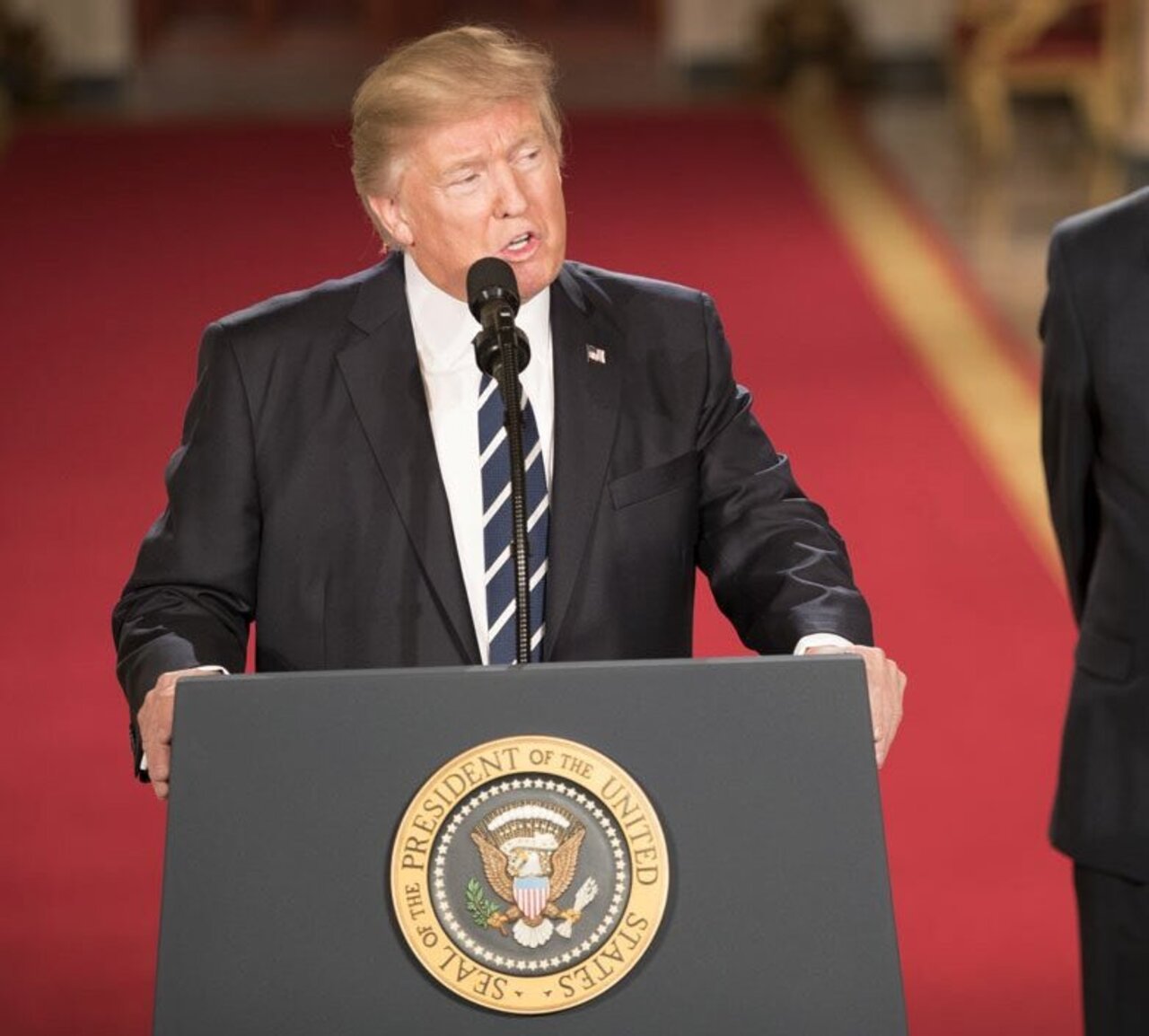
President Donald Trump entered his second term facing closely watched national approval numbers as voters weigh inflation, foreign policy and the economy. That focus sharpened this week after a new Economist/YouGov survey found Trump’s net approval rating at one of the weakest points of either of his presidencies. The result adds to a string of recent polls showing his standing underwater nationally as the White House and both parties look toward the 2026 midterm campaign.
New poll shows Trump at or near the weakest point of his presidency
The latest Economist/YouGov poll, published July 21, found 36% of Americans approve of Trump’s job performance while 60% disapprove, producing a net approval rating of -24, according to YouGov. The poll said that figure is below the lowest level Trump reached in his first term and near the bottom of his second term. An earlier Economist/YouGov release published July 7 put Trump at 35% approval and 61% disapproval, a net -25, and said he was just above the lowest level recorded across either term.
Those numbers are broadly consistent with other recent national surveys. Reuters reported in late April that a Reuters/Ipsos poll found Trump’s approval rating had sunk to the lowest level of his current term as concerns about the cost of living and the Iran war grew. A June Reuters/Ipsos poll then found his approval remained near the lowest levels of his political career, with Americans continuing to express anxiety about rising prices, including gasoline.
Recent issue polling has added to the pressure. Forbes, citing new CNBC survey data published July 17, reported that Trump’s net approval on the economy had fallen to an all-time low in that poll series. Pew Research Center also reported in May that Trump’s overall job approval stood at 34%, which Pew described as the lowest mark of his second term.
The new polling is national, not state-specific, and it does not provide a full breakdown for every city or county. That means the survey does not confirm how voters in any single state, metro area or congressional district are responding right now. It does, however, offer a broad measure of the political environment that campaigns, donors and local party organizations often use to assess voter sentiment.
One of the clearest warning signs for Trump in the recent data is his weakness with independents. YouGov reported on July 7 that 71% of independents disapproved of Trump’s job performance while 21% approved, putting his net approval with that group at -51, which YouGov said was the lowest ever for Trump. Because independents often decide competitive House and Senate races, that figure is likely to draw close attention in battleground states.
What remains unconfirmed is whether those national attitudes will translate evenly across local races. Pollsters and analysts have not released a comprehensive district-by-district picture tied to this survey. For now, the available evidence shows a difficult national backdrop for Republicans, but not a verified outcome in any specific state or community.
Pollsters and news organizations have pointed to several overlapping reasons for Trump’s declining standing. Reuters said April and June polling found voters increasingly negative about his handling of the cost of living, with concerns tied to prices and the economic effects of the Iran war. YouGov’s recent releases also found continued dissatisfaction on major issues and weak assessments of the direction of the country.
Economic concerns appear especially central. Forbes reported that CNBC’s latest polling showed Trump’s net approval on the economy had fallen to its worst level in that survey’s history for him. YouGov separately reported in early June that inflation and prices remained the most important issue for Americans in its polling, outpacing jobs, health care, taxes and immigration.
The broader political context is that Trump still retains strong support among Republicans, but that backing has not offset losses among independents and broader national disapproval. As of this week, the polling does not show a recovery in his overall standing. Instead, the most recent surveys show a president entering the second half of 2026 with approval numbers still near record lows and with economic concerns continuing to shape public opinion.