

National attention has remained fixed on how the White House handles press access and high-stakes foreign policy questions in Trump’s second term. That focus tightened on Washington on August 17, when President Donald Trump angrily cut off a CNN reporter during an Oval Office press availability tied to questions about North Korea and U.S. military exercises. The exchange quickly became one of the most discussed moments from the session because it paired foreign-policy news with another direct confrontation between Trump and a television correspondent.
Trump’s Oval Office exchange became the central moment
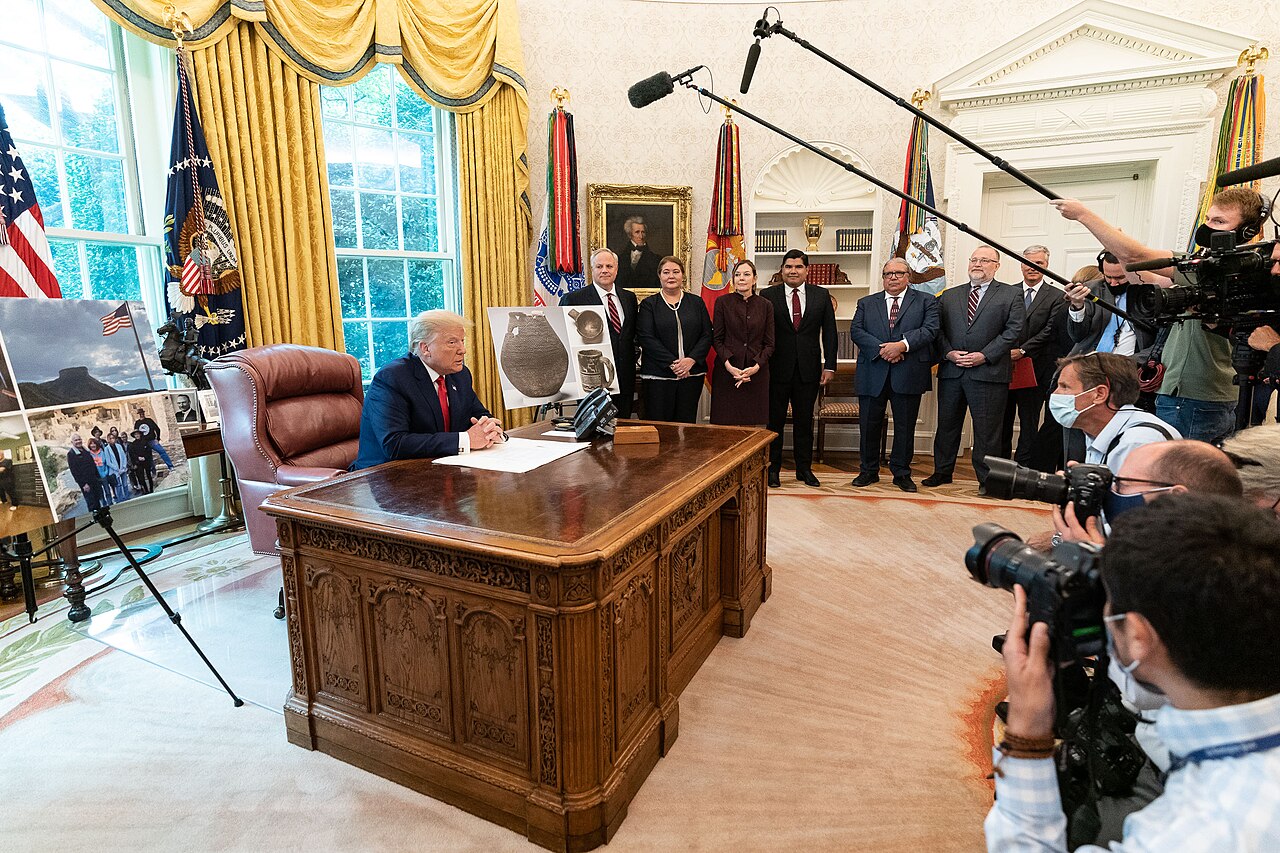
The incident involved President Donald Trump, CNN correspondent Kristen Holmes and a live Oval Office press availability on August 17, 2026. Reuters video from the event shows Holmes asking Trump whether North Korean leader Kim Jong Un had responded to his outreach and then pressing him on whether he was prioritizing the interests of an adversary over a longtime U.S. ally. In footage distributed by Reuters and described by other outlets citing Reuters, Trump responded sharply and at one point told the reporter to “be quiet.”
The exchange unfolded as Trump discussed South Korea’s defense costs and his diplomatic posture toward Kim. Reuters’ transcript of the event shows Trump saying Kim had responded to his request for a conversation and calling that response “very positive.” He also argued that his approach was “making things safer” and returned repeatedly to his long-running position that U.S. allies should contribute more to their own defense.
The confrontation did not happen in isolation from the policy discussion. The same Reuters material shows the president moving from the reporter’s question to complaints about media coverage and then back to security issues involving the Korean peninsula. That combination gave the moment broader significance than a routine verbal clash, because it placed a heated exchange with a reporter inside a discussion of active U.S. foreign-policy decision-making.
The confirmed location of the exchange was the Oval Office in Washington, D.C., according to Reuters video details from August 17. While the confrontation was not tied to a local government action or street-level disruption, its direct impact was felt first in the White House press corps, where access, tone and on-camera exchanges shape how national news is gathered and transmitted. Within hours, the moment circulated widely through television clips and follow-up reports.
What remains unconfirmed is whether the White House took any formal action tied specifically to this exchange, such as credential changes, press seating adjustments or a written complaint process connected to the reporter involved. No such step was identified in the material reviewed here. The available reporting instead confirms the verbal clash itself and the policy setting in which it occurred.
For viewers and readers in Washington and across the country, the significance was less about a single shouted line than about how presidential communications are conducted during consequential briefings. The White House has continued to post presidential press appearances and gaggles on its official platforms, underscoring that these unscripted exchanges remain a central part of how the administration delivers messages on diplomacy, defense and the press.
The immediate subject of the August 17 exchange was foreign policy, especially Trump’s comments on Kim Jong Un, South Korea and military exercises. Reuters’ event transcript shows that Holmes’ questions focused on whether Trump was favoring the interests of North Korea over those of a longtime American partner. Trump rejected that framing and said his diplomacy reduced risk rather than increased it.
The sharper tone fits a longer pattern in Trump’s dealings with reporters, especially journalists from outlets he regularly criticizes in public settings. In the same Oval Office appearance, according to Reuters-based accounts, Trump also dismissed reporting tied to complaints about conditions on the USS Abraham Lincoln as “fake news reporting from CNN.” That response linked his policy messaging directly to his ongoing attacks on coverage he views as hostile.
For the public, the practical takeaway is straightforward: future White House press events are likely to continue serving two roles at once, as venues for policy announcements and as arenas for confrontation over media coverage. What is confirmed from August 17 is that Trump used the setting to defend his North Korea approach, criticize CNN and cut off a reporter in full view of the press pool. The White House has continued publishing presidential press appearances as part of its regular communications operation.