

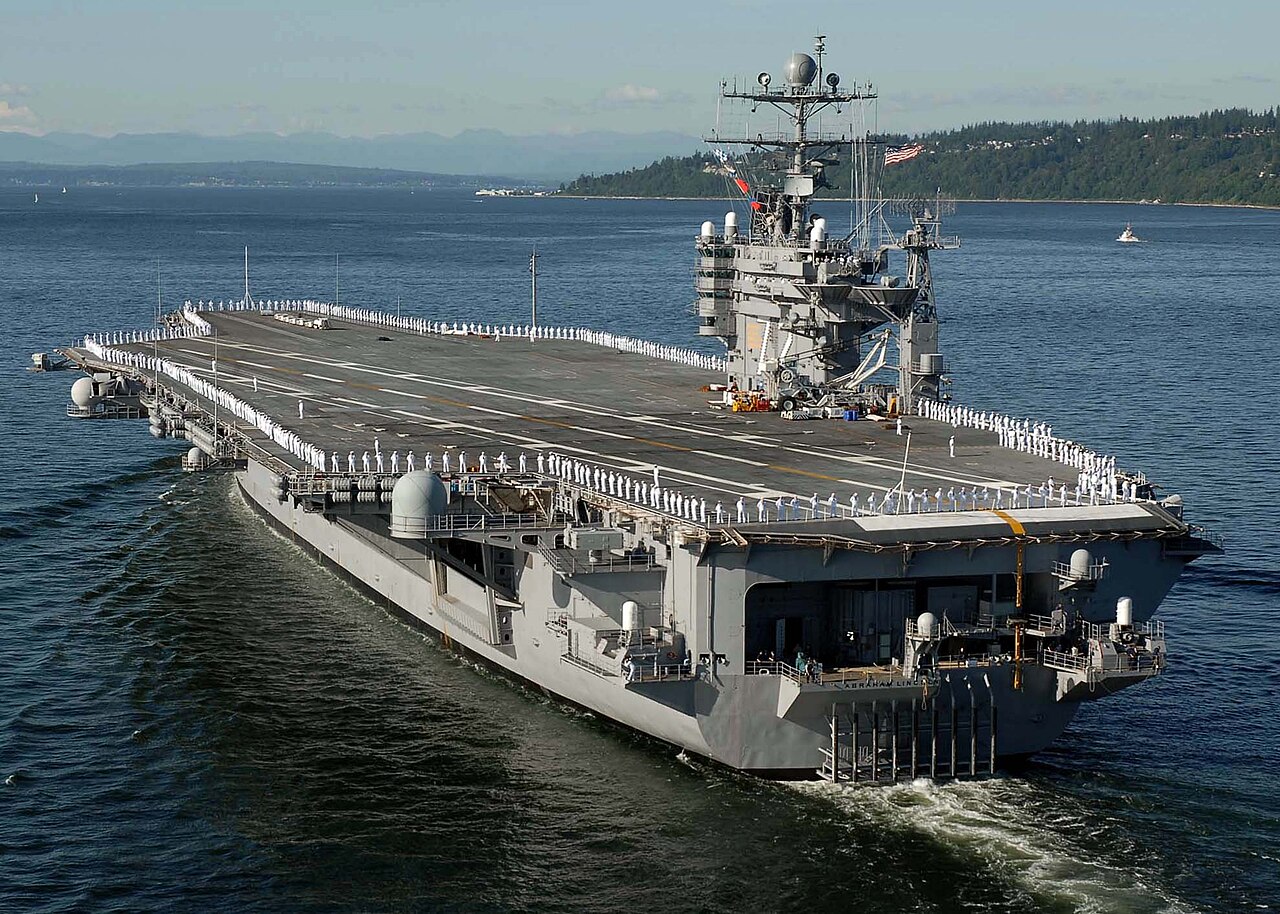
Extended naval deployments have drawn renewed scrutiny in 2026 as U.S. military operations in the Middle East have kept carrier strike groups at sea longer than many families expected. That pressure is now centered on the USS Abraham Lincoln, where a sailor’s spouse said the crew is “extremely resilient” but needs a break after months underway. The comments came as Navy leaders and outside news organizations confirmed growing concern about morale, mental health and living conditions aboard the carrier.
Families raise alarm over conditions aboard USS Abraham Lincoln
The USS Abraham Lincoln, a Nimitz-class aircraft carrier with roughly 5,000 sailors and Marines aboard, has become the focus of national attention after reports that multiple sailors tried or threatened to go overboard during the ship’s extended deployment. The Associated Press reported on August 13 that a Navy official confirmed one sailor went overboard in early August, was recovered, treated by the ship’s medical department and transferred off ship for follow-on care. AP also reported that the Lincoln had spent more than 260 days at sea during a deployment tied to U.S. operations involving Iran.
Public concern intensified after family members began speaking to media outlets about what they said their loved ones were experiencing. In an interview cited by The Daily Beast from remarks to MS NOW, one spouse said the crew was “extremely resilient” but needed a break, describing mounting stress tied to repeated extensions and uncertainty about when sailors would return home. The same reporting said sailors and relatives had described exhaustion, low morale and frustration with the lack of a firm return date.
The Navy has pushed back on some of the broader allegations. According to AP, the service said it had “not observed an increase in suicidal ideations or attempts aboard the ship,” while declining to release detailed data because of operational security and patient privacy concerns. U.S. Central Command separately stated that the Abraham Lincoln Carrier Strike Group remained “resilient and resolved” after the long deployment and sustained combat operations, according to AP.
For families in the Lincoln’s homeport community and other Navy households following the deployment from the United States, the impact has been immediate and personal. CNN reporting from aboard the Abraham Lincoln in July described sailors missing major family milestones, including births and long separations from children and spouses. Those accounts added detail to what many military families already understand: deployment extensions affect not only operations at sea, but day-to-day life at home.
What remains unclear is how many sailors have required emergency mental health intervention during this deployment, or whether the Navy will release a fuller accounting of reported incidents. AP said officials would not say whether the early August overboard case was being considered a suicide attempt. Public reporting has also varied in the number of alleged incidents, and the Navy has not released a comprehensive incident breakdown.
Navy leaders have acknowledged the pressure in other ways. AP reported that acting Navy Secretary Hung Cao and senior commanders recently held a town hall with families of troops aboard the Lincoln, where they said they would do what they could to relieve the carrier. Defense Secretary Pete Hegseth also said on August 13 that he wanted Lincoln sailors home and crews rotated “as quickly as possible,” according to AP.
The main cause identified across recent reporting is the length and uncertainty of the Lincoln’s deployment during sustained U.S. operations in the Middle East. AP reported that the carrier had remained on station amid the conflict involving Iran, while CNN transcripts from July showed the ship operating under continuing uncertainty about how long its mission would last. Those delays have made the Abraham Lincoln a visible example of the operational strain placed on crews during prolonged high-tempo deployments.
The military has begun moving a replacement. AP reported that the USS George Washington has started heading toward the Middle East to relieve the Lincoln, though the exact timeline for a full handoff was not detailed publicly. That matters because the duration of the current deployment has become central to concerns raised by families, lawmakers and sailors’ advocates.
For residents following the story from home, the most concrete takeaway is that relief for the Lincoln crew appears to be in motion, but key questions remain unanswered. The Navy has not released a specific date for the ship’s return, and it has not publicly provided a full account of the reported mental health incidents aboard. What is confirmed is that the Lincoln’s crew has remained at sea for more than 260 days, that one sailor went overboard in early August and was recovered, and that senior officials have said they want the crew rotated home as soon as possible.