

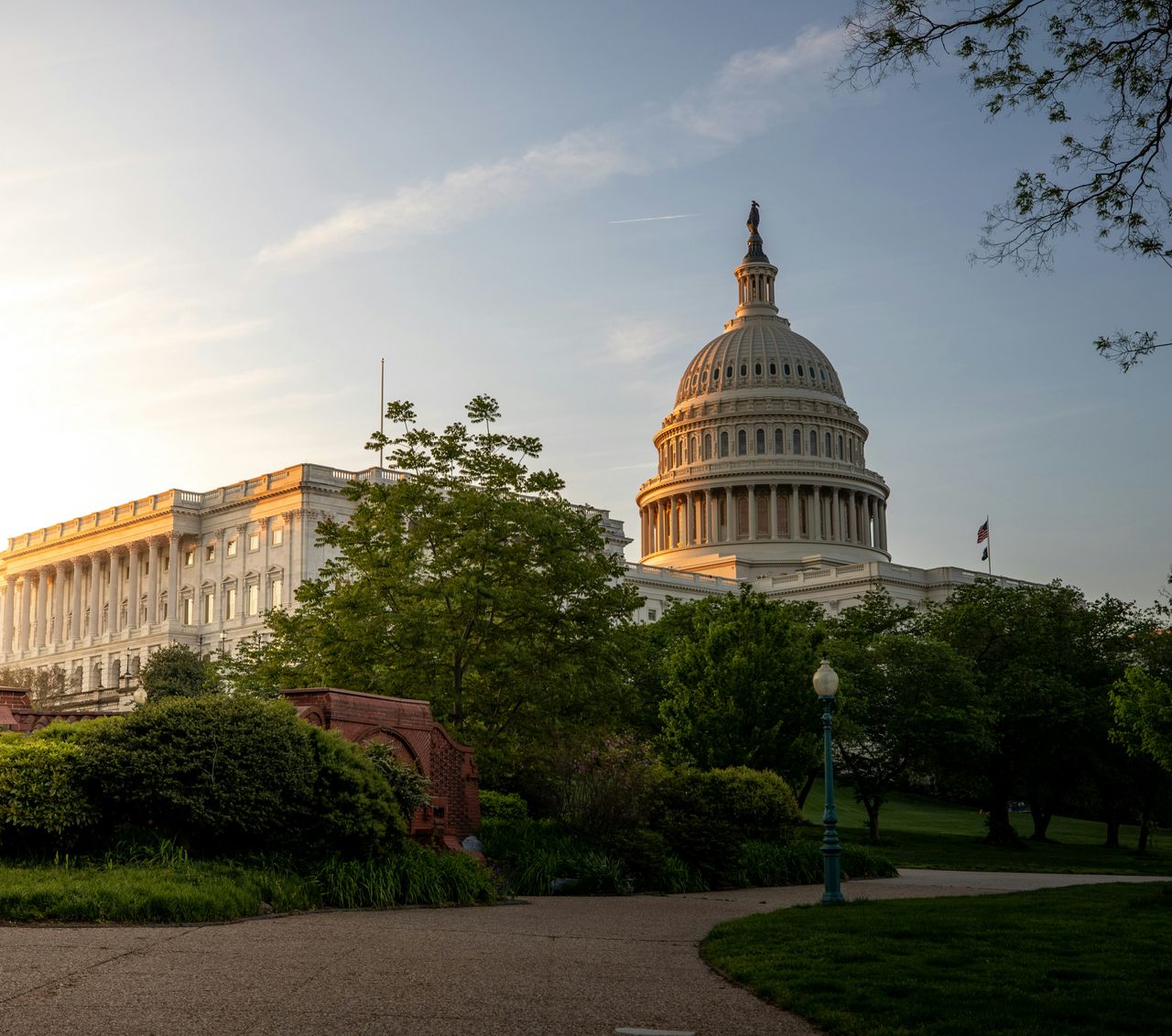
Congress often moves in sweeping packages, but some of the most consequential laws are tightly focused. The three bills signed on May 19, 2026, are a reminder that targeted legislation can reshape local infrastructure, investment policy, and long-running land disputes.
What Was Signed Into Law on May 19, 2026

On Tuesday, May 19, 2026, President Donald Trump signed three bills into law: H.R. 972, H.R. 2066, and H.R. 2815, according to a formal White House announcement. While none of the measures is a massive omnibus package, each addresses a discrete policy issue with direct consequences for communities, businesses, and federal land management. Together, they show how Congress often advances practical, bipartisan legislation outside the spotlight of major budget or national security fights.
The first measure, H.R. 972, is the Sloan Canyon Conservation and Lateral Pipeline Act. It expands the boundaries of the Sloan Canyon National Conservation Area in Clark County, Nevada, while also directing the Bureau of Land Management to grant rights-of-way to the Southern Nevada Water Authority for a water transmission pipeline and related facilities serving the Las Vegas Valley. That pairing of conservation and utility access makes the bill notable, because it blends environmental protection with infrastructure planning in one of the country’s fastest-growing metropolitan regions.
The second bill, H.R. 2066, is the Investing in All of America Act of 2025. This law changes the financing framework for Small Business Investment Companies, or SBICs, which are privately managed investment funds licensed by the Small Business Administration. The bill’s core idea is to encourage more private capital to flow into underserved geographies and strategically important sectors, including rural communities, low-income areas, small manufacturers, and critical technology-focused firms.
The third bill, H.R. 2815, is the Cape Fox Land Entitlement Finalization Act of 2025. It addresses an unresolved land entitlement issue tied to the Alaska Native Claims Settlement Act by allowing the Cape Fox Village Corporation to receive alternative federal land instead of previously selected acreage. In practical terms, the law aims to close a long-running administrative and legal gap affecting the Native Village of Saxman, Alaska, while preserving public access through an easement.
Why H.R. 2066 Matters Most Nationally

Of the three bills, H.R. 2066 is likely to have the broadest national reach because it affects capital formation for small businesses across the country. Congress.gov’s bill summary explains that the law modifies the financing limits available to SBICs and broadens what types of investments can be excluded from leverage calculations. That matters because SBICs play an important role in supplying growth capital to smaller firms that may not have easy access to conventional bank financing or large-scale institutional backing.
Under the measure, certain investments made in rural areas, low-income communities, small manufacturers, and specified technology categories are excluded from the leverage cap calculation. Congress.gov also notes that the bill raises the maximum financing available to two or more commonly controlled SBICs that make quarterly or semiannual interest payments, moving that figure from $350 million to $450 million. At the same time, it revises the cap on excluded amounts to the lesser of $125 million or 50% of an SBIC’s private capital.
This may sound technical, but the policy objective is straightforward. Lawmakers want investment managers to have a clearer incentive to direct capital toward businesses and regions that are often underfinanced, even when they are commercially viable. In that sense, H.R. 2066 is less about creating a new federal spending program and more about changing the rules of the road so private investment can move more freely into areas that Congress sees as economically important.
The bill also expands the definition of private capital for SBIC purposes. According to the congressional summary, that includes certain funds obtained from additional government-sponsored corporations and investments by college or university trusts or endowments. Supporters have framed this as a modernization step for the SBIC program, one that could help widen the investor base while aligning federal small-business policy with concerns about domestic manufacturing capacity, regional inequality, and competition in critical technologies.
The Other Two Laws Show Congress Solving Local Problems

H.R. 972 is a case study in how federal land policy often requires balancing competing public interests rather than choosing just one. The bill expands the Sloan Canyon National Conservation Area by about 9,290 acres, according to the Congressional Research Service summary on Congress.gov. At the same time, it requires the Bureau of Land Management to grant rights-of-way to the Southern Nevada Water Authority for geotechnical work and for construction and operation of a water pipeline and related facilities.
That dual purpose is central to the law’s design. Las Vegas and surrounding communities depend on durable water infrastructure, and the measure is intended to support a transmission route while adding protected acreage to the conservation area. Congress built in limitations as well. Rights-of-way may not run through or under designated wilderness areas, and pipeline construction may not permanently adversely affect surface resources within the conservation area. The Bureau of Land Management also retains authority to impose reasonable terms and conditions to protect resources.
In Alaska, H.R. 2815 addresses a very different kind of policy issue: unresolved land conveyance under the Alaska Native Claims Settlement Act. Congress.gov’s summary says the law waives a statutory township selection requirement for the Cape Fox Corporation and allows the village corporation to receive a different parcel of federal land to satisfy its remaining entitlement. If Cape Fox submits written notice selecting approximately 180 acres within the Tongass National Forest within the required time period, the federal government must convey the surface estate, while the subsurface estate goes to Sealaska Corporation.
The broader significance of H.R. 2815 is that it shows Congress using a narrowly tailored statute to finish unfinished business from a landmark Native land settlement framework. Testimony from the Forest Service during House consideration described the parcel as lying along George Inlet on Revillagigedo Island and noted the importance of preserving public access inland. The law therefore does more than transfer acreage. It attempts to reconcile entitlement, administration, and access in a region where federal land decisions carry economic, cultural, and logistical consequences.
A Bipartisan Legislative Pattern Beneath the Headlines

One reason these three laws deserve attention is that they reflect a legislative style that often gets overshadowed by partisan conflict. H.R. 2066 moved with bipartisan sponsorship in the House, led by Representative Dan Meuser of Pennsylvania and joined early by Representative Hillary Scholten of Michigan, among others. H.R. 972 came from Representative Dina Titus of Nevada, while H.R. 2815 was sponsored by Representative Nick Begich of Alaska. The bills emerged from different policy lanes, but each addressed a problem that members could define in practical rather than ideological terms.
That pattern matters because smaller bills are often where Congress still demonstrates transactional competence. A land conveyance issue, a conservation-and-infrastructure compromise, or a technical adjustment to SBA-backed investment rules may not dominate national political coverage. Yet these measures can materially change what agencies do, where capital goes, and how communities experience federal policy. In that sense, the significance of these laws lies not only in their text but in the kind of governance they represent.
There is also a geographic logic to the trio. One law centers on Nevada water planning and land protection, another on Alaska Native land entitlement, and the third on nationwide small-business finance with an explicit emphasis on rural, low-income, manufacturing, and technology-focused investment. Together, they touch the West, Alaska, and the broader national economy. That mix underscores how Congress often legislates through specific place-based interventions that later shape broader policy conversations.
The timing is notable as well. The White House confirmed the bills were signed on May 19, 2026, making them among the more recent additions to federal law as of May 20, 2026. While none is likely to transform Washington’s political narrative overnight, all three illustrate how Congress continues to make consequential policy through narrower measures that can command enough support to reach the president’s desk.
What Happens Next After a Bill Becomes Law

Once signed, the practical story shifts from legislation to implementation. For H.R. 2066, the next key question is how quickly the Small Business Administration and participating investment managers adapt to the revised framework. The law’s impact will depend on whether SBICs actually increase activity in the target areas Congress highlighted: rural communities, low-income regions, small manufacturers, and critical technology businesses. If they do, the measure could become an example of how modest statutory changes unlock larger flows of private capital.
For H.R. 972, implementation will be measured on the ground in southern Nevada. Federal land managers must carry out the conservation boundary expansion and handle rights-of-way for the Southern Nevada Water Authority consistent with the law’s environmental safeguards. That means the bill’s success will ultimately be judged by whether it delivers both stronger conservation protection and more resilient water infrastructure, without allowing one goal to erode the other.
H.R. 2815 will likely move into a more administrative phase, but that does not make it minor. Land transfers tied to Alaska Native claims often involve years of uncertainty, paperwork, and overlapping jurisdictional interests. By creating a pathway for an alternative selection and specifying treatment of surface and subsurface estates, Congress has tried to create finality. For the Cape Fox Corporation and the Native Village of Saxman, the law could mean closure on an entitlement issue that has persisted far longer than intended.
Taken together, the three newly enacted laws offer a revealing snapshot of how federal policymaking works beyond the headlines. One law updates a national small-business investment system, one brokers a compromise between conservation and infrastructure, and one resolves a long-standing Native land entitlement matter. H.R. 2066 may draw the widest attention because of its economic reach, but the full story is broader: Congress has now turned three targeted bills into binding law, each with concrete consequences that will unfold well after the signing ceremony ends.