

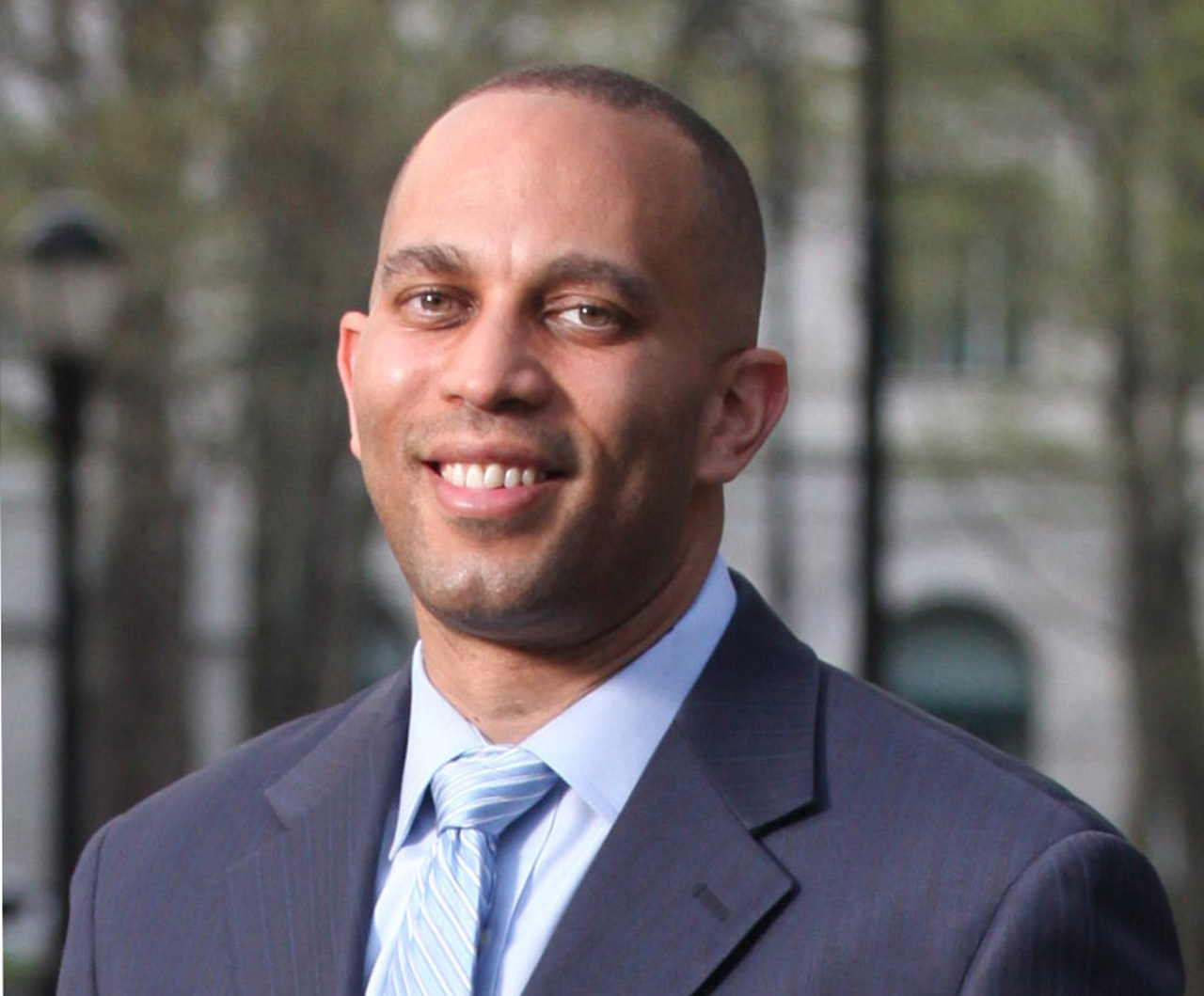
Health care remains one of the Democratic Party’s most closely watched political issues as lawmakers argue over costs, coverage and the future of the Affordable Care Act. That debate narrowed sharply on August 16, 2026, when House Democratic Leader Hakeem Jeffries of New York said Medicare for All is no longer a bill he supports. The comment is significant because Jeffries is the top Democrat in the House and represents Brooklyn- and Queens-based New York’s 8th Congressional District.
Jeffries breaks with a longtime progressive position
Jeffries said in a newly circulated interview on August 16 that Medicare for All is “not legislation that I currently support,” according to video excerpts and accounts that spread widely online Sunday. The remark marked a notable change for the House Democratic leader, who had previously been associated with support for the proposal over much of the last eight years.
The scale of the shift matters because Jeffries is not a rank-and-file member. He is the highest-ranking Democrat in the House, according to his official leadership biography, and his position often signals where party leaders see political room to move on major domestic policy. His recent public remarks on health care have focused instead on affordability, extending tax credits and protecting existing coverage.
That emphasis has appeared in multiple official statements this year. In late July, Jeffries said House Democrats were fighting for “an affordable America,” and on his official House website he said Democrats want to “make healthcare affordable for every single American.” Those statements did not endorse single-payer legislation, but they did underline the leadership’s current focus on cost and access rather than a full system overhaul.
For New York, the change is politically relevant because Jeffries represents a safely Democratic district in New York City, where progressive policy positions have often carried influence in both local and federal politics. His district includes parts of Brooklyn and Queens, and his standing has made him one of the state’s most prominent national Democrats.
What is confirmed is Jeffries’ current position on the legislation itself. What is not yet known is whether that statement will lead to a broader change in the House Democratic caucus leadership’s formal agenda, or whether other top Democrats will publicly follow him in distancing themselves from Medicare for All. House Democratic leaders have continued to center attacks on Republican health care cuts, but they have not announced a new caucus-wide replacement for single-payer proposals.
The issue also lands as Medicare for All remains active among progressives. In July, progressive Democrats including Rep. Pramila Jayapal and Rep. Debbie Dingell hosted a Capitol Hill hearing tied to the Medicare for All Act of 2025, showing that the policy still has organized backing inside the caucus even as the party’s top House leader steps away from it.
The broader context is a Democratic strategy built around affordability and defense of existing programs rather than a near-term push for single-payer legislation. Semafor reported in July that House Democrats were preparing a pre-midterm “100 days of action” tied to what Jeffries called an “affordable America,” a frame that fits his recent health care messaging.
That approach has also been shaped by legislative reality. Axios reported in 2024 that many progressives had already moved Medicare for All off their immediate front-burner agenda in favor of protecting and expanding more incremental coverage policies. In 2026, Jeffries and other Democrats have spent significant energy on extending Affordable Care Act tax credits and criticizing Republican-backed health policy changes.
For residents and voters, the practical takeaway is that House Democratic leadership is still talking extensively about health care, but its confirmed priorities are lower costs, preserving coverage and fixing what Jeffries calls a broken system. As of August 16, 2026, Medicare for All is no longer part of Jeffries’ own legislative support list, even as some Democrats continue pressing for it elsewhere in the caucus.