

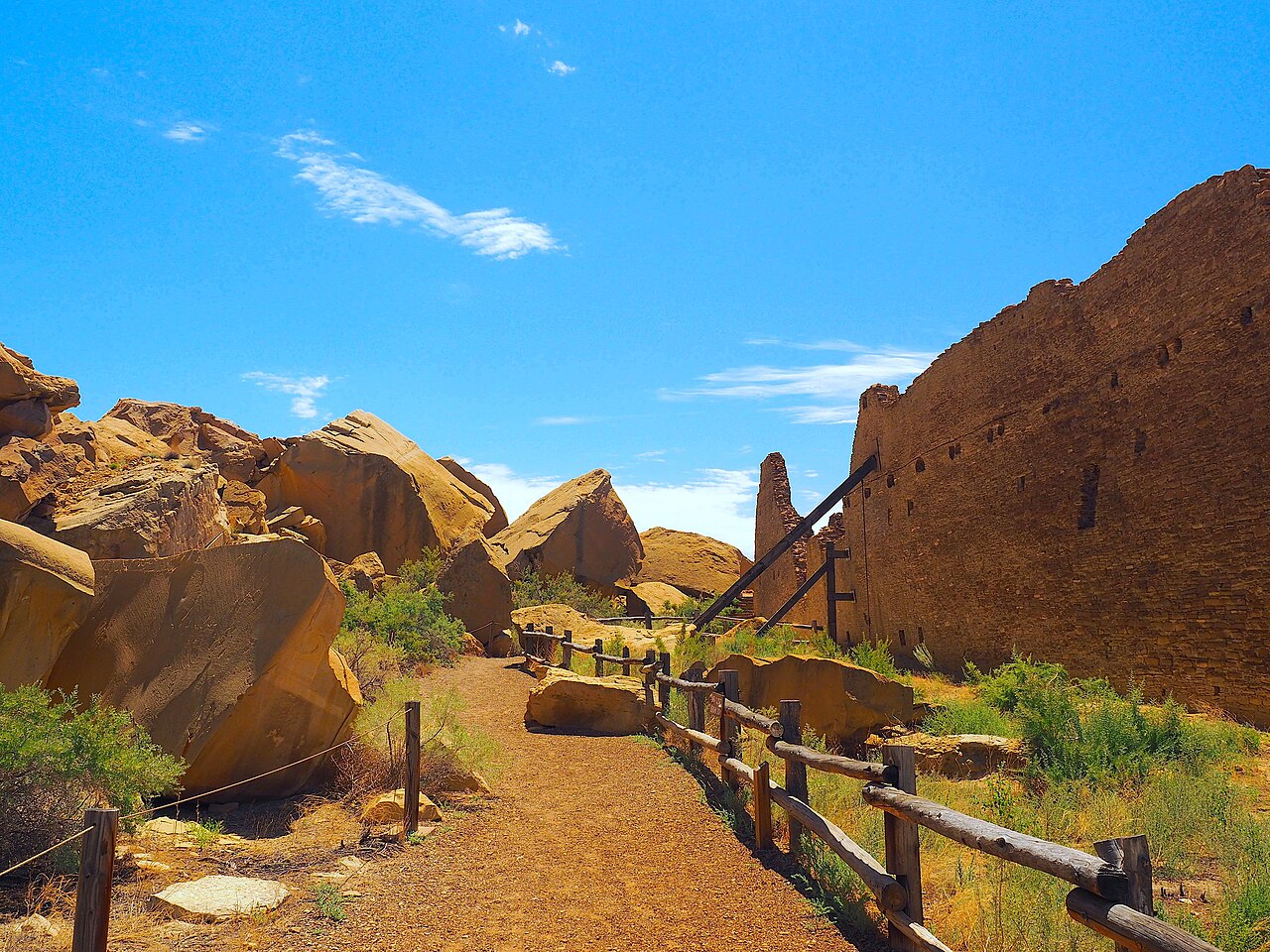
A new federal push to expand energy development on public land is colliding with a long-running preservation fight in northwestern New Mexico. The dispute now centers on land surrounding Chaco Culture National Historical Park, a UNESCO World Heritage site and a place many Pueblo and Tribal leaders have described as sacred. New Mexico officials have responded with formal opposition, saying the Trump administration should keep existing protections in place.
Federal review targets 336,425 acres around Chaco
The Bureau of Land Management announced on July 15, 2026, that it was seeking public comment on a proposal to revoke Public Land Order No. 7923, the 20-year withdrawal that currently blocks new mineral leasing and mining claims on about 336,425 acres within roughly 10 miles of Chaco Culture National Historical Park, according to the agency’s project file and press materials. The withdrawal was put in place in 2023 and applies to federal land around the park, not to the park itself.
BLM’s planning documents say one option would reopen land beyond a 5-mile buffer around the park to leasing and mining, while another option would revoke the withdrawal more broadly. The agency’s public materials also state that oil and gas development is not proposed inside the existing boundaries of Chaco Culture National Historical Park, which remains protected under National Park Service management.
The review fits within the administration’s broader energy agenda. In a separate July 2026 summary of lease sales, BLM said second-quarter oil and gas auctions generated more than $4.1 billion and described that work as part of the Trump administration’s “Energy Dominance” initiative.
New Mexico’s clearest formal response came on July 29, 2026, when Attorney General Raúl Torrez announced that the New Mexico Department of Justice had submitted comments opposing the rollback. The department said the proposal to rescind the 10-mile protective buffer was legally deficient and would threaten one of the state’s most significant cultural landscapes.
In those comments, the state said the federal review moved too quickly, pointing to what it described as a 7-day scoping period and a 14-day public comment period. The department also said BLM had failed to provide meaningful Tribal consultation and had not adequately explained why it was reversing earlier findings that supported the buffer.
The full outcome is not yet known. BLM has not announced a final decision on whether the withdrawal will be revoked, partially revoked, or left in place. State officials also have not identified any new, parcel-by-parcel drilling approvals tied to this proposal, and BLM’s own project materials say no oil and gas development is proposed within the park itself.
The conflict reflects years of tension between preservation and oil and gas development in the Greater Chaco region. Federal records tied to the 2023 withdrawal said the area contains extensive archaeological and cultural resources beyond the park boundary and that the UNESCO designation reflects the global significance of the broader Chaco landscape, not only the core park unit.
State officials say that history is one reason the rollback is drawing such strong resistance. The New Mexico Department of Justice said the original buffer followed more than a year of public review, multiple public meetings, and extensive Tribal consultation before federal officials concluded the protections were necessary. New Mexico also said it has adopted its own 20-year moratorium on new oil and gas and mineral leasing on nearby state trust lands.
For New Mexico residents, the immediate effect is that the dispute remains in the administrative stage rather than at the drilling stage. No new federal action has opened the park itself to development, but the land around it could change if the withdrawal is lifted. For now, the next factual marker is federal action on the pending review, which will determine whether the 10-mile buffer remains intact, is reduced, or is removed.