

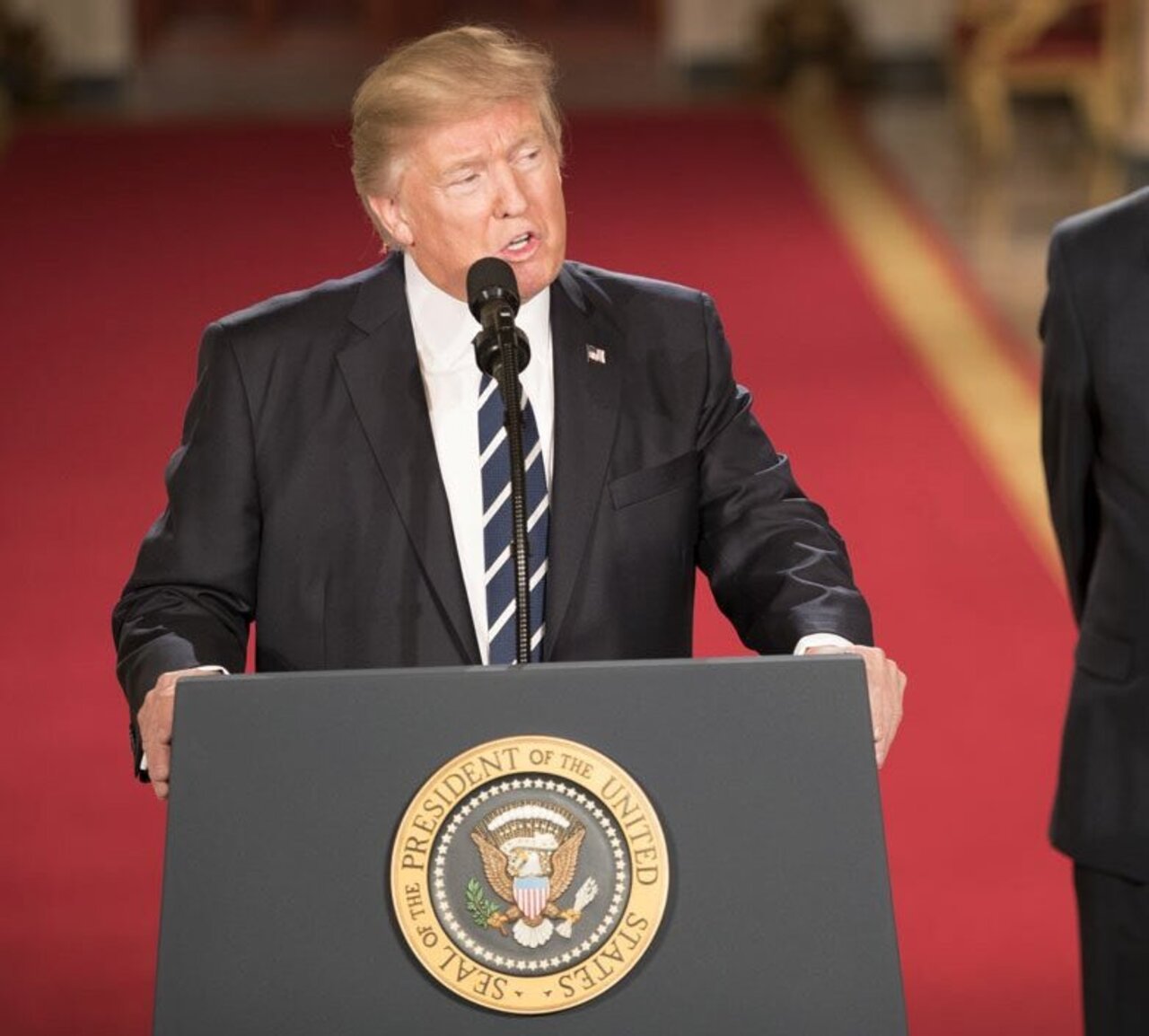
National politics and foreign policy are colliding again as the Trump administration tries to contain the domestic fallout from the U.S.-Iran conflict and higher energy prices. In remarks on September 10, President Donald Trump said Iran was hurting him politically and then suggested the Strait of Hormuz could be renamed after himself, tying a global shipping crisis directly to the U.S. midterm campaign. The comments underscored how the waterway’s disruption has become both a geopolitical flashpoint and a campaign issue.
Trump links Iran conflict to his political standing
President Donald Trump made the remarks Wednesday at the Republican midterm convention in Dallas and earlier in comments to reporters, according to the Associated Press. AP reported that Trump said oil prices likely would not come down until after the November midterm elections and argued that Iran’s actions were hurting him politically as the war’s economic effects continue to reach U.S. voters. Later, during his convention speech, he said the Strait of Hormuz should be renamed the “Trump Strait” and added, “I should get something out of it,” according to AP.
The scale of the issue is significant because the Strait of Hormuz has been one of the world’s most important energy chokepoints. AP reported that about 20% of the world’s petroleum moved through the waterway before the current conflict sharply slowed shipping. That disruption has pushed crude prices above $100 a barrel and added pressure to gasoline prices, giving Trump’s political opponents and nervous Republicans a fresh point of attack, according to AP’s reporting on global markets and the convention.
Trump’s comments also fit a broader pattern of highly personalized rhetoric around geographic names and foreign policy symbolism. AP reported that he used the Dallas appearance to revisit earlier renaming efforts and present the Hormuz idea as part provocation, part political messaging. What is confirmed is that he made the remarks publicly on September 10; what is not yet known is whether White House officials intend to turn the idea into any formal proposal.
For U.S. households, the most immediate effect is not the name of the strait but the price of energy tied to instability there. AP reported that the latest attacks involving the U.S. and Iran have choked shipping through the waterway and helped send oil above $100 a barrel, creating the risk of higher fuel costs for drivers and businesses. That national pressure matters in every state because gasoline and diesel prices feed into commuting, freight, delivery costs and household budgets.
What remains uneven is the state-by-state impact. The available reporting confirms broader market stress and higher benchmark oil prices, but it does not provide a comprehensive list of which states or metro areas have seen the sharpest retail gasoline increases as of September 10. In practice, price effects can vary by refinery access, fuel blends, taxes and existing supply conditions, and no federal agency had released a fresh state-by-state political impact estimate tied specifically to Trump’s latest remarks at the time of publication.
The political geography is clearer than the fuel map. AP reported that Republicans are heading into the November midterms with concern that war-related price spikes could weaken support in competitive races. Trump’s own framing in Dallas and before traveling there showed he sees the economic consequences of the Iran conflict as directly connected to voter sentiment in the United States.
The cause of the latest political tension is rooted in the strategic role of the Strait of Hormuz and the limits of military pressure on Iran. AP has reported for months that Iran’s leverage over the narrow shipping corridor has complicated Trump’s effort to force concessions from Tehran, while any interruption there quickly reverberates through global energy markets. More recent AP coverage said Iranian attacks and U.S. military actions have dramatically slowed Gulf oil shipments, making the strait central to both the security crisis and the domestic economic fallout.
That context helps explain why Trump is talking about the waterway in explicitly political terms. AP previously reported that rising gasoline prices and broader market volatility were already creating problems for Republicans ahead of the midterms. By saying Iran is hurting him politically, Trump publicly acknowledged the domestic cost of a conflict his administration has tried to defend as strategically necessary.
For residents, the practical takeaway is straightforward. Consumers should expect the national conversation to remain focused on oil prices, fuel costs and the risk of additional disruption in the Gulf rather than any actual change to international maps. As of September 10, the confirmed developments are Trump’s comments, ongoing shipping strain around the Strait of Hormuz and continued uncertainty over when energy markets may stabilize, according to AP.