

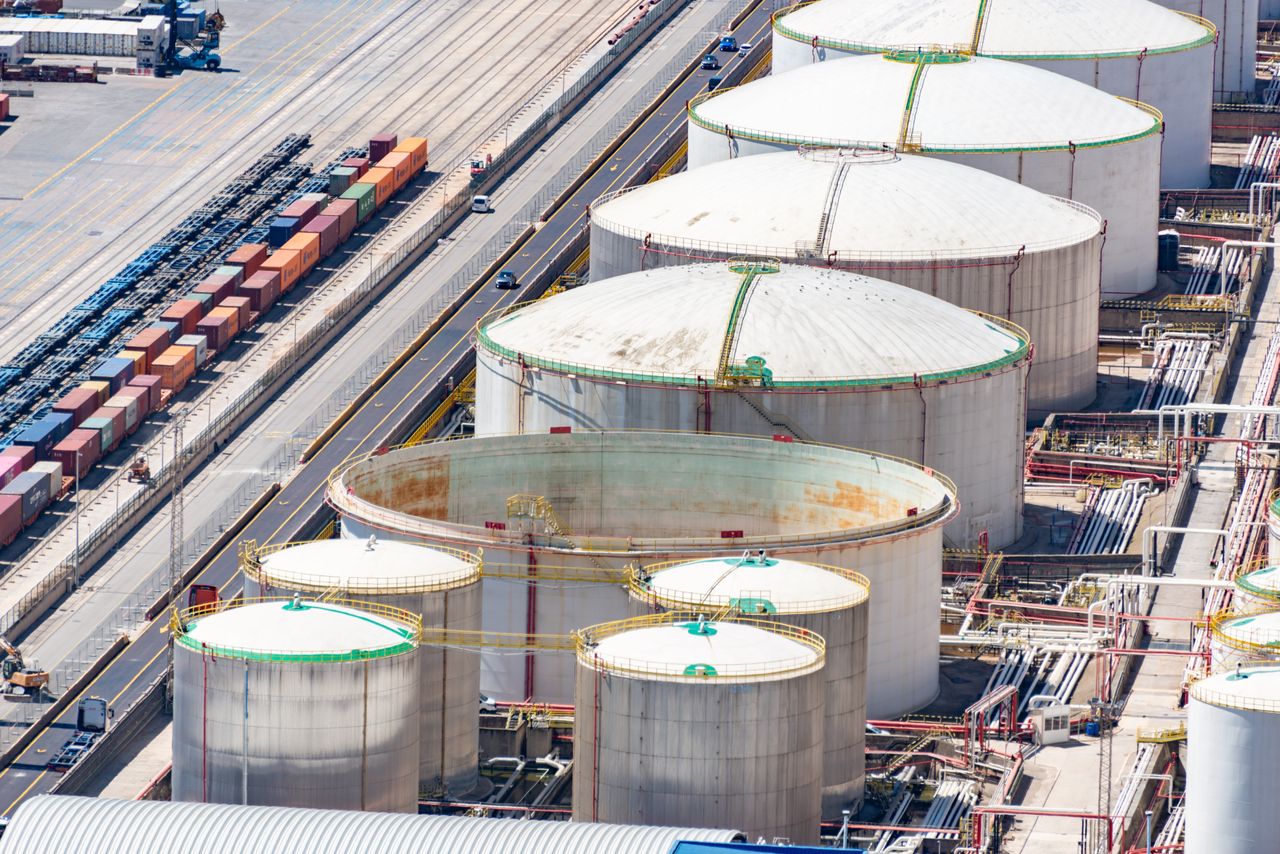
U.S. energy policy has taken on new political urgency as oil markets remain tight and the country’s emergency crude stockpile has fallen to its lowest level in decades. That pressure sharpened on August 28, when President Donald Trump announced a new Venezuela agreement tied to 65 billion barrels of oil reserves. The move arrives as Washington weighs fuel-price risks, reserve levels and the national political stakes ahead of the 2026 midterms.
Trump says U.S. secured access tied to 65 billion barrels
President Donald Trump announced on August 28 that the United States had entered an agreement involving more than 65 billion barrels of proven Venezuelan oil reserves, according to his public statement and reporting by the Associated Press and Reuters. AP reported that the figure was tied to the development of 17 oil fields identified by Venezuelan officials. Reuters reported that Trump described the arrangement as majority U.S. control achieved through government coordination and private-sector participation.
What has been publicly described so far remains limited. AP reported that the White House had released few details beyond Trump’s social-media announcement, and the structure of the agreement has not been fully documented in public filings or a formal bilateral treaty. Reuters reported that Secretary of State Marco Rubio said the deal could bring nearly $100 billion in private investment to Venezuela, though those financing plans have not been independently laid out in a full public package.
The scale alone makes the announcement significant. Venezuela holds some of the world’s largest crude reserves, but production has been constrained for years by underinvestment, sanctions, operational failures and political instability, according to AP. That means the 65 billion-barrel figure refers to reserves in the ground, not an immediate supply increase reaching U.S. refineries or gas stations.
The most immediate U.S. relevance is not a confirmed new gasoline supply this week but the broader pressure on energy security. The Department of Energy’s Strategic Petroleum Reserve inventory, as cited by federal energy data and recent reporting, fell below 300 million barrels in August 2026, the first time since the early 1980s that the reserve crossed that threshold. DOE data dated August 20 showed the reserve at roughly 293 million barrels, far below its historical peak above 726 million barrels.
That matters most along the Gulf Coast, where the Strategic Petroleum Reserve is stored and where much of the nation’s refining and crude-handling infrastructure is concentrated. What is confirmed is that the emergency stockpile is materially smaller than it was at the start of the year, after repeated drawdowns tied to global supply disruptions and higher prices. What is not yet known is whether crude covered by the Venezuela agreement would move quickly enough, or in the right grade and volume, to offset near-term supply stress for specific U.S. refiners.
No federal agency has released a public timeline showing when barrels associated with the agreement could enter commercial circulation. There is also no comprehensive public accounting yet of which U.S. companies would operate the fields, transport the crude or process it domestically. For U.S. consumers, the practical effect remains uncertain until those operating details are confirmed.
The context for the agreement is a combination of depleted emergency reserves, tighter global crude balances and election-year political pressure. AP reported that Trump has faced growing pressure over fuel prices as war-related disruptions in the Middle East continued through 2026. The U.S. Energy Information Administration said in its August Short-Term Energy Outlook that global inventories were expected to remain tight and that U.S. commercial crude inventories would stay below recent five-year lows through the end of the year.
The political calendar is also clear. Federal election guidance shows the 2026 midterm election is set for November 3, 2026, placing Trump’s announcement a little over two months before voters choose all House seats and a portion of the Senate. AP separately described the current period as a two-month sprint to the general election, underscoring how closely energy policy and voter concerns are likely to intersect in the fall campaign.
For residents and drivers, the immediate takeaway is that the announcement signals an attempt to expand future crude access, not proof of instant relief at the pump. Until the administration, participating companies or Venezuelan authorities publish a fuller implementation timeline, the practical effect will be measured through reserve data, refinery flows and fuel-price trends already under close national scrutiny.