

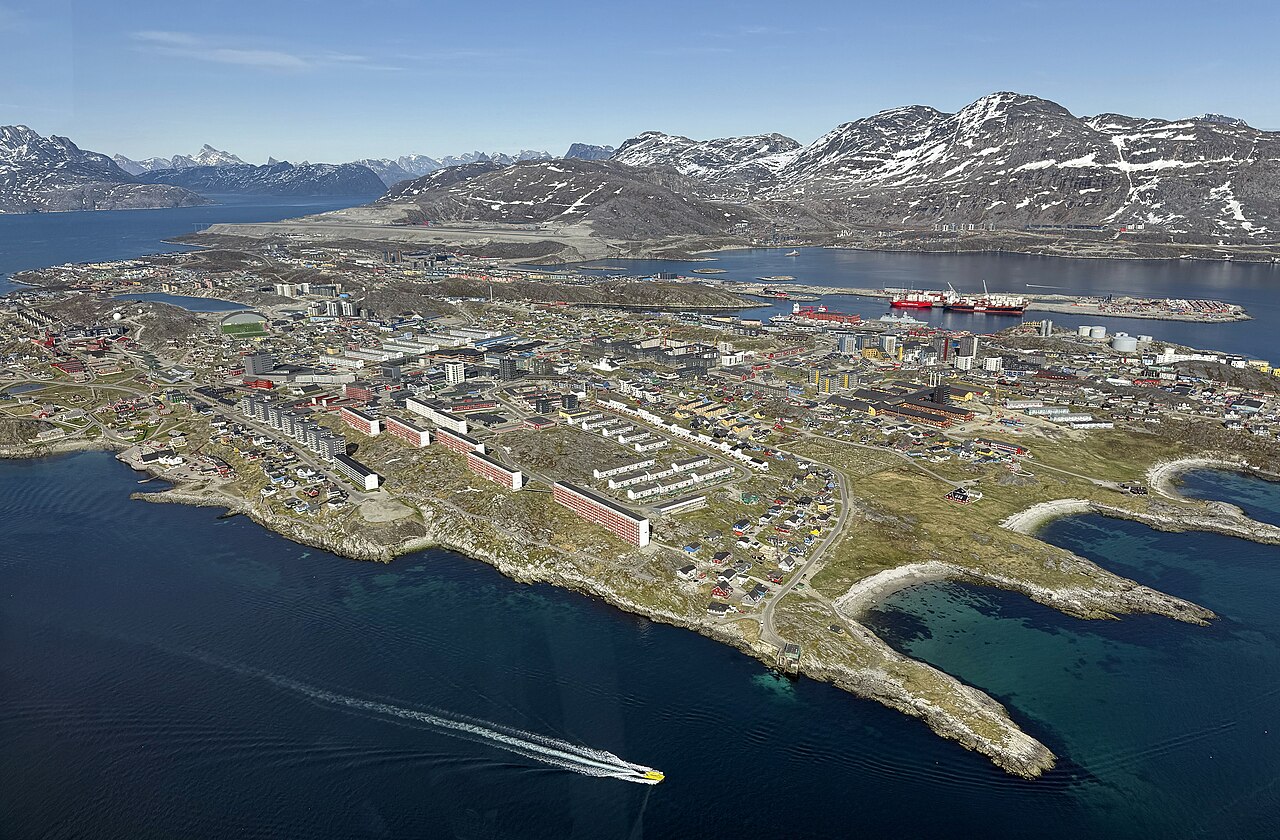
As Arctic security and great-power competition move higher on the U.S. agenda, Greenland has become a focal point because of its strategic location between North America and Europe. That broader debate sharpened on September 18, when President Donald Trump announced a new agreement involving the United States, Denmark and Greenland that would expand the American military role on the island while keeping Greenland under Danish sovereignty. The deal follows months of diplomatic tension after repeated Trump statements about taking control of the territory.
Trump announces a three-party Greenland security agreement
Trump said on September 18 that the United States had entered into an agreement with the Kingdom of Denmark and Greenland to give Washington a larger, lasting security role on the island, according to reporting by Reuters and the Associated Press. The core point confirmed by Danish and Greenlandic officials is narrower than Trump’s wording: Greenland remains part of the Kingdom of Denmark, and sovereignty is not being transferred. That distinction has become the central verified fact as governments on all three sides describe the agreement in different terms.
Reuters reported that the arrangement would expand the U.S. military presence in Greenland, while AP reported that Denmark viewed the deal as a way to bolster U.S. presence without changing the island’s constitutional status. A U.S. official cited by AP said the agreement would bar non-NATO military bases in Greenland and restrict adversarial investment, with China and Russia specifically identified in public discussion. Neither government has released the full text of the agreement.
The expected timing has also been outlined publicly. Danish Prime Minister Mette Frederiksen’s office said the agreement was expected to be signed during the United Nations General Assembly week in New York, according to AP and Reuters. Until that text is released, the exact scale of any troop increase, construction plan or command arrangement has not been publicly confirmed.
The immediate local impact is clearest on sovereignty and less clear on implementation. Greenland’s government and Denmark both said the agreement will not compromise Greenland’s sovereignty, according to Reuters, a point aimed at calming months of uncertainty inside the self-governing Arctic territory. For residents of Greenland, that means the island’s formal status remains unchanged even as its defense footprint appears likely to grow.
What is confirmed is that U.S. military activity in Greenland is not new. The United States already operates Pituffik Space Force Base in Greenland, and longstanding defense arrangements between Washington and Copenhagen have given the U.S. broad military access there. Reuters reported earlier this year that negotiations were taking place under the framework of the 1951 U.S.-Danish defense agreement, which remains an important legal foundation for American operations on the island.
What remains unconfirmed is significant. Officials have not released a comprehensive public list of new facilities, troop levels, air-defense assets or infrastructure projects tied to the new agreement. Reuters reported that discussions had included possible use of Greenlandic territory for the Trump administration’s planned Golden Dome missile defense shield, but no final deployment map has been published.
The reason Greenland matters to Washington is strategic geography. AP reported that the island is considered crucial to North American defense because it sits along Arctic and North Atlantic approaches and has held military importance for the United States since World War II. That long-standing role has gained fresh urgency as U.S. officials frame the Arctic as an area of competition with Russia and China.
The current agreement also appears to be the product of months of political pressure followed by negotiation. Reuters reported in May that Greenland’s prime minister said increased U.S. military presence was part of talks with Washington after the United States, Denmark and Greenland agreed to high-level diplomatic negotiations. By mid-September, Reuters reported that U.S. and Danish officials were closing in on a deal that would expand the U.S. presence without fulfilling Trump’s earlier ambition to acquire Greenland outright.
For residents in Greenland and for U.S. readers following Arctic policy, the practical takeaway is limited but important. Greenland remains Danish, a broader U.S. military role is expected, and the precise operational changes are still not public. The next factual marker will be the formal signing and release of terms, which Danish officials said should occur during UN General Assembly week, providing the first official measure of how far the new security arrangement goes.