

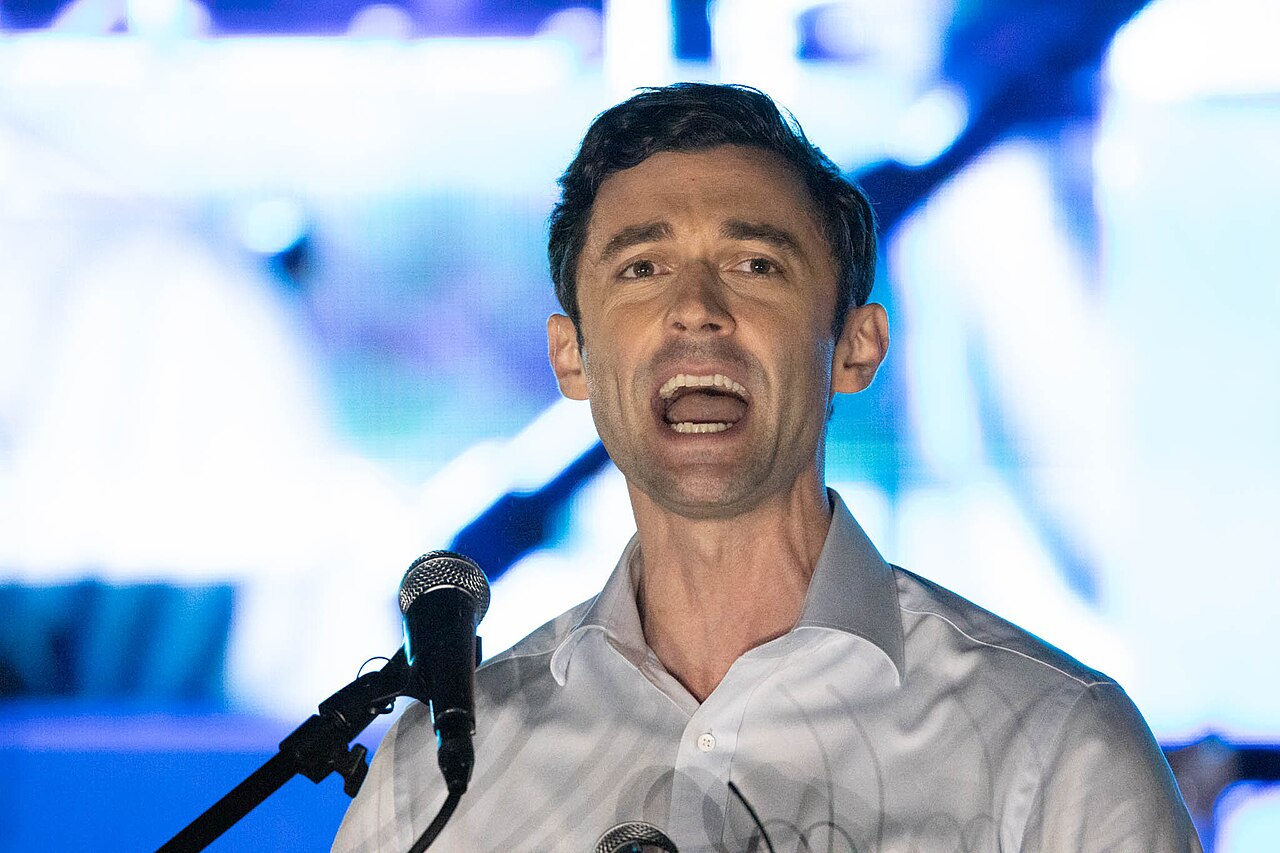
Control of the U.S. Senate is increasingly centered on a small number of late-breaking battlegrounds as both parties enter the final weeks before the November 3, 2026 midterm election. That national fight is now narrowing around Georgia and North Carolina, where Democrats are defending one critical seat and targeting another in races that strategists and outside groups expect to cost tens of millions of dollars more before Election Day. Reuters and other national outlets have identified both states as central to the chamber’s balance of power as campaign spending accelerates.
Georgia becomes a central defensive fight for Democrats
Georgia’s Senate race has hardened into one of Democrats’ most important hold opportunities, with Sen. Jon Ossoff seeking reelection in a state Reuters identified on September 7 as a top battleground in the 2026 map. Reuters reported that Democrats need to gain four seats to win control of the 100-seat chamber, making Ossoff’s contest a core part of the party’s defensive strategy. The same Reuters reporting described Georgia as one of only a few states Donald Trump carried in 2024 where Democrats are still competing seriously statewide.
The contest has also drawn national attention because of the money already behind it. Reuters reported earlier this cycle that Ossoff had built a cash advantage that outpaced potential Republican rivals, underscoring how expensive the Georgia race was expected to become even before the final stretch began. That financial edge does not settle the race, but it gives Democrats a major tool in a state where turnout, persuasion and television advertising are likely to decide the result.
What remains less clear is the precise shape of late independent spending in the closing weeks. Campaigns and allied groups continue to reserve ad time, but not every fall buy has been disclosed in a way that offers a complete public picture of the final Georgia barrage. What is confirmed is that both parties view the state as indispensable to their Senate math.
North Carolina has become one of Democrats’ clearest pickup opportunities after Republican Sen. Thom Tillis chose to retire, turning the seat into an open race. Reuters included North Carolina among the small group of contests most likely to help determine Senate control, and described Democrat Roy Cooper as a well-known statewide figure after winning four races for attorney general and two for governor. That résumé has helped place the race near the center of the fall map.
For Republicans, the state is now both a defensive necessity and a test of whether the party can hold ground in a competitive Southern battleground without an incumbent on the ballot. Reuters reported that Republicans still hold a 53-47 Senate majority, which gives them room for losses but not many if other closely watched races move toward Democrats. That arithmetic is why North Carolina’s open-seat contest is drawing sustained national spending and attention.
The full extent of late ad reservations in North Carolina is still developing, and a complete state-by-state breakdown of every outside group’s final buy is not yet public. Even so, the race is confirmed to be among the most closely watched in the country, and both parties are treating it as essential to the November outcome.
The broader reason these races are tightening is the convergence of money, national mood and a narrow Senate battlefield. Axios reported on September 11 that Republicans are outspending Democrats in many battleground Senate races this month, while the Associated Press reported this week that total spending across Senate contests is expected to exceed $3.4 billion. Those numbers help explain why even small polling movements in Georgia and North Carolina carry outsized significance in the closing stretch.
National conditions are also shaping the contests. Reuters/Ipsos polling published in late August and highlighted again in early September found President Donald Trump’s approval rating at 33%, with dissatisfaction tied in part to the economy and the war in Iran. Reuters noted that Trump’s standing could work against Republican candidates in competitive states, especially where swing voters are deciding whether to check the party in power.
For voters in both states, that means a final phase dominated by advertising, candidate travel and sharper national attention rather than a settled outcome. No winner is predetermined by the current trend lines, and neither party has released evidence that the late movement has ended. What is established is that Georgia and North Carolina are now firmly in the expensive, high-stakes core of the Senate battle heading into November 3.