

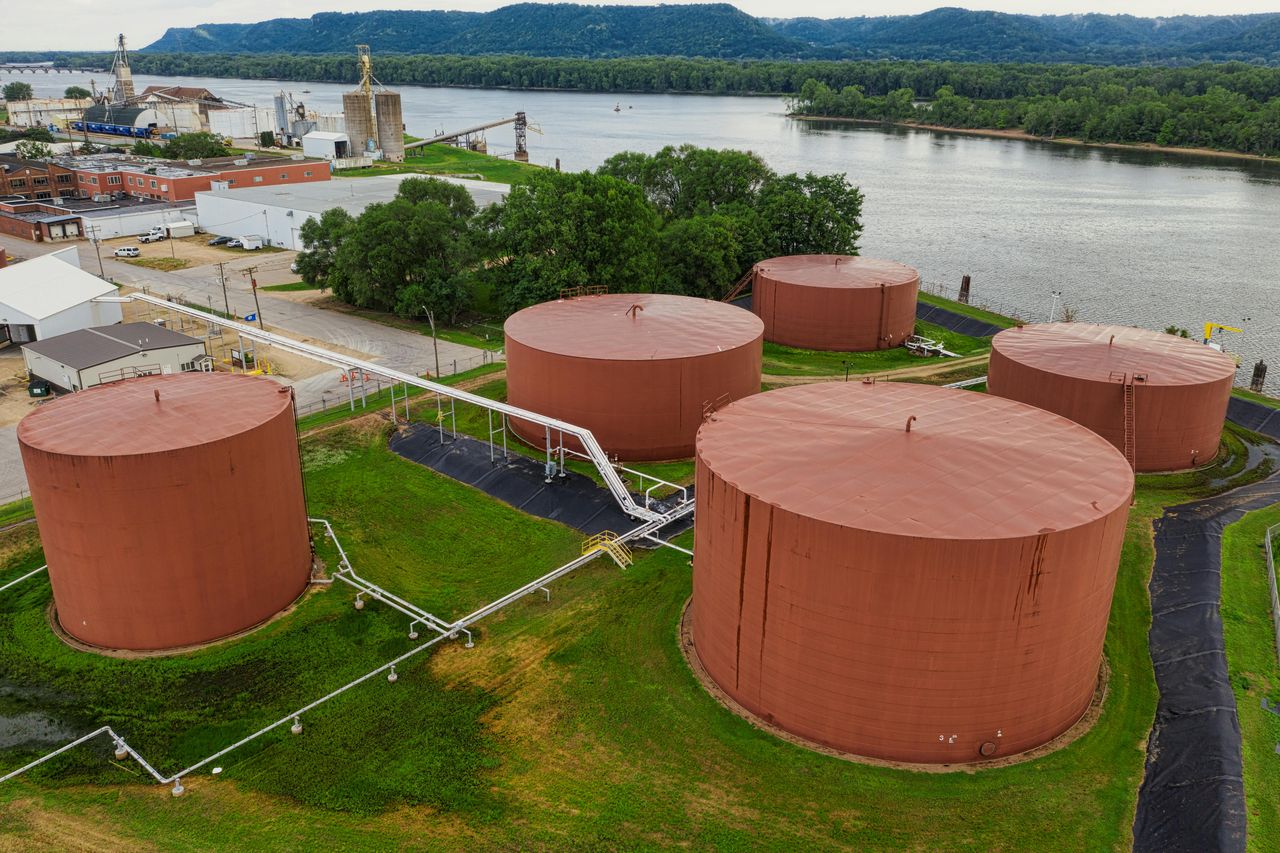
America is not running out of oil. But the margin for error is getting thinner.
The big picture still looks strong, yet several smaller signals now point to a system with less slack than many people realize.
The reassuring headline numbers are still real

The case against panic starts with production. The United States remains one of the world’s dominant oil producers, and recent federal data show output is still hovering near record territory. The Energy Information Administration said U.S. crude production set a new annual record in 2025 at 13.6 million barrels per day, extending a run of historic gains that has reshaped global energy markets. That is not what a supply crisis looks like.
Those output gains matter because they have changed the country’s strategic position. A generation ago, the U.S. was defined by vulnerability to overseas shocks. Today, it is a major producer, a major exporter, and still a country with access to one of the world’s largest emergency crude stockpiles. The Strategic Petroleum Reserve, created after the oil shocks of the 1970s, still has an authorized capacity of 714 million barrels, according to the Department of Energy. Even after major drawdowns, it remains a powerful tool in a true disruption.
Domestic geology also remains an enormous advantage. The shale revolution unlocked resources that older models of U.S. decline simply failed to anticipate. The Permian Basin in Texas and New Mexico continues to do much of the heavy lifting, accounting for nearly half of total U.S. crude production in 2025, according to EIA data. That concentration has risks, but it also shows that the country still has a highly productive core region capable of supplying very large volumes.
There is another reason the crisis language is premature: near-term supply forecasts do not show a collapse. EIA has repeatedly projected only modest declines, or production staying close to recent highs, rather than a steep reversal. In plain terms, the U.S. oil system is still producing a lot of crude, still refining large volumes, and still backed by a strategic reserve that exists precisely for emergencies. The warning signs are not evidence of failure. They are evidence that resilience is becoming more conditional, more expensive, and more dependent on everything going right at once.
The Strategic Petroleum Reserve is still useful, but much less comfortable than before
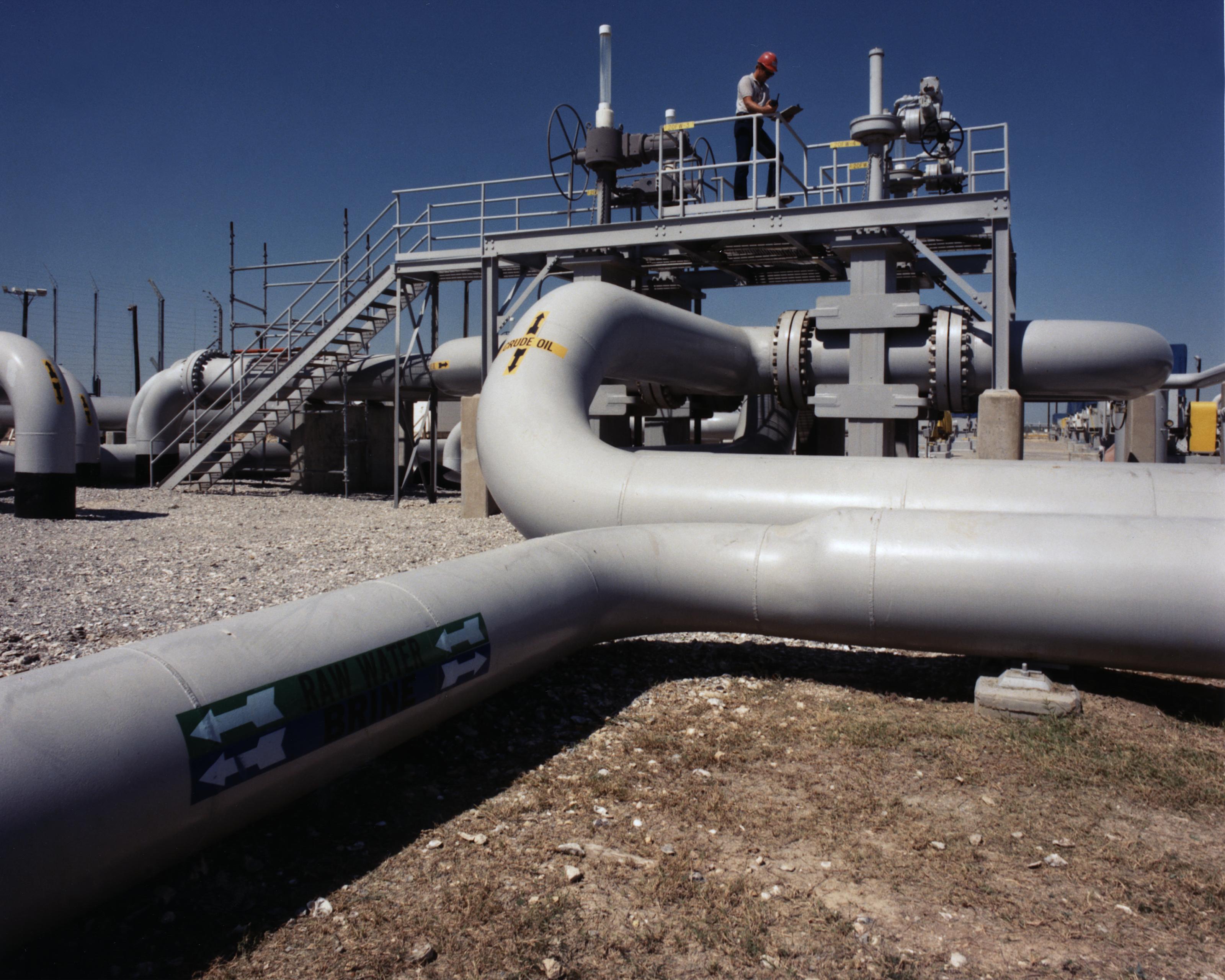
The Strategic Petroleum Reserve is where the sense of unease becomes harder to dismiss. Its existence is reassuring; its current level is less so. EIA reported in late April 2026 that SPR stocks stood at about 397.9 million barrels after the Department of Energy released 17.5 million barrels in just over a month. That is far above zero, and enough to matter in a real disruption, but it is a much smaller cushion than the country carried at earlier points in the last decade.
That distinction is crucial. The SPR is not supposed to function as a day-to-day balancing tank for every bout of market volatility. It is meant to serve as a strategic backstop against severe supply interruptions, wars, infrastructure attacks, or major disasters. When the reserve sits far below its historical peaks, policymakers still have an emergency tool, but they have less room to respond repeatedly or over a long period. A reserve can be large in absolute terms and still feel thin relative to the scale of modern risks.
The reserve’s location also creates a double-edged reality. Its storage sites along the Gulf Coast place it near the heart of U.S. refining and marine export infrastructure, which is efficient under normal conditions. But the Gulf Coast is also exposed to hurricanes, shipping disruptions, and industrial bottlenecks. In a layered emergency, the key issue is not simply how many barrels exist underground. It is whether those barrels can move fast enough, through intact infrastructure, into the places where refineries and consumers need them most.
None of this means the SPR has lost its value. It means the political temptation to use it more often has consequences. Every emergency release can be defended in the moment, especially when global tensions rise or fuel prices jump. But over time, frequent drawdowns normalize a lower baseline. That changes the psychology of U.S. energy security. Instead of asking whether the country has a reserve, the better question is whether it has rebuilt enough reserve depth to absorb multiple shocks in close succession. Right now, that answer is less comfortable than the headline reassurance suggests.
Beneath record output, the reserve base is showing strain

Production and reserves are not the same thing, and confusing the two is one of the easiest ways to misread the oil picture. Production tells you what is coming out now. Proved reserves tell you what companies can recover economically with reasonable certainty under current conditions. On that measure, the latest federal data are more sobering. EIA’s year-end 2024 report showed nationwide crude oil and lease condensate proved reserves fell, with Texas posting the largest annual net decline among the states at 529 million barrels.
That does not mean oil suddenly disappeared from the ground. It means economics, depletion patterns, and field-level revisions are starting to push against the idea of endless abundance. Lower prices played a role in the 2024 reserve estimates, as EIA noted, because reserves are partly a commercial judgment, not just a geological one. When expected prices soften, some barrels no longer qualify as proved reserves. That matters because it reveals how dependent America’s oil confidence is on favorable market assumptions.
Shale remains the great offsetting strength, but it brings its own discipline problem. EIA said shale plays represented 60% of U.S. crude and lease condensate proved reserves at year-end 2024, up from 26.2 billion barrels to 27.5 billion barrels in shale-specific reserves. That is impressive, yet shale is a treadmill business. Wells often deliver high early output and then decline quickly, forcing companies to keep drilling and completing new wells to sustain aggregate production. Efficiency gains can extend the run, but they do not eliminate the need for constant reinvestment.
That is where warning signs accumulate. EIA and other market observers have pointed to lower rig counts, fewer wells drilled, and softer price expectations into 2026. The system is still productive enough to set records, but it may be doing so while consuming some of its easiest momentum. In other words, the U.S. oil engine still has horsepower, but it is becoming more sensitive to financing conditions, breakeven costs, service-sector constraints, and investor patience. A country can avoid crisis and still move into a phase where maintaining strength becomes noticeably harder.
Refining and fuel inventories may be the more immediate vulnerability

For consumers, the bigger danger may not be a lack of crude in the ground at all. It may be the country’s reduced flexibility in turning crude into usable fuels where and when they are needed. EIA has warned that refinery closures and strong fuel demand could push inventories of major transportation fuels to unusually low levels. In one forecast, the agency said gasoline, distillate fuel oil, and jet fuel inventories in 2026 could fall to their lowest year-end levels since 2000. That is not an abstract statistic; it points directly to tighter supply cushions for everyday fuel markets.
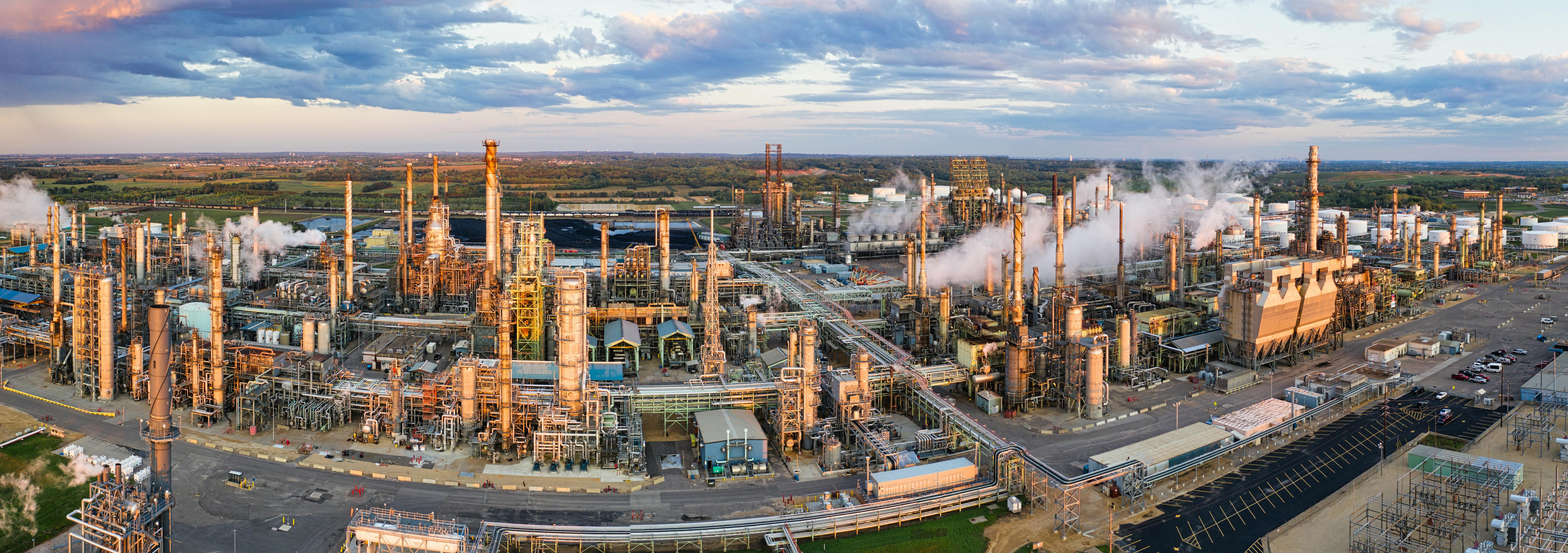
Recent refinery closures sharpen that concern. LyondellBasell ended refining operations at its Houston refinery in March 2025, removing nearly 264,000 barrels per day of capacity. On the West Coast, Phillips 66 planned to close its Wilmington refinery in the Los Angeles area, and EIA said the West Coast was already dealing with a longer-term decline in refining capacity. California alone is set to lose a significant share of its refining base, making fuel markets there more volatile and more dependent on imports or long-distance replacement supply.
This is why oil security cannot be measured only by counting barrels of crude. A nation can produce record volumes of crude and still experience regional fuel stress if its refining network becomes too concentrated, too old, or too thin. Diesel is a particularly important example because it is the fuel of freight, agriculture, construction, and backup power. EIA has also highlighted multiyear low distillate inventories as a concern. When diesel stocks run lean, the economic effects spread well beyond the gas station.
The refining issue also complicates the value of the SPR. The reserve holds crude, not gasoline or diesel. In a supply emergency, those barrels help only if refineries are operating and transportation systems can move products efficiently. That makes refining capacity, maintenance discipline, regional logistics, and import backup just as important as upstream production. America’s oil reserve story, in other words, is increasingly a story about bottlenecks. The country has supply strength, but some of the machinery that translates that strength into consumer protection is becoming less redundant.
Why the next few years will matter more than the next few weeks
The most sensible conclusion is neither complacency nor alarmism. America’s oil reserves are not in crisis, and the country still has real advantages that many competitors would envy: massive domestic output, deep technical expertise, a large strategic reserve, and a private sector that has repeatedly found ways to boost efficiency. Even EIA’s forecasts for 2026 point more toward leveling off than collapse. For now, the system remains sturdy.
But sturdy is not the same as invulnerable. The warning signs are accumulating in a way that should interest policymakers, investors, and consumers before a true emergency forces the issue. The SPR is serviceable but far below its maximum comfort zone. Proved reserves have softened under lower-price assumptions. Drilling activity is not keeping the same pace everywhere. Refinery closures are reducing slack in some of the country’s most sensitive fuel markets. And product inventories, especially distillates, are lean enough to raise concern if demand surges or infrastructure fails.
The deeper lesson is that energy security should be judged by resilience, not just abundance. Resilience means spare capacity, storage depth, geographic diversity, infrastructure reliability, and the ability to withstand two or three shocks in a row rather than just one. By that standard, the U.S. still passes, but by a narrower margin than the record-production headlines imply. The country has bought itself time, not immunity.
That is why this moment matters. If policymakers treat today’s strong production numbers as proof that every structural issue can wait, the warning signs will keep stacking up until they are no longer warnings. Rebuilding strategic inventory depth, protecting refining flexibility, encouraging disciplined investment, and hardening critical energy infrastructure are not panic moves. They are the practical steps a confident country takes before confidence becomes overconfidence.