

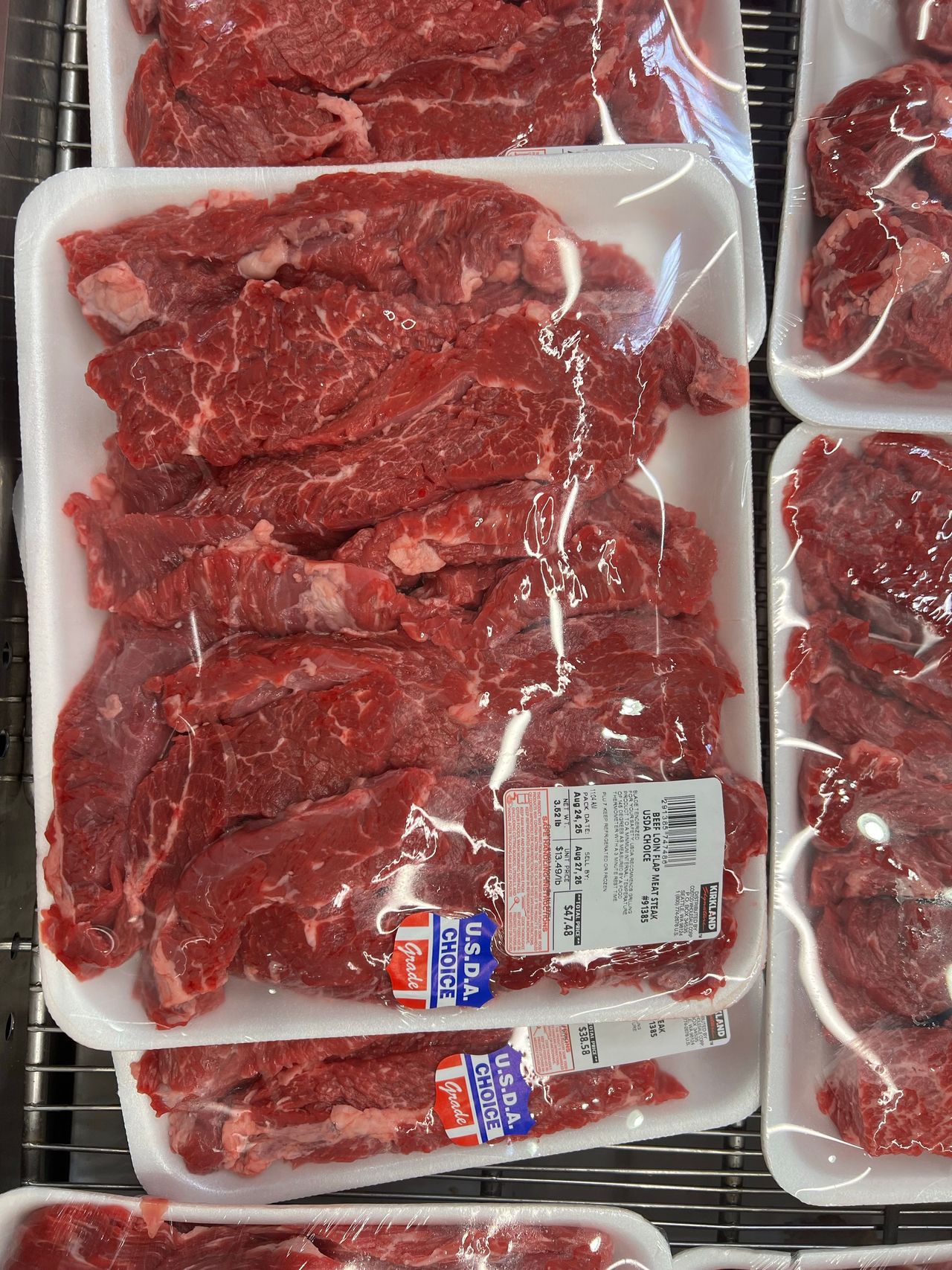
Beef is everywhere in America, from supermarket coolers to fast-food menus. Yet for many shoppers, the price tag still feels stubbornly, surprisingly high.
A big beef industry can still have a supply problem
At first glance, the contradiction seems obvious: if the United States produces so much beef, why is beef still expensive? The key is that “a lot” does not necessarily mean “enough relative to demand,” especially when the industry is coming off years of herd liquidation. USDA’s Economic Research Service said in May 2026 that its forecast for 2026 beef production was lowered to 25.547 billion pounds because cattle slaughter was expected to slow, even as prices for cattle were raised on recent market data. In other words, America is still producing an enormous quantity of beef, but the pipeline feeding that production is tighter than it looks.
That pipeline begins with cattle inventory, and here the numbers tell the story. USDA’s National Agricultural Statistics Service reported that the U.S. had 86.2 million head of cattle and calves on farms as of January 1, 2026, with the beef cow herd at 27.6 million head, down 1% from a year earlier. Those are not collapse-level numbers for a country this large, but they are historically lean. Industry groups and recent reporting have described the herd as the smallest in roughly 75 years, a reflection of several consecutive years of contraction.
The reason that matters is simple: beef cannot be scaled up quickly. Unlike factory output, cattle production works on a biological clock. A rancher who decides to rebuild today cannot create market-ready beef in a few months. Heifers must be retained, bred, calve, and then those calves need time to grow before they ever reach a feedlot or processor. USDA has noted that higher heifer retention may be a sign the industry is nearing a turn in the cattle cycle, but even that is more a hint of future relief than an answer for today’s meat case.
So the central misunderstanding is this: the U.S. beef industry is large, but it is not loose. Production may still be measured in the tens of billions of pounds, yet the underlying herd is tight enough that every pound is more expensive to produce, bid for, and replace. That is why abundance on paper can coexist with scarcity in practice.
The cattle cycle is slow, costly, and still shaped by drought
High beef prices did not appear out of nowhere. They are the cumulative result of weather shocks, rising costs, and the normal but painful dynamics of the cattle cycle. Years of drought across major cattle-producing regions pushed ranchers into difficult decisions. When pasture quality deteriorates and hay becomes expensive, many producers reduce herd size simply to survive. Selling cows helps conserve feed and generate cash, but it also shrinks future calf supplies.
That liquidation phase has consequences that last well beyond the drought itself. Once breeding cows leave the herd, the industry loses future production capacity. USDA’s cattle outlook has repeatedly tied current tight supplies to the long contraction in the beef cow herd, and recent farm-sector analysis has stressed that uncertainty over weather, forage conditions, and input costs is still making ranchers cautious about aggressive expansion. Even with cattle prices at profitable levels, producers do not necessarily rush to rebuild if drought could return or land costs remain elevated.
Feed and operating expenses compound the problem. Grain markets have eased from their most extreme peaks, but ranching and feeding cattle still require expensive land, labor, fuel, veterinary care, equipment, financing, and transportation. A rancher looking at strong calf prices also sees expensive replacement females, high interest rates, and the risk that the market may change by the time those animals produce saleable offspring. For many operations, especially smaller ones, the safest move is not rapid expansion but disciplined restraint.
This helps explain why high prices can persist even when they appear to be sending the market a clear signal to produce more. In many industries, a price spike invites quick new supply. In cattle, the response is delayed by biology and tempered by risk. USDA’s February and May 2026 outlooks indicated that more heifers were being retained for breeding, a potentially important shift, but also made clear that meaningful herd expansion takes sustained retention over time.
The result is a market that remains structurally tight. America may have plenty of beef compared with most countries, but it does not have much spare beef. That distinction matters. When the herd has been cut for years, the system becomes less flexible, and consumers end up paying for that inflexibility at the meat counter.
Strong consumer demand keeps the market from cooling off
Supply is only half the equation. Beef prices are also high because Americans keep buying beef, even after multiple rounds of food inflation. Demand has been more durable than many forecasters expected. The American Farm Bureau Federation, citing USDA estimates, said in May 2026 that total U.S. beef consumption for 2026 was projected at 29.38 billion pounds, up 1.3% from 2025. That is not the profile of a market in retreat.
Beef’s staying power comes from several places. For one, it occupies a special role in American eating habits. Burgers, steaks, tacos, meatballs, deli roast beef, and restaurant entrées all support demand across income levels and meal occasions. Consumers may trade down from ribeye to ground beef or from restaurant steaks to home grilling, but many do not exit the category entirely. That substitution within beef helps keep overall demand firmer than raw price comparisons might suggest.
Ground beef has become especially important. It absorbs demand from households looking for a comparatively cheaper beef option, but it also faces its own supply pressures because lean beef for grinding is influenced by both domestic cow slaughter and imports. When domestic herds are tight, the supply of trim and lean grinding beef can also tighten, which means the “budget” beef choice does not necessarily stay cheap. That is one reason shoppers can feel squeezed even when they are already economizing.
Demand from food service also matters. Restaurants may adjust portion sizes, menu prices, or promotions, but beef remains a traffic-driving item. A steakhouse cannot simply stop serving steak, and a burger chain cannot casually replace beef with pork or chicken without changing its identity. That brand dependence gives beef a certain pricing resilience. Reuters and other recent coverage have noted that strong consumer demand has helped keep cattle and beef markets firm despite higher prices.
There is also a broader inflation backdrop. Even when general inflation moderates, it does not automatically reverse previous price increases. BLS reported that the CPI for beef and veal rose 2.7% over the 12 months ending in April 2026. USDA’s Food Price Outlook has been even more explicit, projecting that beef and veal prices would rise notably in 2026, while wholesale beef prices were expected to increase as well. In short, demand has not weakened enough to force broad retail discounting, and that keeps beef expensive.
Retail prices reflect more than what ranchers receive
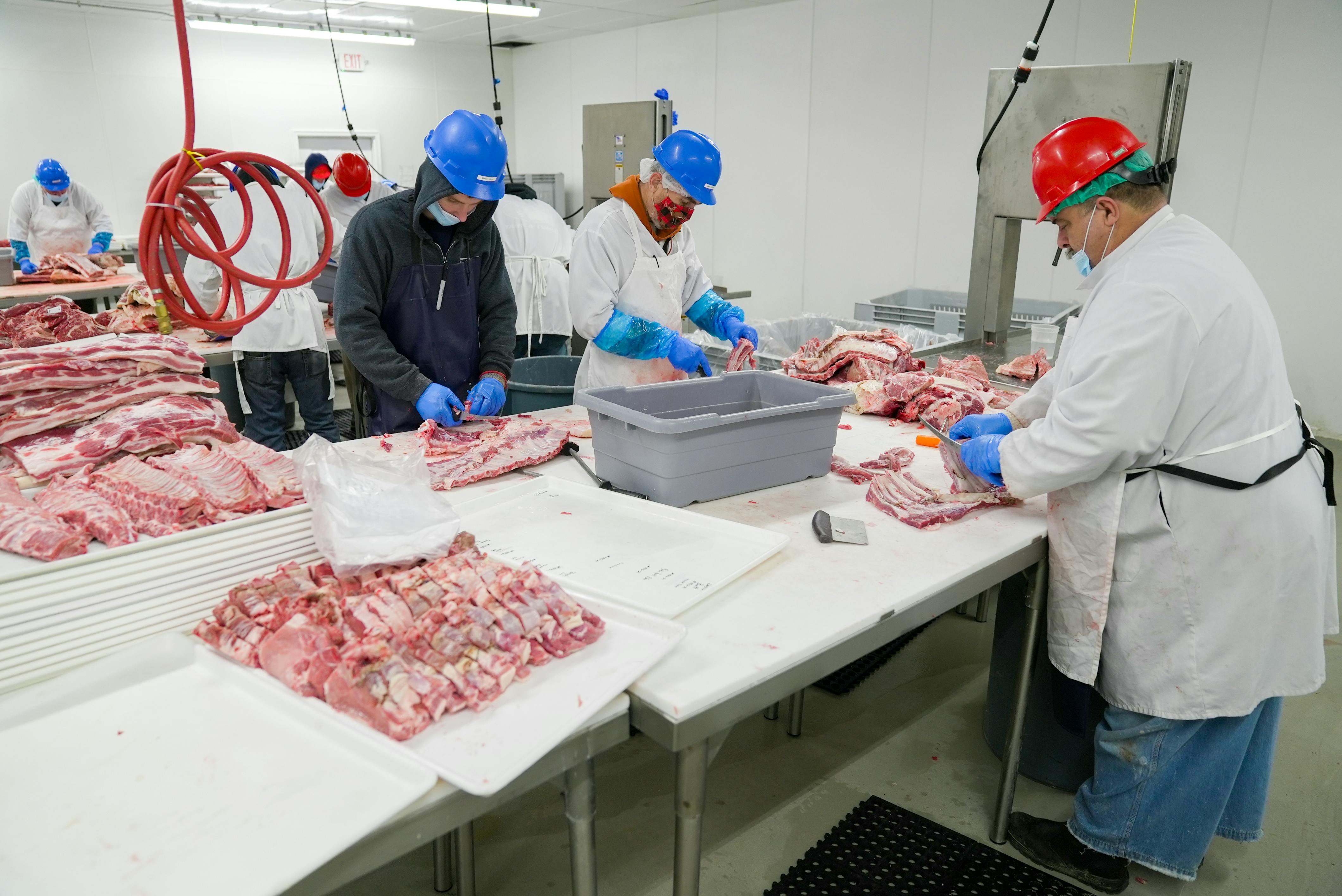
Many consumers assume the price of beef should track the number of cattle on farms in a direct, simple way. It does not. Between a ranch and a grocery receipt lie feedlots, meatpackers, cold storage, trucking, wholesalers, distributors, retailers, and restaurants. Each step adds cost, and each step has its own margins, contracts, and competitive pressures. That means even if one link in the chain eases, shelf prices may not follow immediately.
Processing is one major factor. Cattle must be slaughtered, fabricated into cuts, packaged, inspected, refrigerated, and shipped under tight food-safety rules. Those activities are labor-intensive and capital-intensive. Meatpacking plants face their own costs for wages, utilities, maintenance, compliance, and logistics. Industry debates often focus on whether packers have too much pricing power, but whatever the margin structure at a given moment, the consumer price is shaped by much more than the live-cattle price alone.
Retail strategy matters too. Supermarkets do not price every cut of beef strictly on daily input costs. They use a mix of promotional planning, inventory management, competitor pricing, and category strategy. A store may keep some beef items sharp-priced to draw traffic while preserving margin elsewhere. Or it may keep prices elevated because consumers are still buying enough volume to justify it. Meat Institute statements cited in recent reporting have argued that retailers and food-service companies, not packers, set the final prices consumers see. That is not the whole story, but it is a reminder that shelf prices are the outcome of a chain, not a single auction.
Imports add another layer. The U.S. both exports and imports beef, often because different parts of the animal and different fat levels are valued differently in different markets. USDA now expects higher beef imports in 2026, largely to supplement domestic supply, especially lean beef for processing. Yet imports are not a magic fix. They can ease shortages at the margin, but they do not quickly undo a multi-year contraction in the domestic herd.
This is why consumers often feel that prices rise quickly and fall slowly. The supply chain absorbs shocks unevenly, and every participant makes decisions based on expected future conditions, not just today’s costs. In a tight market, that tends to keep prices sticky on the high side.
What would have to change for beef prices to come down
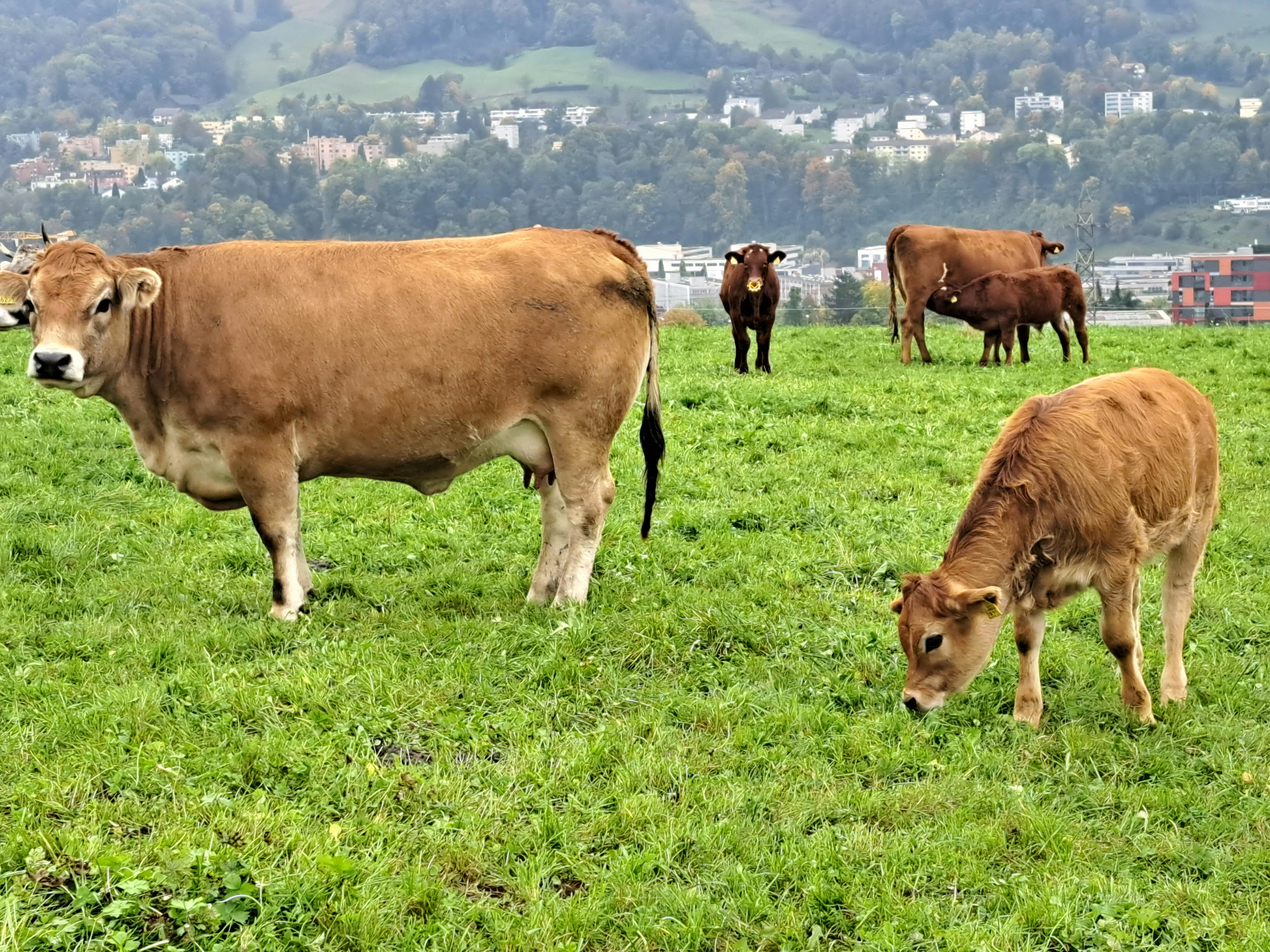
For beef prices to fall meaningfully, the most important change would be a sustained rebuilding of the U.S. cattle herd. That would require decent pasture conditions, manageable feed costs, confidence in future profitability, and enough patience among producers to retain heifers rather than sell them into a strong market. USDA data suggest the industry may be edging toward that turn, but the timetable is long. Even if herd rebuilding gains momentum in 2026, the retail effects are likely to be gradual rather than immediate.
Weather remains the wildcard. Good rains can improve pasture, reduce supplemental feeding costs, and make expansion more attractive. Another round of drought can do the opposite and push producers back toward liquidation. That is one reason forecasts remain cautious. The cattle cycle does not move in a straight line, and one bad season can delay recovery by a year or more.
Consumer behavior could also cool prices, but only at the margin unless demand weakens more sharply. If households increasingly shift to chicken, pork, or plant-based meals, retailers may have to become more promotional on beef. But beef has proven unusually resilient. Consumers often trade down within the category before abandoning it. As long as that pattern continues, the market retains support even when shoppers complain loudly about prices.
Policy changes, including import adjustments or antitrust scrutiny, may influence sentiment and some short-term pricing, but they are not likely to transform the core economics on their own. The deeper issue is that the U.S. is working through the aftereffects of a reduced breeding herd. Until there are more calves moving through the pipeline, supplies will remain relatively tight and cattle prices will remain historically firm.
So the answer to the headline question is not that America lacks beef. It is that America lacks surplus beef. The country still produces a vast amount, but after years of herd contraction, expensive production, and stubbornly strong demand, that abundance is not enough to generate cheap prices. For now, the supermarket meat case is reflecting a hard truth about agriculture: when supply takes years to rebuild, high prices can last a lot longer than consumers expect.