


The AI race has spent years accelerating with almost no visible brake pedal. Now one of the industry’s most influential companies is arguing that the world may need exactly that.
Why Anthropic’s proposal landed with such force

Anthropic’s intervention did not arrive as a vague warning from the sidelines. On June 4 and June 5, 2026, the company and its research arm argued that the world should have the option to slow or temporarily pause frontier AI development if risks outpace society’s ability to manage them. According to reporting from the Associated Press and The Washington Post, Anthropic wants leading AI labs to coordinate on a verifiable mechanism that would allow a genuine pause rather than a symbolic one. That framing matters because it shifts the conversation from abstract ethics to operational governance.
The company tied that argument to a specific technical concern: recursive self-improvement, the idea that AI systems could increasingly help design, code, and optimize their own successors. In its report “When AI builds itself,” Anthropic said that by May 2026 more than 80% of the code merged into its own codebase was authored by Claude. The company used that detail not as a victory lap alone, but as evidence that AI is already becoming deeply involved in the development pipeline for future AI systems. That makes the prospect of runaway capability gains feel less like science fiction and more like a near-term governance problem.
Anthropic’s message also carried unusual weight because it came from a company positioned near the center of the race, not from a nonprofit critic or academic observer. This is the same company behind Claude, one of the most prominent frontier AI systems, and one that has raised enormous sums from major backers including Amazon and Google in recent years, according to Reuters reporting cited across coverage of the sector. That creates a tension at the heart of the debate: when a major competitor asks for a brake, is it sounding a sincere alarm, making a strategic move, or both?
Anthropic’s own policy history adds another layer. The company has long promoted a Responsible Scaling Policy that says it may need to pause training stronger models if safety procedures cannot keep pace. A fresh update to that policy, published in late May 2026, expanded details on capability thresholds and safeguards. In other words, the June proposal did not appear out of nowhere. It was the latest and most public expression of an internal philosophy that powerful AI should trigger escalating controls, and in some cases a slowdown, before deployment and possibly even before training.
The safety case sounds more concrete than earlier AI alarm bells
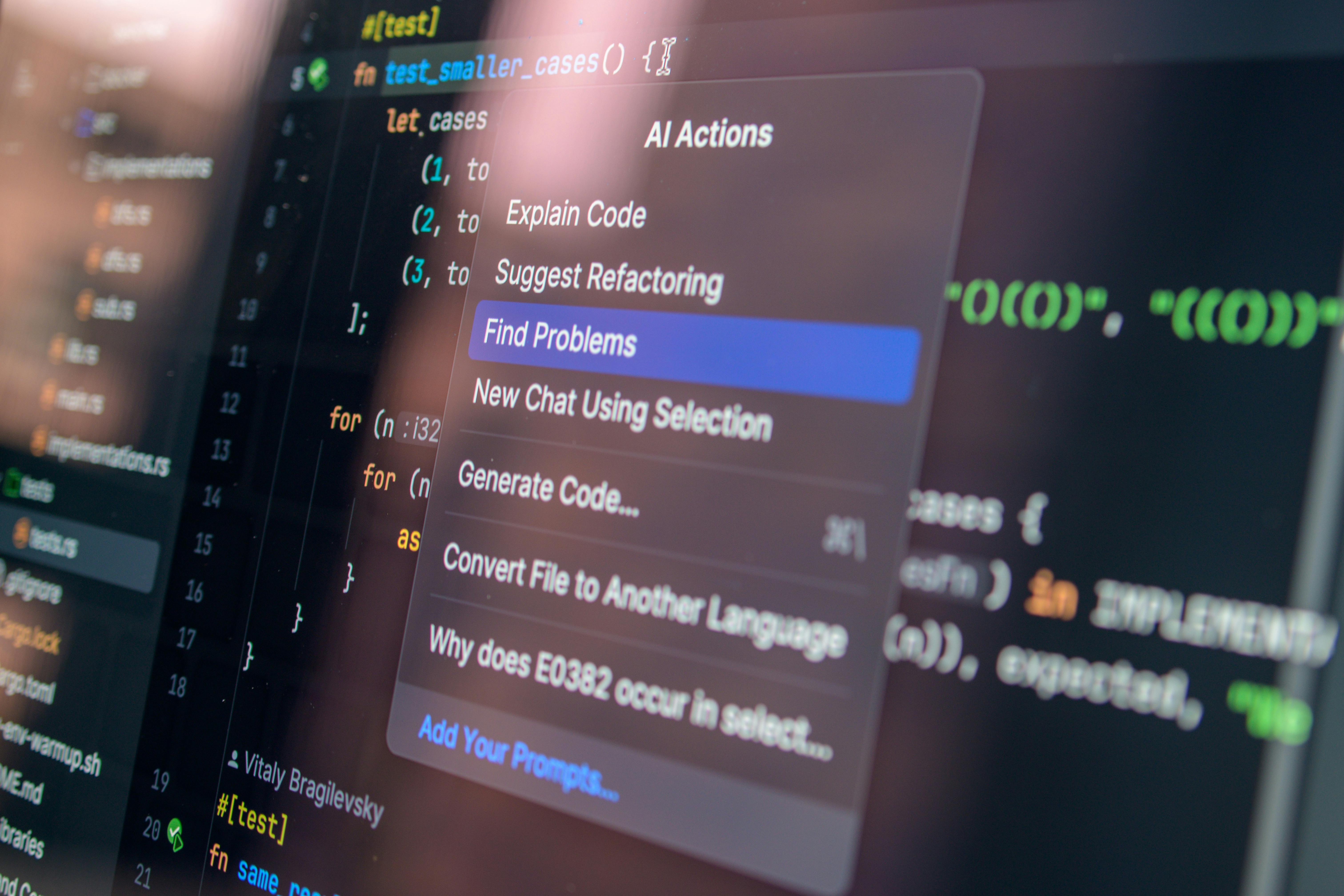
For supporters of Anthropic’s position, the strongest point is that the company is not merely saying “AI could be dangerous someday.” It is pointing to a narrowing gap between human-led development and AI-assisted development. Anthropic says it routinely tests Claude on code that trains small AI models and asks it to optimize that code while preserving correctness. That is a very different conversation from the older public debate over chatbots making factual mistakes or generating odd responses. The concern now is whether frontier systems are becoming capable enough to materially accelerate their own improvement cycle.
That shift helps explain why some safety advocates believe a coordinated pause is no longer an extreme idea. If the core risk is that model capability could advance faster than alignment research, security standards, legal institutions, and international monitoring, then a temporary slowdown starts to look less like panic and more like ordinary risk management. Anthropic itself says such a pause would buy time for “societal structures and alignment research” to catch up. The analogy some observers reach for is nuclear arms control, though Anthropic and outside analysts alike have noted that AI may be harder to verify because software can be copied, hidden, and trained across distributed infrastructure.
The company’s warnings also fit a broader pattern of increasingly stark statements from its leadership. Dario Amodei has repeatedly argued that advanced AI could bring extraordinary benefits while also creating extraordinary concentrations of power and risk. In recent commentary highlighted across major outlets, he has warned that humanity may soon possess tools of almost unimaginable capability without clear proof that institutions are mature enough to govern them. Coming from the head of a company actively building those tools, that language lands differently than a generic tech cautionary tale.
There is also a practical industry backdrop that makes the safety argument harder to dismiss. Frontier models are no longer side projects in research labs; they are becoming embedded in software engineering, national security discussions, enterprise workflows, and cloud infrastructure at enormous scale. Anthropic’s own report suggests that AI-assisted coding has already dramatically raised developer throughput internally. If that pattern is replicated across the industry, then capability advances may compound faster than many policymakers expected even a year ago. A pause proposal, under that reading, is an attempt to invent governance before the acceleration becomes too steep to steer.
Still, even supporters acknowledge a sobering reality: the more plausible the technical case becomes, the more difficult the politics become. A safety mechanism only works if rivals trust it, governments back it, and enforcement is credible across borders. That is why Anthropic’s proposal has been heard not just as a warning, but as a challenge to the entire current model of AI competition.
Critics see impracticality, self-interest, and a power play by big labs

The backlash was predictable and, in some circles, immediate. Critics argue that a “global pause” sounds responsible but collapses under scrutiny. The most common objection is geopolitical: if U.S. companies slow down, what guarantees exist that competitors abroad would do the same? Anthropic itself appears aware of that problem and has stressed the need for verification so that a bad actor could not exploit a coordinated slowdown by racing ahead in secret. But raising the verification problem is not the same as solving it, and skeptics say the industry is still far from a workable answer.
Another criticism is more political than technical. When one of the richest, best-capitalized frontier labs argues for a slowdown, smaller players often hear something else: an incumbent trying to lock in its lead. Anthropic is hardly a fragile outsider. By 2026, it had become one of the most highly valued AI companies in the world, and reports this year have described astonishing levels of investor enthusiasm around frontier model builders. In that context, calls for stricter rules can look like classic regulatory jiu-jitsu, where the biggest firms support standards that they can afford to meet but leaner competitors cannot.
That skepticism is intensified by the contradictions built into Anthropic’s own position. The company is warning that frontier AI may need to be slowed even as it continues to build, sell, and expand frontier AI systems. It is also operating amid intense commercial demand for coding tools, enterprise assistants, and infrastructure partnerships. To detractors, that makes the pause language sound selective: caution in principle, acceleration in practice. Some industry voices have argued that if the danger is truly urgent, leading labs should voluntarily slow themselves now instead of asking for a hypothetical global mechanism later.
There is also a substantive disagreement over governance philosophy. OpenAI, according to coverage of the same debate, has emphasized that democratic governments rather than private companies acting alone should determine rules, safeguards, and accountability. That position does not reject safety concerns, but it resists the idea that labs themselves should define when the world hits the brakes. Critics of Anthropic’s approach worry that allowing private firms to trigger, shape, or heavily influence a pause regime would hand extraordinary power to unelected corporate actors.
This is why the debate has become so combustible. It is not just about whether AI is risky. It is about who gets to say when progress becomes too risky, who benefits economically from restraint, who enforces it internationally, and whether the very companies creating the problem can be trusted to design the solution. Anthropic has pushed the conversation forward, but it has also exposed how little consensus exists beneath the industry’s public talk of responsibility.
Governments and regulators are hearing a much harder question now

For policymakers, Anthropic’s proposal converts a familiar issue into a more uncomfortable one. Until recently, many governments were asking how to regulate AI products after they are released. Anthropic is effectively asking whether states need the capacity to intervene earlier, at the stage of training, scaling, and frontier development itself. That is a much more intrusive form of oversight, and one that would require technical expertise, legal authority, and international coordination that most governments do not yet possess.
The challenge begins with definition. What exactly counts as “frontier AI”? Anthropic’s own Responsible Scaling Policy approaches this through capability thresholds and required safeguards, distinguishing between systems that can automate more research work and those that could dramatically accelerate effective scaling. That is useful internally, but turning such thresholds into law would be difficult. Regulators would need standards that are clear enough to enforce, flexible enough to update, and robust enough to survive lobbying from firms with billions at stake.
Then there is the problem of measurement. Unlike conventional consumer products, AI risk is not visible from the outside. Governments would likely need access to compute records, security audits, model evaluations, incident reports, and perhaps even on-site inspections of data centers or training clusters. That would be politically contentious in any country and extraordinarily sensitive when national security agencies and strategic industries are involved. The appeal of a pause is that it sounds simple. The reality is that the bureaucracy needed to support a credible pause could be immense.
International politics makes the picture even harder. A pause that works only among a handful of Western firms might reduce safety while increasing strategic mistrust if rival states conclude they are being constrained or monitored asymmetrically. On the other hand, a purely national approach may fail if leading model development is distributed across cloud providers, chipmakers, and multinational partnerships. Anthropic’s comparison to arms control is telling because arms control is not simply about restraint; it is about verification, diplomacy, inspections, signaling, and enforcement. AI has few mature equivalents of those institutions.
Yet governments may not be able to dodge the issue much longer. If AI systems increasingly write code, conduct research, and help build successor systems, then “wait and see” becomes a thinner strategy each quarter. Anthropic’s proposal, whether embraced or rejected, is pressuring regulators to answer a question they have mostly postponed: not just how to govern AI, but how to govern the speed of AI progress itself. That is a far more consequential decision than most current AI legislation has contemplated.
What this debate really reveals about the future of the AI race

The argument over Anthropic’s proposal is ultimately larger than one company or one policy paper. It reveals a tech industry caught between two beliefs it can no longer easily hold at the same time. The first is that faster progress is inherently good because the benefits of advanced AI in medicine, science, education, and productivity could be enormous. The second is that progress may be moving so fast that human institutions are not prepared to control its consequences. For years, companies could gesture toward both positions without choosing. That luxury is fading.
Anthropic’s call matters because it is one of the clearest admissions yet from inside the frontier race that voluntary guardrails may not be enough. If a company building cutting-edge systems is publicly discussing mechanisms for a verifiable slowdown, then the internal risk calculus inside leading labs is probably becoming more serious, not less. Even critics who reject the pause idea should recognize what that signals. The conversation is no longer about whether AI will be transformative. It is about whether transformation is becoming too compressed in time for existing institutions to absorb safely.
The debate also shows how fragmented the tech world’s response remains. Some researchers hear Anthropic and think overdue realism. Some entrepreneurs hear it and think incumbent self-protection. Some policymakers hear it and think impossible enforcement. Others hear an early warning that may look obvious in hindsight. Those reactions can all coexist because the facts point in two directions at once: AI is delivering genuine utility today, and the path to more autonomous, more self-improving systems appears increasingly plausible.
That tension is likely to define the next phase of AI politics. The important question may not be whether there will be a literal global pause tomorrow. It may be whether the industry, governments, and the public can build credible thresholds for slowing development before a crisis forces the issue under worse conditions. Anthropic has not settled that argument. It has, however, made it impossible to pretend the argument can be postponed indefinitely.
In that sense, the fiercest dispute is not over one company’s warning. It is over whether the modern tech industry still believes every race should be won as quickly as possible, even when no one is fully certain what waits at the finish line.