

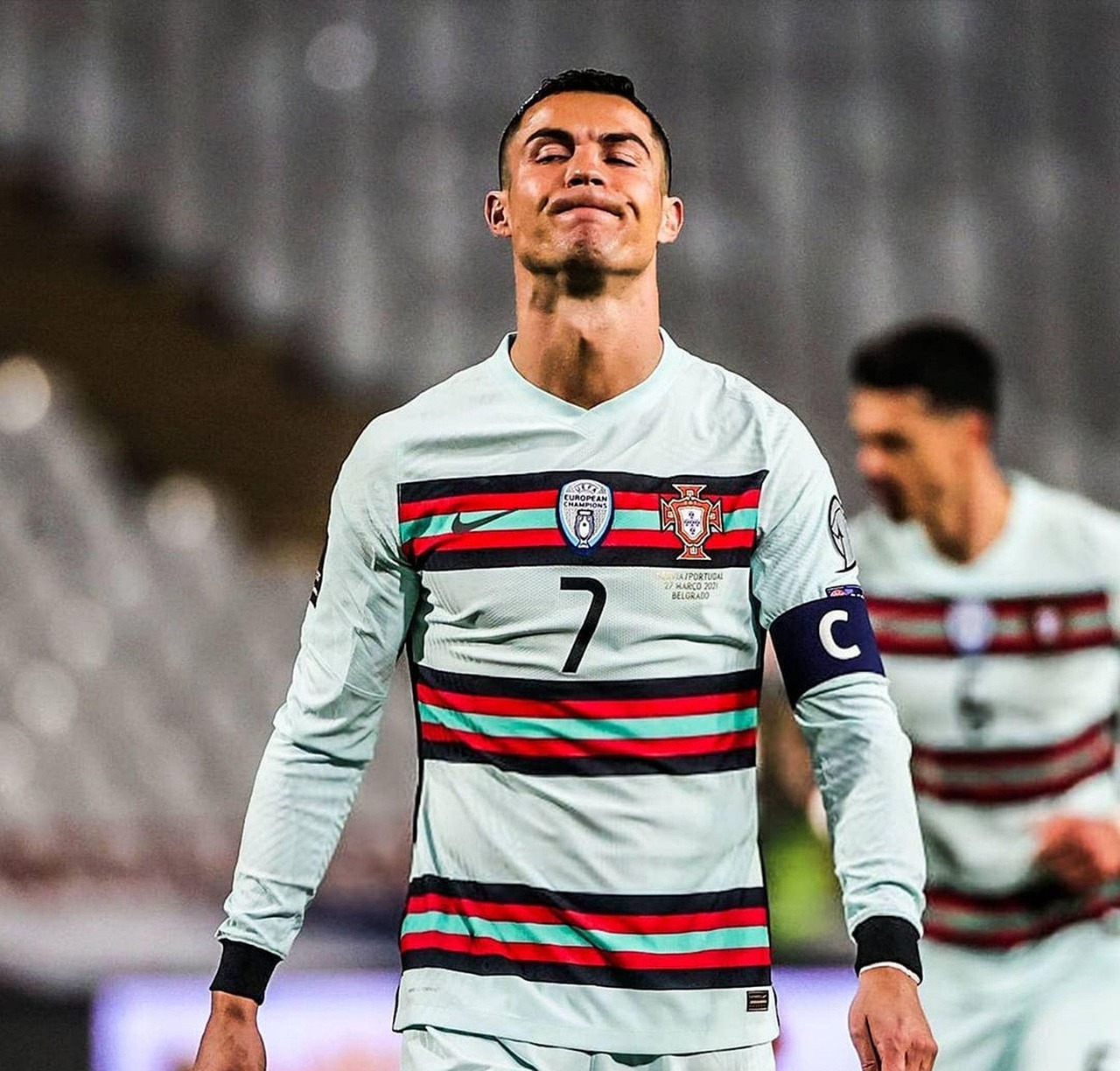
He is still here, still scoring, still refusing the tidy ending people keep trying to write for him.
And as Cristiano Ronaldo approaches the 2026 World Cup at 41, the debate around him has become almost as compelling as the football itself.
The astonishing fact at the center of the argument
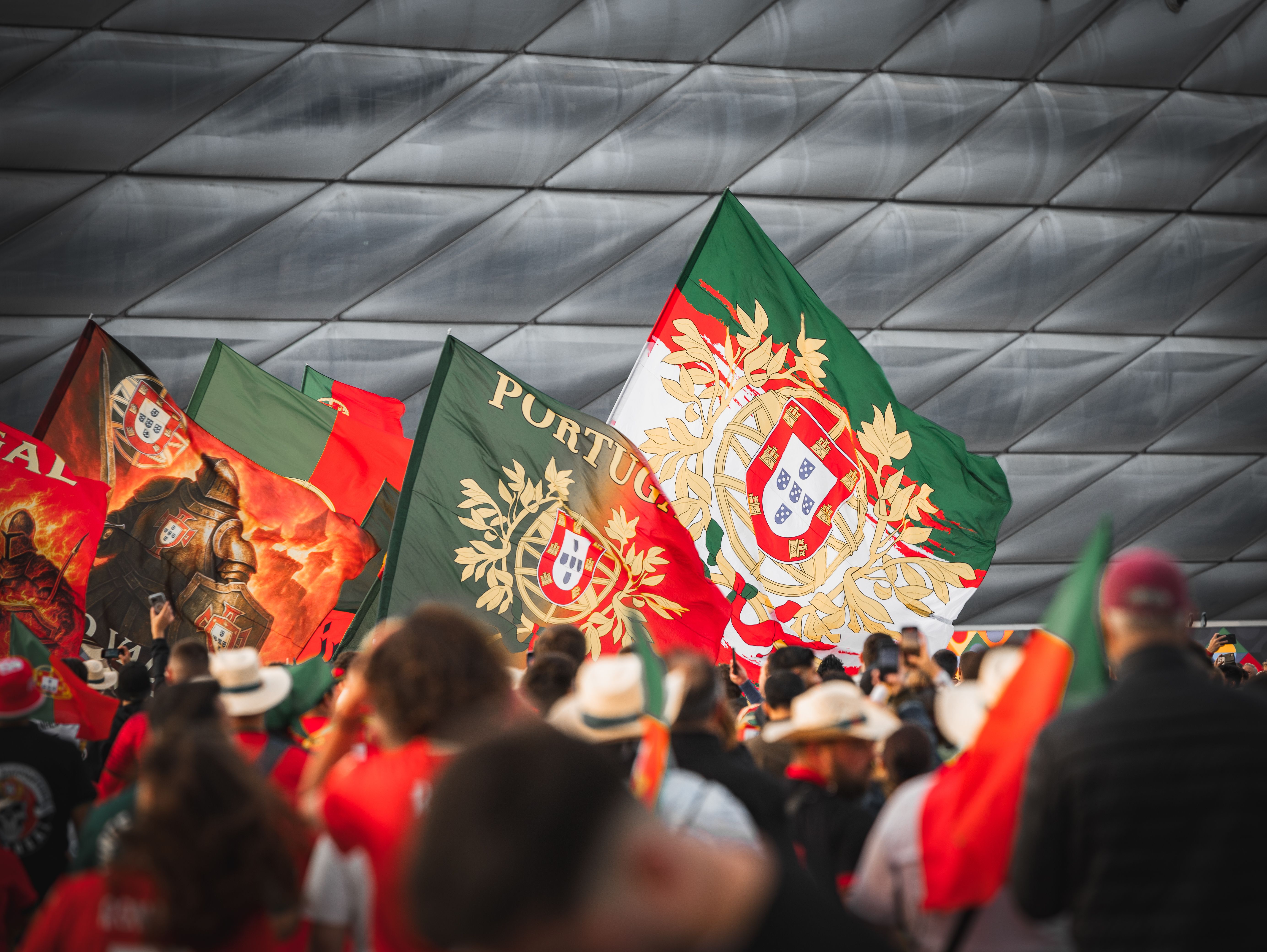
The headline alone explains why emotions run so high: Ronaldo, born on February 5, 1985, is 41 years old in 2026 and set to appear at a sixth World Cup if he takes the field for Portugal in North America. That would extend a tournament run that began in Germany in 2006 and continued through 2010, 2014, 2018, and 2022. FIFA and UEFA both frame his 2026 campaign as a continuation of one of the longest international careers the modern men’s game has ever seen, and Portugal’s qualification has made the possibility real rather than sentimental fantasy.
The numbers are not decorative. UEFA lists Ronaldo as the most-capped men’s international player in history, with 226 appearances for Portugal, and as the all-time leading scorer in men’s international football with 143 goals. Those figures matter because they move the discussion beyond branding and celebrity. Whatever one thinks of his style, influence, or place in the current Portugal side, he is not hanging around on nostalgia alone; he has built statistical territory no other men’s player has reached.
That is why the conversation splits so sharply. For one camp, a sixth World Cup is the logical extension of an unmatched career built on durability, discipline, and elite production over more than two decades. For the other, the same fact feels like proof that football has become too attached to icons, too willing to confuse visibility with necessity. A great career, critics argue, does not automatically justify one more major tournament.
The tension is heightened by the timing. Ronaldo is no longer the player who terrorized defenders with repeated 40-yard bursts or shaped every attacking sequence with sheer athletic force. But age in sport is rarely judged fairly. Once an athlete passes 35, every appearance is treated either as a miracle or an embarrassment. There is very little room for a calmer truth: that an older player can still be useful, still decisive, and yet still provoke entirely valid questions about selection, tactics, and succession.
Why supporters still believe he has earned the stage

The simplest argument in Ronaldo’s favor is also the strongest: he keeps giving managers reasons to pick him. FIFA noted in early 2026 that he remained productive for both club and country, while UEFA’s recent records show he was still adding goals well into late 2025. Even as his game has narrowed, it has not disappeared. He is no longer asked to be the entire attack, but he remains a penalty-box finisher, an aerial threat, and a forward with instincts few younger players possess at the same level.
Portugal’s recent results have only strengthened that case. UEFA’s coverage of the 2025 Nations League final highlighted Ronaldo’s equalizing goal against Spain in a match Portugal eventually won on penalties. That was not a ceremonial cameo. It was another example of his continued ability to shape elite matches in short, sharp moments, especially when the game compresses into set pieces, crosses, second balls, and late-box chaos. For supporters, this is the essential point: tournament football is often decided by specialists, and Ronaldo remains one.
There is also a psychological case that numbers alone do not capture. Teammates do not have to treat him as the old untouchable for his presence to matter. A squad entering a World Cup benefits from players who have seen everything: group-stage nerves, knockout tension, refereeing swings, extra time, penalty shootouts, and the strange emotional weather of global tournaments. Ronaldo has lived all of it. Even if Portugal’s younger core carries the running, his experience can still act as structure in moments when tournaments become frantic or shapeless.
And then there is the broader cultural pull. Fans are not irrational for wanting to witness the end of a historic career on the biggest stage. Sport is not only about ideal lineups constructed on a tactics board; it is also about memory, ritual, and the rare feeling of seeing an era before it vanishes. A sixth World Cup would not just be another appearance. It would be a living link across generations, from the winger with frosted tips in 2006 to the veteran finisher of 2026, still forcing the world to look at him one more time.
Why the calls for retirement are not unreasonable
Still, the anti-Ronaldo argument is not just bitterness dressed up as analysis. It begins with a legitimate football question: does building around a 41-year-old striker limit Portugal more than it helps them? Modern international football is increasingly defined by pressing, rotational movement, and collective speed without the ball. Even the greatest forwards eventually become selective movers. A team can compensate for that, but compensation has a cost. Every tactical accommodation given to one star changes the burden on everyone else.
Portugal’s squad makes that question more urgent because the country now produces attacking talent in waves. This is not a thin generation clinging to an old hero. It is a deep one, with technical midfielders, quick wide players, and defenders more comfortable carrying and passing than many predecessors. In that context, critics worry that Ronaldo’s gravitational pull can distort the team. The issue is not whether he can score. The issue is whether Portugal become too eager to serve him, crossing too early, forcing too much, or slowing attacks that might be more unpredictable without a fixed focal point.
There is also the optics problem, which modern sport can never fully escape. Great athletes often outlast public consensus, and once that happens every missed chance feels symbolic. A younger striker can have a quiet match and be judged as merely off form. An older legend has a quiet match and people call it decline, denial, or vanity. Fair or not, Ronaldo now plays under a harsher interpretive spotlight. The argument about retirement is partly strategic, but it is also aesthetic: some people simply do not want to watch greatness fade in real time.
Recent tournament memory adds fuel. Ronaldo’s 2022 World Cup ended with Portugal eliminated by Morocco in the quarter-finals, a painful image sealed by his tears leaving the field. For many observers, that looked like a natural endpoint. Continuing beyond that can seem, to skeptics, like reopening a chapter that already delivered its emotional conclusion. They see a player still chasing the one major title absent from his résumé, but also risking the harshest possibility in elite sport: staying long enough for the myth to shrink into debate.
What this says about modern sport, celebrity, and legacy

The Ronaldo argument is really about more than Ronaldo. It exposes how modern audiences consume aging superstars in an era when every match is clipped, compared, and judged instantly. We say we admire longevity, but we often admire it only if it remains glamorous. The moment decline becomes visible, the tone changes. Fans become archivists of old brilliance, measuring each new performance against a version of the player that no longer exists. That gap between memory and reality is where the retirement debate lives.
Football has seen versions of this before, though few at Ronaldo’s scale. Late-career icons become symbols onto which people project competing beliefs about excellence. Some viewers see discipline, hunger, and refusal to surrender standards. Others see ego, brand management, and an inability to accept athletic mortality. Both readings can contain truth. The modern superstar is not just an athlete but also a public narrative machine, and every selection, celebration, or substitution feeds a broader cultural argument about status and relevance.
Ronaldo intensifies that dynamic because he has always represented more than pure football craft. He is one of the defining athletes of the 21st century, a figure built from numbers, aesthetics, commercial force, rivalry, and relentless self-authorship. His career has conditioned the public to think in extremes: historic or finished, heroic or indulgent, indispensable or obsolete. There is very little middle ground in the way people discuss him. That is one reason the sixth-World-Cup debate feels so loud. It is not merely about a striker’s place in a squad; it is about how we process fame that refuses to dim quietly.
Legacy, then, is not fixed by a final tournament. If Portugal win in 2026, the late chapter becomes glorious confirmation of endurance. If they fall short and Ronaldo struggles, critics will use it as evidence that he overstayed. But his central legacy is already secure. UEFA, FIFA, and the competitive record agree on that much. The open question is not whether he belongs among the greatest. It is whether greatness itself should know when to leave before the world asks it to.
The fairest way to watch him now

Perhaps the most sensible response is to reject the false choice in the headline. We do not have to either cheer blindly or demand retirement as if those are the only serious positions available. It is possible to recognize Ronaldo as one of football’s defining figures and still judge his 2026 role with sobriety. He should not be selected out of sentiment, and he also should not be dismissed simply because aging offends our idea of how legends are supposed to look.
The right standard is performance within context. If he helps Portugal, scores goals, occupies defenders, converts high-pressure chances, and accepts a role proportionate to what he can still offer, then his presence is defensible. If he slows the team, distorts tactical choices, or crowds out better options, criticism is not disrespectful; it is normal football analysis. That is the mature way to see this stage of his career. Not as a morality play, but as an elite sporting question attached to an unusually famous man.
There is also something worthwhile in allowing sport to be emotionally contradictory. Fans can admire the discipline required to remain relevant at 41 and still feel uneasy watching a body negotiate time. They can want one final iconic moment without pretending the old total dominance is still there. They can celebrate the history while understanding that history does not pick the best starting XI. Contradiction is not confusion. It is often the most honest response to an athlete who has occupied so much of the game for so long.
So when Ronaldo walks into another World Cup, the world will argue again. Some will see an immortal competitor extending the limits of the possible. Others will see a legend lingering past the ideal exit. Both reactions are understandable. But the clearest view may be this: football is rarely graceful about endings, and perhaps that is because true sporting greatness almost never leaves neatly, quietly, or on time.