

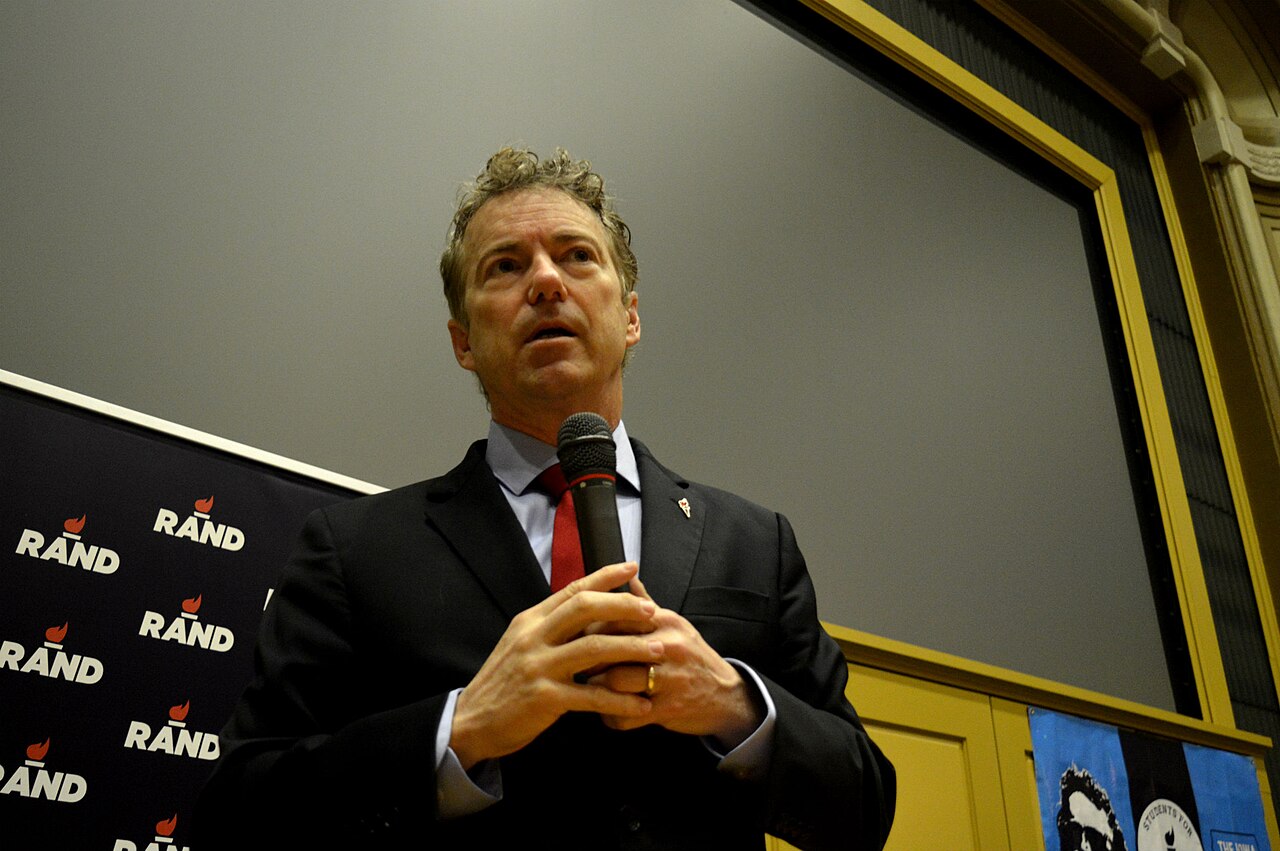
Presidential clemency powers are broad under the Constitution, but a fresh dispute in Washington is testing how those powers are documented and carried out. That fight now centers on Dr. Anthony Fauci’s pardon and whether former President Joe Biden personally authorized it before White House staff used an autopen. The new challenge comes from Sen. Rand Paul of Kentucky, who is asking the Justice Department to revisit both Fauci’s 2021 Senate testimony and the legal validity of the pardon itself.
Rand Paul asks DOJ to review Fauci pardon and prior referral
Paul, who chairs the Senate Homeland Security and Governmental Affairs Committee, announced July 14 that he had renewed his criminal referral of Fauci to the Department of Justice, according to a committee news release and the letter his office published the same day. In that letter, Paul said Fauci received a “full and unconditional pardon” on January 19, 2025 for offenses dating to 2014 and argued that newly reported details about the use of an autopen raise questions about whether the clemency action was properly authorized.
The senator’s office said the renewed referral asks DOJ to examine whether Fauci’s May 11, 2021 testimony to Congress violated federal false-statement law. Paul has argued since 2023 that Fauci’s Senate testimony about National Institutes of Health funding and gain-of-function research in Wuhan was contradicted by later disclosures and internal emails, a position he repeated in his latest announcement.
Justice Department records show Fauci was among the Biden clemency recipients listed for January 19, 2025, with the pardon covering federal offenses he may have committed or taken part in from January 1, 2014 through the date of the pardon, arising from his government service. Paul’s new letter says the key unresolved issue is not the existence of the pardon record, but whether Biden personally reviewed or approved that specific clemency grant before it was executed.
The immediate action is taking place in Washington, D.C., where Paul is pressing DOJ and the FBI to review the matter, but the dispute reaches beyond one senator’s referral. Fauci served as director of the National Institute of Allergy and Infectious Diseases and later as chief medical adviser to the president, making the pardon fight a national political and legal question rather than one confined to a single state.
What is confirmed is that Biden issued a series of preemptive pardons on January 19, 2025, including one for Fauci, according to Justice Department clemency listings and later fact-checking reviews. What is not publicly known is whether investigators have obtained documentation showing Biden personally authorized Fauci’s grant before an autopen was used, the central point Paul says should now be examined.
Another Republican senator, Roger Marshall of Kansas, said this week that a special counsel should review Fauci’s role in COVID-era decisions and also determine whether Biden personally authorized the autopen-signed pardon. That adds to a widening Senate effort, but neither Paul nor Marshall has produced public documentary evidence showing the Fauci pardon was invalid, only that they believe the process deserves further legal scrutiny.
The broader legal context cuts against the argument that a pardon automatically fails because it was not signed by hand. PolitiFact and FactCheck.org reported in March 2025 that legal experts said the Constitution does not require a handwritten presidential signature for pardons, citing a 1929 Justice Department memorandum and a 2005 Office of Legal Counsel opinion concluding a president may direct a subordinate to affix the president’s signature.
Those reports also noted there is no established constitutional mechanism for a later president or another official to simply revoke a completed pardon. Historical examples cited in those reviews include 19th-century clemency documents signed in the president’s name by other officials, and legal scholars told those outlets that the decisive issue is presidential authorization, not whether ink came directly from the president’s hand.
That distinction is why this latest fight matters. If DOJ reviews the matter, the central question is likely to be whether Biden authorized the clemency action, not merely whether an autopen was used. For now, Fauci’s pardon remains listed in Justice Department records, and no court has ruled that it was invalid.