

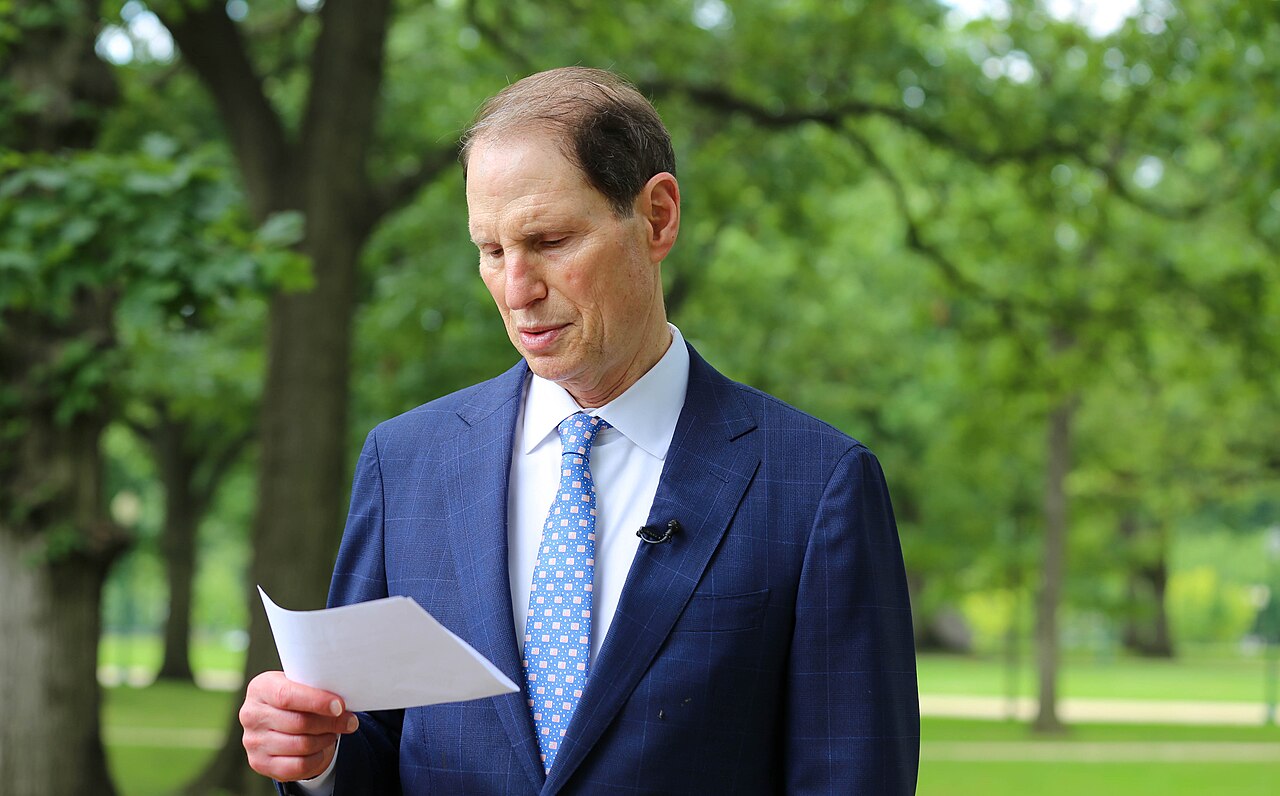
As scrutiny of political activity by Cabinet officials continues to draw attention in Washington, a new complaint is focusing on whether a senior Trump administration official crossed a legal line during House races in Iowa. On July 14, Sen. Ron Wyden of Oregon asked the U.S. Office of Special Counsel to investigate Health and Human Services Secretary Robert F. Kennedy Jr. over calls he made to two Libertarian congressional candidates. The complaint centers on whether Kennedy used his official position to influence active federal elections in a state where closely watched races could affect control of the U.S. House.
Wyden asks federal watchdog to review Kennedy’s calls
Wyden, the top Democrat on the Senate Finance Committee, said Monday, July 14, that he had filed a complaint asking the Office of Special Counsel to immediately investigate whether Kennedy violated the Hatch Act, according to Wyden’s office and reporting by the Associated Press. The Hatch Act is a 1939 federal law that limits certain political activity by executive branch employees, including conduct tied to official authority.
The complaint points to two June phone calls involving Iowa Libertarian candidates. In one, Kennedy told Marco Battaglia, a Libertarian running in Iowa’s 3rd Congressional District, “If this seat flips, it’ll make my life hell,” according to Wyden’s letter and accounts cited by The Washington Post and the AP. Wyden said the statement suggested Kennedy was trying to prevent a Democratic gain in a competitive House race.
Wyden’s filing also cites a June 11 call with Rick Stewart, a Libertarian candidate in Iowa’s 2nd District. According to Wyden’s letter, Kennedy suggested Stewart could pursue another role in the federal government outside elected office and said he would help. Wyden wrote that Kennedy called Stewart in his official capacity as a Cabinet secretary and asked him to suspend his campaign to make it easier for Republicans to hold the House.
The complaint is centered entirely on Iowa, where both districts named by Wyden are part of the state’s 2026 House map. Battaglia is running in the 3rd District, where Republican Rep. Zach Nunn is seeking reelection against Democrat Sarah Trone Garriott in a race that has drawn national attention. Earlier polling cited in coverage of the dispute showed a competitive contest, with support also available to third-party candidates.
The second call involved Iowa’s 2nd District, now open because Rep. Ashley Hinson is running for the U.S. Senate seat being vacated by Sen. Joni Ernst. That district’s race has also become more closely watched. The Cook Political Report shifted its rating from likely Republican to lean Republican last month, a sign that national handicappers see a narrower margin than is typical in the district.
What is confirmed so far is Wyden’s request for an investigation and the existence of public reporting about the calls. What is not yet known is whether the Office of Special Counsel will formally open a Hatch Act investigation, whether Kennedy will respond in detail, or whether any enforcement action will follow. The Department of Health and Human Services had not publicly released a full response to Wyden’s letter as of Tuesday’s reporting.
The central question is not whether Kennedy expressed a political preference, but whether he used official authority attached to his Cabinet post to influence an election. The Office of Special Counsel says it enforces the Hatch Act to prevent the political abuse of government power by federal employees. That framework is why Wyden’s letter emphasizes Kennedy’s role as health secretary and the allegation that he linked electoral outcomes to his own dealings with a future Democratic-controlled House.
Outside legal observers cited in national coverage said Hatch Act cases often depend on context, including whether an official was acting in an official capacity, using government resources or invoking the power of office. Reporting by The Washington Post noted that the law does not bar all political speech by federal officials, but it does restrict partisan activity tied to official duties.
For Iowa voters and residents, the immediate effect is political rather than administrative. The candidates remain in their races unless they choose otherwise, and no federal agency has announced penalties or findings against Kennedy. The next factual milestone is whether the Office of Special Counsel confirms a review, a decision that would determine whether the matter remains a political accusation or becomes a formal federal investigation.