

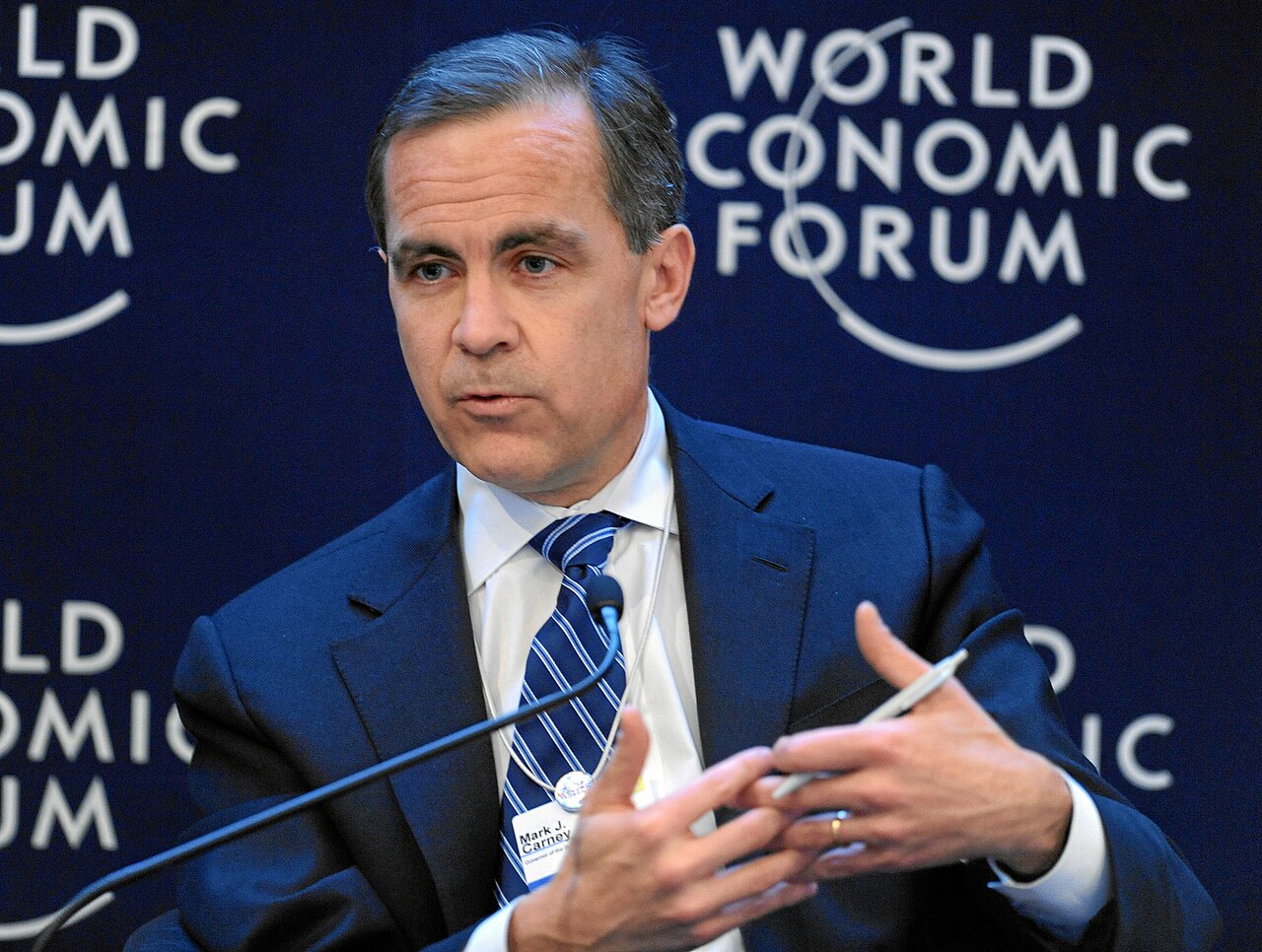
North American trade tensions intensified this month as Washington and Ottawa moved closer to a deeper tariff fight despite years of economic integration under the U.S.-Mexico-Canada Agreement. The immediate flashpoint is Canada, where Prime Minister Mark Carney said on August 22 that his government walked away from the latest U.S. proposal rather than accept terms it viewed as too costly for Canadian industry. The breakdown matters well beyond Ottawa because economists and trade groups have warned that prolonged disruption could put roughly 90,000 Canadian jobs at risk across manufacturing-heavy sectors.
Carney says Canada walked away as new U.S. tariffs took effect
Prime Minister Mark Carney said in Ottawa on August 22 that he had instructed Canadian negotiators to return home, telling the public his government was “walking away from a bad deal” after talks with the Trump administration failed to produce what Canada considered acceptable terms. In remarks released by the Prime Minister’s Office, Carney said Canada would not accept what Washington had offered and would not give what the United States had asked.
Reuters and the Associated Press both reported that the failed talks were followed by new 50% U.S. tariffs taking effect on a range of Canadian goods, deepening a dispute that had already strained one of the world’s largest bilateral trading relationships. Reuters reported that the two countries did not reach a deal late Friday, while AP said the collapse came after Carney concluded the U.S. was demanding too much in exchange for tariff relief.
The employment risk attached to a prolonged rupture is significant, even if estimates vary by scenario. A report prepared by Oxford Economics for the Canadian American Business Council, cited by The Canadian Press on August 11, found Canada could lose 102,000 jobs if CUSMA were to collapse entirely. Separate Canadian political and business discussion around the latest tariff round has centered on a lower estimate of roughly 90,000 jobs at risk if the new barriers remain in place.
The most immediate impact is expected in provinces with large export exposure to the United States, especially Ontario and Quebec, where autos, metals, machinery, chemicals, wood products and paper are deeply tied to cross-border supply chains. The Oxford Economics report, as summarized by The Canadian Press, identified Ontario, Quebec, Manitoba and New Brunswick among the Canadian provinces most exposed if the current trade framework deteriorates further.
What remains unclear is exactly which employers or facilities would be hit first if tariffs persist. Neither the Canadian federal government nor U.S. officials have released a comprehensive plant-by-plant list of businesses facing immediate disruption from the latest measures. That leaves workers and local communities with confirmed sector-level warnings, but not a full public accounting of which factories, mills or exporters could see layoffs first.
For residents, the practical significance is that trade damage would likely be uneven, with border-linked manufacturing regions feeling it sooner than provinces less dependent on industrial exports. Carney has said Canada will respond with retaliatory measures beginning September 8, and he has framed that response as protection for workers, farmers, families and businesses. That means the dispute is no longer limited to negotiating rooms; it is moving into the operating decisions of manufacturers, distributors and retailers.
Carney has presented the breakdown as a matter of both economics and sovereignty. In his August 22 remarks, he said Canada had pursued a comprehensive agreement in good faith for more than a year but concluded that the final gap between partnership and what he described as a competitor posture from Washington had become too wide. He also said the United States had repeatedly changed the rationale for tariffs, citing disputes ranging from dairy policy to taxes on tech giants.
The U.S. account has been different. AP reported that U.S. Trade Representative Jamieson Greer rejected Canada’s version of events, saying Ottawa introduced new demands and backed away from commitments even after Washington offered tariff reductions on sectors including steel, autos and lumber. That split underscores why the negotiations collapsed: the two sides were not only far apart on terms, but also on the basic narrative of who moved last.
The broader context is that Canada sends nearly three-quarters of its exports to the United States, according to AP, making a fast reset difficult even as Ottawa pushes to diversify trade. For now, customers and residents should expect continued uncertainty in industries tied to cross-border manufacturing and raw materials. Carney has said Canada will focus on becoming less dependent on the U.S., while trade experts cited by Reuters have warned that vulnerable sectors could still face job losses and business closures if the tariff fight drags on.