

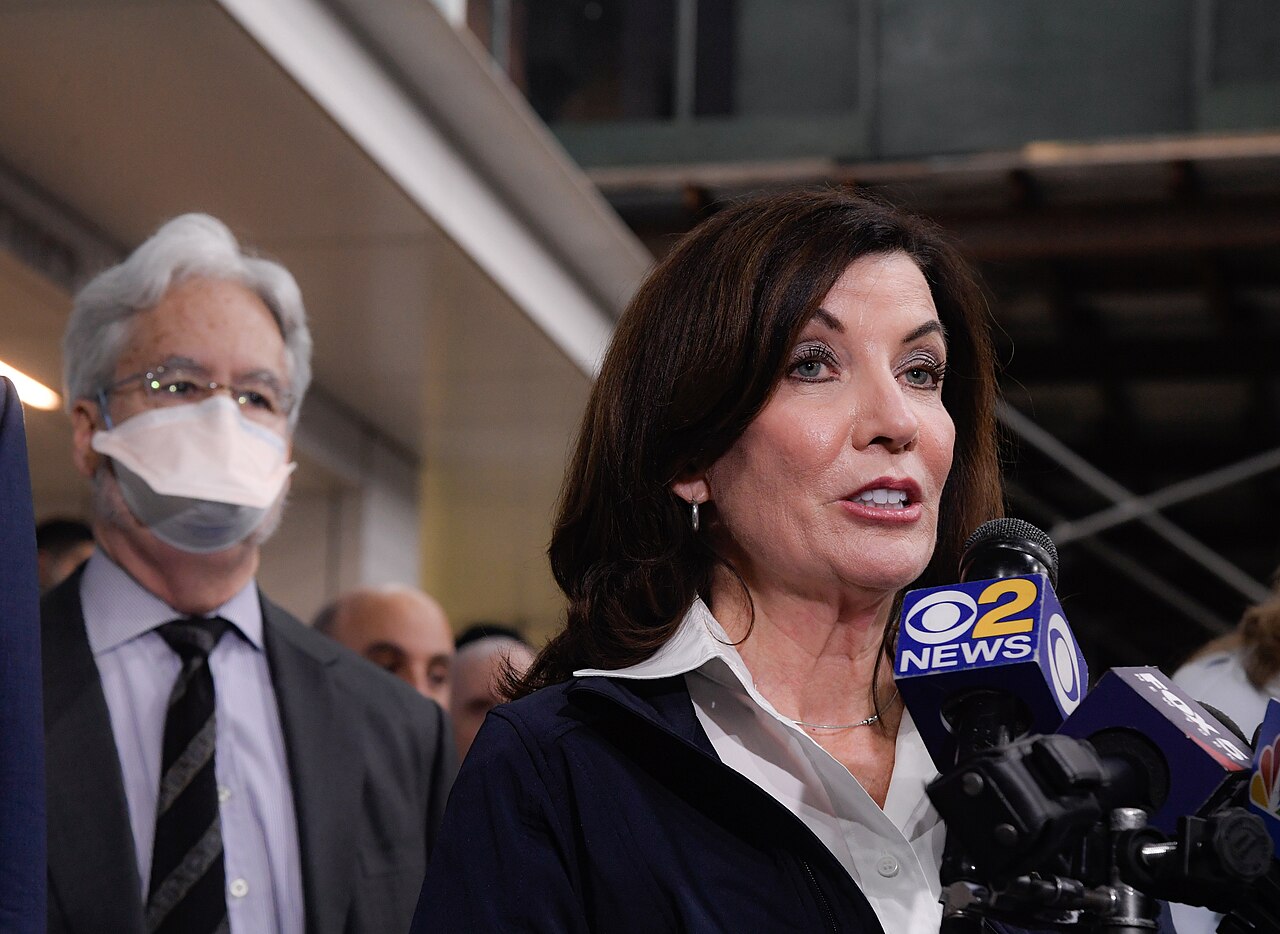
Nationally, immigration enforcement cases involving veterans and long-resolved convictions have drawn renewed scrutiny as courts and elected officials debate how old criminal records should affect removal decisions. That debate now runs through New York, where Gov. Kathy Hochul has pardoned Sae Joon Park, a legal permanent resident and Purple Heart recipient whose removal order stemmed from convictions more than 15 years old that he has said were tied to untreated post-traumatic stress disorder.
Hochul grants clemency to Sae Joon Park in August action
Gov. Kathy Hochul granted clemency to Park on August 28, 2026, erasing his New York convictions for bail jumping and drug possession, according to reporting by Georgia Public Broadcasting and Hochul’s office. Hochul’s office said Park was one of six people granted clemency in the latest action, and the governor said recipients had demonstrated rehabilitation and a commitment to improving their communities.
In the statement quoted by Georgia Public Broadcasting, Hochul said the clemency recipients “earned their second chance through rehabilitation and can now establish their futures once again.” That language has become central to Park’s case because his two convictions had already triggered a final removal order that forced him to leave the country in 2025.
Park came to the United States from South Korea at age 7 and later joined the U.S. Army at 19, according to Georgia Public Broadcasting. He was deployed during the 1989 U.S. invasion of Panama, was shot in the back, returned home, received an honorable discharge and was awarded a Purple Heart. In the years afterward, he said he struggled with undiagnosed PTSD, which led to addiction and the conduct behind the convictions.
The clemency action came from New York because the convictions on Park’s record were New York convictions, even though he had rebuilt his life in Hawaii before leaving the United States. The governor’s action clears those convictions at the state level, but immigration consequences are governed federally, and the pardon does not automatically cancel the removal order, according to Georgia Public Broadcasting.
What is confirmed is that Park has been outside the United States since June 2025, when immigration authorities told him to leave voluntarily or face detention and deportation, according to NPR reporting carried by Jefferson Public Radio and statements cited by his legal team. What is not yet known is how quickly federal immigration authorities or the Board of Immigration Appeals might act if his lawyers move to reopen the case.
Park’s situation has also become a New York political issue because Hochul used clemency power tied to state convictions while federal immigration enforcement remains outside Albany’s control. New York has not released any broader state tally showing how many noncitizen veterans with old convictions might be in similar circumstances, and federal agencies did not immediately provide a public update in the reports reviewed.
The immediate cause of Park’s legal jeopardy was a removal order based on the two convictions, which NPR reported were more than 15 years old when he was forced to leave in June 2025. According to Georgia Public Broadcasting, Park served three years in prison, got sober and then spent about a decade rebuilding his life in Hawaii before immigration authorities revived the consequences of those convictions.
The broader context is that immigration law can continue to attach severe penalties to old criminal cases long after a sentence has been completed. A 2025 congressional letter and hearing materials cited Park’s case as an example of a veteran facing removal after service-related trauma and nonviolent offenses, while advocates argued that untreated PTSD contributed to the underlying conduct.
For New York residents, the practical takeaway is limited but clear: Hochul’s pardon gives Park’s attorneys a new legal basis to ask immigration authorities to revisit his case, but it does not by itself bring him back to the United States. Georgia Public Broadcasting reported that his attorney plans to seek reopening before the Board of Immigration Appeals, meaning the next step now shifts from Albany’s clemency process to the federal immigration system.