

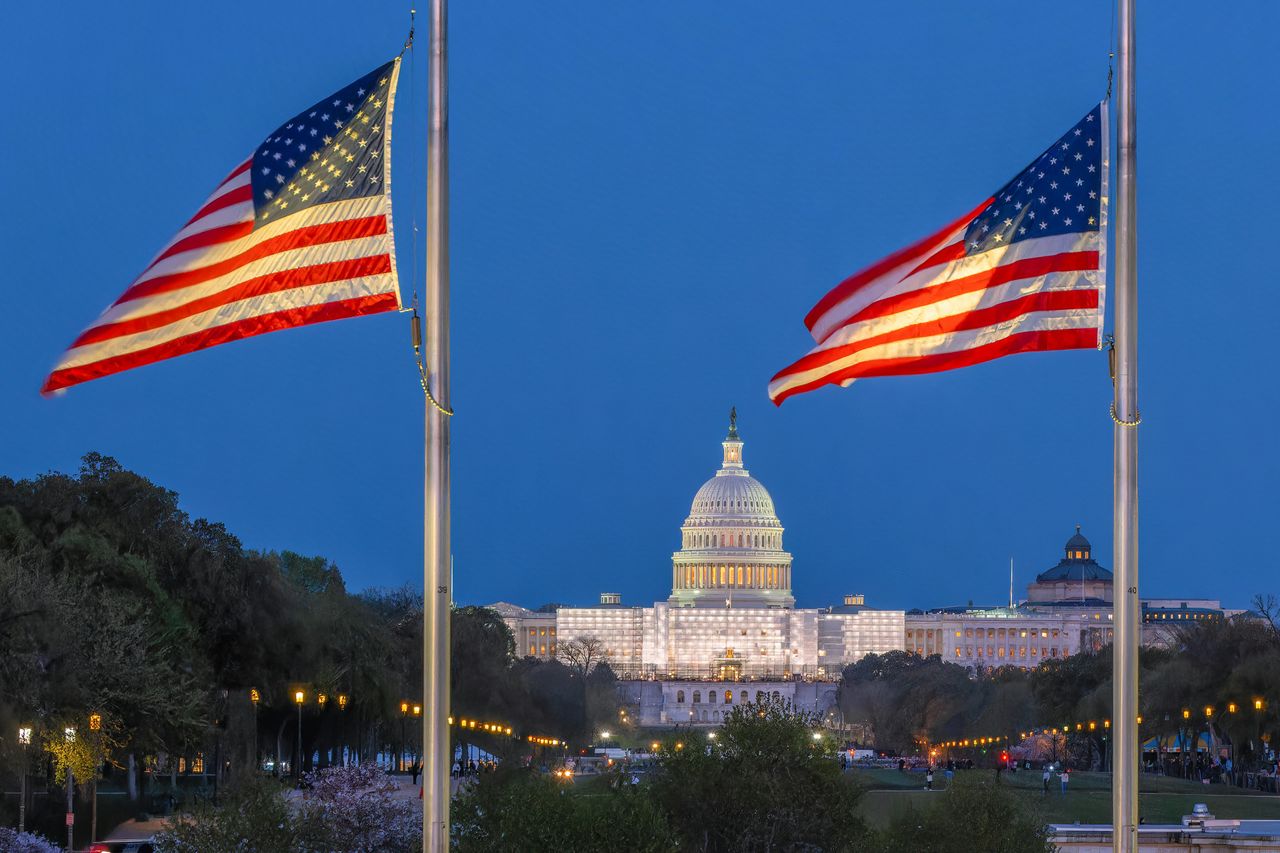
Confidence in America’s standing is no longer a given. A new poll suggests the old assumption of unquestioned national exceptionalism is giving way to something more complicated, and more unsettled.
What the Poll Found
The Associated Press-NORC Center for Public Affairs Research survey delivered a stark headline: only 25% of adults in the United States now say the country stands above every other nation in the world. That means just 1 in 4 Americans currently view the U.S. as unequivocally the greatest country on Earth. For a nation that has long defined itself through ideas of leadership, power, and exceptionalism, that is a remarkable finding.
The rest of the public is divided between more qualified forms of patriotism and outright comparative doubt. According to the poll, 44% say the United States is one of the greatest nations, but not uniquely above all others. Another 30% go further, saying there are countries they consider better than the U.S. That split matters because it shows most Americans are not rejecting the country altogether, but many are reevaluating its place in the world.
The timing gives the numbers additional weight. The survey arrives as the nation marks its 250th anniversary, a moment that would traditionally invite broad civic pride and glowing reflection. Instead, the poll captures an electorate that appears far more ambivalent. Americans still recognize the country’s strengths, but many no longer seem willing to describe those strengths as unmatched.
Methodologically, the survey was substantial. It was conducted from April 16-20, 2026, among 2,596 adults age 18 and older across all 50 states and Washington, D.C. Of those responses, 2,461 were collected online and 135 by phone. The poll’s overall margin of sampling error was +/-2.6 percentage points, lending credibility to the broader trend even if individual numbers may shift modestly within that range.
Why National Confidence Has Softened
A decline in belief that the U.S. is the greatest country rarely happens in isolation. Public sentiment tends to reflect lived experience, and many Americans have spent the last several years navigating high costs, political conflict, institutional mistrust, and a general sense that the country is not functioning as well as it should. When daily life feels strained, broad claims of national supremacy become harder to sustain.
Economic dissatisfaction appears to be a major part of the story. The same poll found that 70% disapproved of President Donald Trump’s handling of the economy, while only 30% approved. That number suggests economic anxiety is not a niche concern but a dominant force shaping public mood. Even if one separates views of the presidency from views of the country itself, people often judge national greatness through the lens of wages, prices, job security, and their own ability to get ahead.
That helps explain another striking finding: only 34% said the American dream still holds true, meaning that hard work can help someone move ahead in life. By contrast, 51% said the American dream was once real but no longer is, and 15% said it was never true at all. These numbers point to a broad erosion of faith in one of the country’s most central civic promises. If the pathway to upward mobility looks blocked, then belief in national greatness naturally weakens.
There is also a psychological dimension to this shift. Americans are exposed constantly to global comparisons on healthcare, education, infrastructure, public safety, and quality of life. In earlier eras, many citizens may have absorbed patriotic narratives with less day-to-day comparison to peer nations. Today, information flows quickly, and people can easily see where other countries appear to perform better on affordability, transit, family support, or social stability.
The American Dream Is at the Center of the Debate
The idea of the United States as the greatest nation has always been tied to more than military or economic power. It has also rested on a moral and social claim: that America is the place where ordinary people, through hard work and determination, can build a better life. The poll suggests that belief is weakening, and that may be even more consequential than the topline ranking of the country itself.
When only 34% of adults say the American dream remains true, it signals deep skepticism about mobility and fairness. Americans may still admire innovation, entrepreneurship, and the country’s democratic traditions, but those strengths are harder to celebrate when many households feel stuck. Rising housing costs, student debt, healthcare expenses, and uneven wage growth all feed the impression that opportunity is less accessible than it once was.
The 51% who say the dream used to be true but no longer is represent a particularly important middle group. These are not necessarily people who reject the American ideal. In many cases, they may still be emotionally invested in it. Their response suggests disappointment rather than cynicism, a belief that the nation has drifted away from one of its defining promises and could, at least in theory, find its way back.
The 15% who say the American dream was never true add another layer. That view speaks to longstanding criticisms that opportunity in the U.S. has always been unevenly distributed across race, geography, class, and family background. From that perspective, the current mood is not a sudden fall from grace but a clearer recognition of structural barriers that were always present, even when national rhetoric was more optimistic.
Together, these responses show that the debate is not really about whether Americans love their country less. It is about whether they believe the nation is delivering on its core bargain. Greatness, in this context, is not just about flags and symbols. It is about whether citizens believe the system is fair, open, and capable of rewarding effort.
Politics Is Deepening the Divide
The poll also underscores how sharply political identity shapes perceptions of the country. Views of the American dream varied dramatically by partisan alignment. According to the findings, 57% of Republicans and Republican-leaning respondents said the dream remains intact. Among Democrats and Democratic-leaning respondents, just 17% said the same. That is not a minor gap. It is a fundamental disagreement about whether the country still works.
Such differences help explain why conversations about patriotism now feel so loaded. For many Republicans, affirming American greatness may be tied to preserving traditional ideas of national identity, economic freedom, and resilience. For many Democrats, expressions of national pride may be more conditional, linked to whether the country is living up to ideals on equity, democracy, and material security. Both sides may claim to love the country, but they are evaluating very different evidence.
Trump’s standing in the poll adds another political layer. The survey found his approval rating at 33%, with 67% disapproving. Only 17% strongly approved and 16% somewhat approved, while 49% strongly disapproved and 17% somewhat disapproved. Those numbers suggest a deeply polarized public, but also one in which dissatisfaction currently outweighs support by a wide margin.
In practical terms, presidents often become symbols of national direction. When a president’s numbers are deeply underwater, that can color public sentiment about the country more broadly. People may not consciously say, “I dislike the administration, therefore America is not the greatest nation,” but the emotional logic is often related. Confidence in leadership and confidence in the nation tend to rise and fall together.
This partisan split also makes national consensus harder to rebuild. If one side sees continued greatness and the other sees profound decline or unrealized promise, then the same poll becomes evidence for competing narratives rather than a shared diagnosis. That fragmentation may be one of the most important findings of all.
What This Means for America at 250

As the United States reaches its 250th anniversary, the poll offers a revealing snapshot of a country in self-examination. The decline in unquestioned belief that America is the world’s greatest nation does not necessarily mean patriotism has disappeared. Instead, it may reflect a shift from reflexive confidence to conditional judgment. Americans increasingly seem to be asking not what the country says about itself, but what it is actually delivering.
That change could be healthy in one sense. Democracies benefit when citizens are willing to scrutinize institutions rather than simply celebrate them. A more demanding public may push leaders to focus on affordability, upward mobility, infrastructure, education, and trust in governance. If national pride has become more earned than assumed, that could create pressure for meaningful reform rather than symbolic reassurance.
At the same time, the numbers carry a warning. A nation that loses faith in its own promise can become more cynical, more polarized, and more vulnerable to political extremes. If people conclude the system no longer rewards work, protects fairness, or reflects their interests, they may withdraw from civic life or embrace more disruptive solutions. That is why the erosion of belief in the American dream may matter even more than the ranking question itself.
The poll does not prove that the United States is weaker than other countries in any objective sense. It does show, however, that many Americans no longer feel comfortable asserting automatic superiority. That is a major cultural shift. It suggests the story Americans tell about their country is changing from one of assumed exceptionalism to one of contested performance.
Ultimately, the message is less about decline than about accountability. Americans still appear to care deeply about what the country should be. The problem is that many no longer believe it is fully living up to its ideals. Whether that skepticism becomes renewal or deeper disillusionment will depend on what happens next in the economy, in politics, and in the everyday lives of the people the poll reflects.