

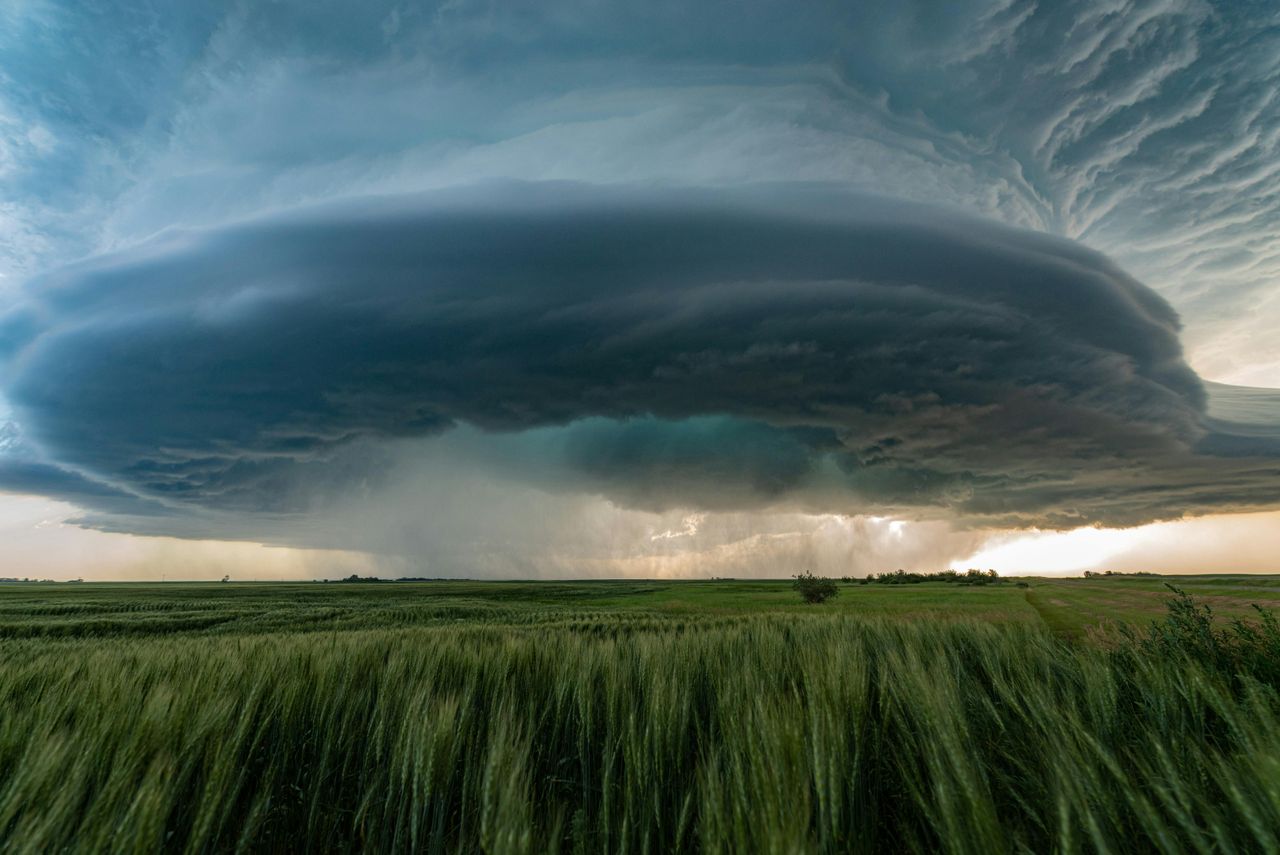
The atmosphere is loading the dice again across the nation’s midsection. For forecasters, the concern is not just one outbreak, but a pattern capable of producing repeated rounds of dangerous weather.
Why this setup has meteorologists on edge
The current threat across the Central Plains and Mississippi Valley is rooted in a familiar but potent collision of ingredients: warm, moisture-rich air surging north from the Gulf, a stalled or wavering frontal boundary, and upper-level disturbances moving out of the Rockies into the Plains. National Weather Service messaging on June 9, 2026, highlighted severe weather in the Central Plains alongside heavy rainfall concerns extending into parts of the Mississippi and Tennessee valleys, underscoring how broad the active zone has become. According to NOAA forecast discussions, storms in this pattern can quickly organize into clusters or lines capable of producing multiple hazards in a single evening.
What has forecasters especially concerned is the overlap between severe thunderstorm risk and flooding risk. The Weather Prediction Center has recently pointed to repeated thunderstorm development along quasi-stationary boundaries from the Plains into the Mississippi Valley, a pattern that supports not only large hail and severe wind gusts but also localized flash flooding where storms train over the same areas. In plain terms, communities may face damaging weather first and rising water immediately afterward, a combination that complicates emergency response and public decision-making.
This is the kind of setup that often looks manageable in broad national forecasts but becomes much more dangerous at the local level. A county on the cool side of a front may see mostly heavy rain, while a location just 50 miles away in hotter, more unstable air could face very large hail or a tornado warning. That sharp contrast is one reason forecasters often sound more urgent than the average viewer expects: the atmosphere does not distribute risk evenly, and small shifts in storm track or timing can produce very different outcomes.
The Storm Prediction Center’s outlook framework is designed for exactly these situations. Even when broad risk categories are not at the top of the scale, an enhanced or slight risk spread over densely populated or highly exposed areas can still translate into serious real-world impacts. NOAA products in recent days have repeatedly referenced hazards including severe wind, hail, tornado potential, and excessive rainfall across parts of the Central Plains, Upper Mississippi Valley, Lower Mississippi Valley, and Tennessee Valley, suggesting an active corridor rather than an isolated event. For emergency managers, that kind of persistence is often as troubling as the peak intensity of any single storm.
The threats go well beyond ordinary summer thunderstorms

Large hail is one of the most immediate dangers in this pattern, especially across the Plains, where strong updrafts can suspend ice stones long enough for them to grow to damaging size. National Weather Service forecasts for the Central Plains have specifically warned of large to very large hail, a phrase meteorologists do not use lightly. Hail of that magnitude can shatter windshields, destroy roofs and siding, strip crops, and injure anyone caught outdoors without shelter. It is also a hazard that can strike before many people perceive the storm as truly severe.
Damaging straight-line winds are another major concern, particularly if storms consolidate into organized lines or bowing segments during the evening. These wind events can produce destruction that resembles a weak tornado path, downing trees, snapping power poles, and causing widespread outages over a broad area. In the Mississippi Valley, where mature trees, utility networks, and transportation corridors are tightly interwoven with towns and suburbs, a severe wind event can quickly become a public safety and infrastructure emergency. Unlike isolated lightning storms, organized convective systems can maintain strength for hours after sunset, catching residents off guard if they assume the danger ends with daylight.
Tornado potential remains an especially alarming part of the forecast, even when it is described as “a few tornadoes” rather than a historic outbreak. In operational forecasting language, that still means the atmosphere may support rotating thunderstorms capable of producing sudden, localized devastation. The Weather Prediction Center and Storm Prediction Center have both recently referenced tornado threats in portions of the Central Plains and Mississippi Valley storm zones, alongside hail and wind. The challenge for the public is that tornado risk can be highly conditional, rising sharply if storms remain isolated long enough to rotate before merging into clusters.
Then there is the flood threat, which can be underestimated during severe-weather coverage dominated by dramatic radar imagery and tornado messaging. WPC outlooks have noted slight risks of excessive rainfall in parts of the Middle and Lower Mississippi Valley, with urban areas, roads, small streams, and low-lying locations especially vulnerable. Training storms and cell mergers can produce rapid runoff even when overall rainfall totals do not sound extraordinary. In communities that have already seen wet antecedent conditions this spring, it does not take a record-breaking rain event to flood intersections, trap motorists, or overwhelm local drainage systems.
Why the Central Plains and Mississippi Valley are so vulnerable
Geography is a big reason these regions so often sit in the crosshairs. The Central Plains act as a meeting ground for contrasting air masses: hot air from the south and southwest, cooler air spilling out of the Rockies or northern tier, and rich low-level moisture streaming northward. Add strong wind shear aloft and the region becomes one of the most efficient severe-weather engines on Earth. That basic pattern is not unusual in late spring and early summer, but when boundaries stall and disturbances arrive in sequence, the threat can persist over several days instead of peaking and ending quickly.
The Mississippi Valley, meanwhile, adds its own vulnerabilities. The river system and its tributaries create a landscape where saturated soils, low-lying communities, and dense transportation networks can magnify the effects of heavy rainfall. Forecast guidance from NOAA’s hydrologic outlooks this spring has already indicated pockets of minor to moderate flood concern in parts of the Lower and Middle Mississippi Valley, as well as portions of the Missouri Valley and Central Plains. That means new rounds of storms may fall on areas that are not starting from a clean slate, especially where recent rain has reduced the ground’s capacity to absorb more water.
Population patterns also matter. Many communities across Kansas, Nebraska, Missouri, Iowa, Arkansas, Tennessee, Mississippi, and surrounding states include a mix of rural residents, small towns, and metro areas spread over wide distances. In rural locations, warning lead times may be adequate but shelter options can be limited, especially for people in manufactured homes, on roadways, or working outdoors. In urban corridors, by contrast, flash flooding and traffic disruption can turn a severe thunderstorm warning into a cascading public-safety problem within minutes.
Agriculture and critical infrastructure are further reasons forecasters treat these setups seriously. Early-summer storms can flatten corn, damage wheat near harvest, harm livestock, and interrupt supply chains tied to rail lines, highways, and river transport. Repeated hail and wind events also strain insurance systems and local recovery capacity. A pattern that produces moderate damage over several states in succession can be more disruptive economically than one isolated high-end storm, because repairs, debris removal, and utility restoration begin overlapping before earlier impacts are fully resolved.
How forecasters read risk when conditions keep evolving

Forecasting severe weather in this corridor is as much about timing and storm mode as it is about raw instability. Meteorologists are watching where the front sets up, how quickly daytime heating can erode any cap, and whether storms form as discrete supercells or quickly merge into larger complexes. A discrete supercell in the late afternoon may favor very large hail and tornado risk, while a merged nighttime convective line may shift the main hazard toward widespread damaging winds and flash flooding. The science is strong, but the exact expression of that threat can remain uncertain until only hours before impact.
That is one reason official messaging can seem to intensify quickly. Outlooks issued one or two days in advance describe the broad threat envelope, but mesoscale discussions, watches, and warnings refine what is actually unfolding in real time. The Storm Prediction Center’s categorical outlooks are useful for understanding coverage and confidence, while local National Weather Service offices translate that risk into county-level impacts. When forecasters say people should monitor updates closely, it is not boilerplate. In a volatile setup, the difference between an ordinary thunderstorm evening and a life-threatening one may hinge on a subtle shift in wind fields or storm interactions.
Another challenge is public perception. Many residents in the Plains and Mississippi Valley are accustomed to summer thunderstorms and may not immediately respond to severe-weather messaging unless they hear the word tornado. But destructive hail, 70 mph winds, and fast-onset flash flooding can be just as dangerous in practice. NOAA messaging in recent days has repeatedly emphasized multiple concurrent hazards, reflecting a forecasting philosophy that treats compound risk as a serious concern rather than an afterthought.
Forecasters are also weighing how repeated rounds of storms fatigue both the public and emergency systems. After several active nights, people may silence phone alerts, delay shelter decisions, or underestimate the next warning because the previous storm missed them. Emergency managers and utilities, meanwhile, can see resources stretched by successive episodes of debris clearance, power restoration, and overnight staffing. Alarm from meteorologists often reflects not only what one storm might do, but what a multi-day pattern can do to readiness, resilience, and response.
What residents should do as the pattern unfolds

The most important step for anyone in the threatened corridor is to treat this as a dynamic, multi-hazard event rather than a generic storm chance. A morning forecast mentioning hail could evolve into an afternoon tornado watch and then a nighttime flash flood warning. That means residents need more than one way to receive alerts, especially overnight when many of the region’s most dangerous storm complexes mature. A weather radio, wireless emergency alerts, trusted local broadcast coverage, and local National Weather Service updates all serve different but complementary roles.
Preparation also has to be hazard-specific. If tornadoes are possible, know the lowest, most interior place you can reach quickly, and do not wait to decide after a warning is issued. If large hail is in the forecast, move vehicles under cover early rather than after the storm is visible. If flooding is a concern, identify alternate travel routes and be prepared to cancel nighttime driving. The classic warning to never drive through flooded roadways remains essential because many flash-flood deaths occur in vehicles, often where water depth is hard to judge after dark.
Households should think beyond the storm’s arrival and plan for what comes after. Power outages may last hours or longer if wind damage is widespread. Phones should be charged in advance, medications accessible, and flashlights ready. Families with children, older adults, mobility limitations, or pets benefit from a simple written plan because severe weather decisions are harder when everyone is improvising under stress. Employers, schools, and event organizers should also review shelter options and dismissal timing before storms fire, not after warnings begin.
What makes this stretch especially concerning is that the pattern favors repeated opportunities for trouble. National Weather Service and Weather Prediction Center guidance has pointed to severe weather in the Central Plains and flood-prone heavy rain into the Mississippi Valley in successive forecast cycles, signaling persistence rather than a one-off disturbance. For the public, the takeaway is straightforward: stay alert, respect the forecasts, and be ready to act quickly. In regions where the atmosphere can pivot from humid calm to destructive violence in an hour, preparedness is not overreaction. It is the margin that saves lives.