

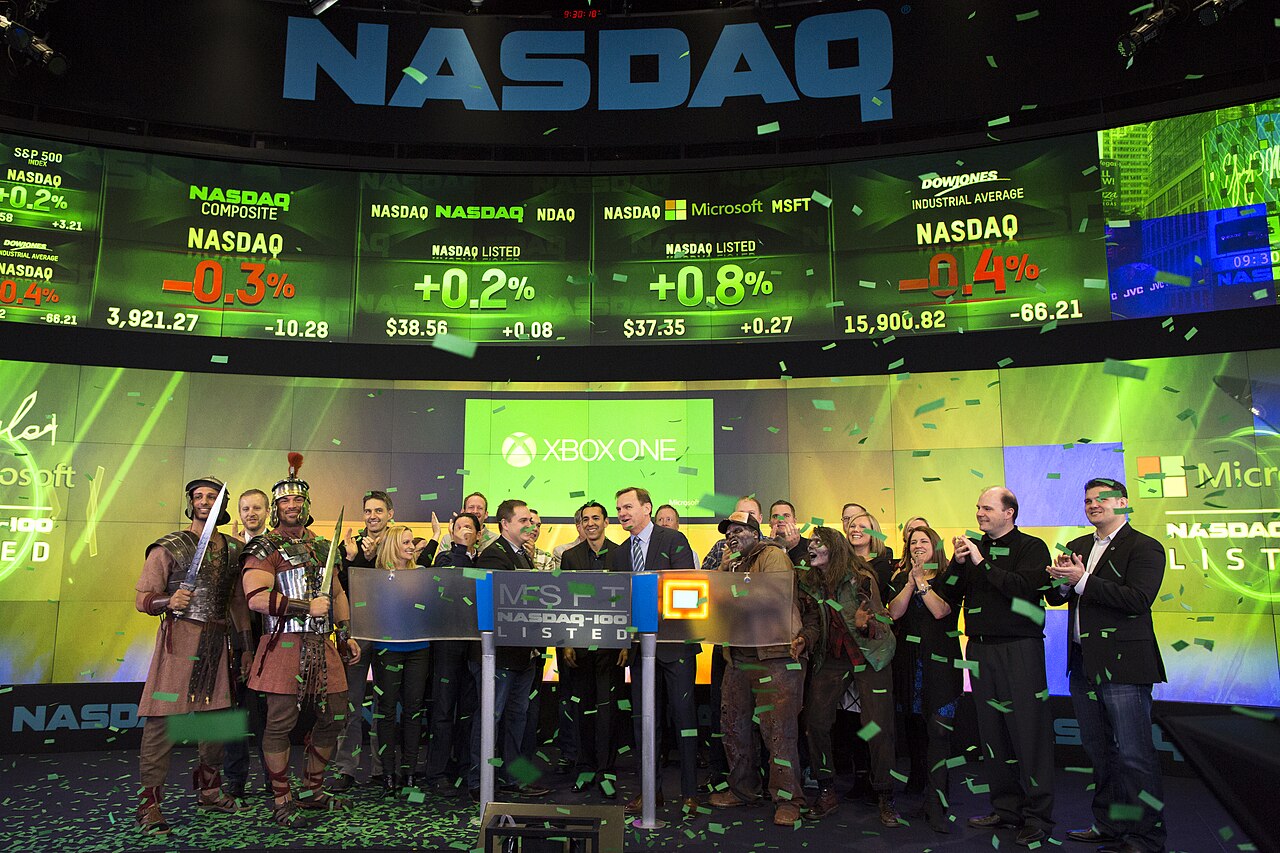
A surge in artificial-intelligence investing has pushed semiconductor stocks to the center of global markets. On July 10, South Korean memory chipmaker SK Hynix made that trend tangible in the United States with a record-setting Nasdaq debut.
SK Hynix completes a record-setting U.S. listing
SK Hynix listed its American depositary receipts on Nasdaq on July 10 after pricing the offering at $149 per ADR, raising about $26.5 billion, according to AP and the company’s listing announcement. That total made it the largest first-time U.S. stock sale ever completed by a foreign company, surpassing Alibaba’s 2014 New York debut.
The offering involved 177.9 million ADRs, with 10 ADRs representing one common share, according to the company’s SEC filing and Nasdaq trading notices. Reuters reported earlier in the week that the transaction had been launched at roughly $28 billion before final pricing came in lower. Even at the reduced amount, it remained one of the largest equity offerings globally.
Shares rose nearly 13% in their Wall Street debut, according to AP, signaling strong investor demand. SK Hynix said the listing was intended to diversify its investor base and better reflect the company’s value in a market where many of its major AI-related customers and peers already trade.
For U.S. investors, the immediate impact is access. Before this week, American buyers who wanted direct exposure to SK Hynix often had to trade the company indirectly or buy shares tied to overseas markets. The Nasdaq listing now allows those investors to buy dollar-denominated securities during regular U.S. market hours.
What is not yet known is whether the listing will translate into a broader physical footprint in any particular state. SK Hynix has not announced a new U.S. factory, office expansion, or state-by-state hiring plan as part of the ADR debut. Public disclosures tied to the offering focused on capital raising, investor access and production investment, not on a list of affected U.S. locations.
The U.S. significance is still substantial because SK Hynix sits deep inside the AI hardware supply chain. The company is a major producer of high-bandwidth memory, a crucial component used with advanced AI accelerators. That means the listing matters less as a local real-estate story and more as a financial-market event that gives U.S. investors direct exposure to a company tied to AI server growth, cloud spending and semiconductor demand.
The timing of the offering reflects a broader shift in how investors view memory chipmakers. For years, companies like SK Hynix were often seen as cyclical businesses tied closely to personal computer and smartphone demand. That changed as AI systems increased demand for advanced memory, especially high-bandwidth memory used in data-center processors.
Reuters, AP and company statements all point to the same core driver: surging AI demand has sharply improved SK Hynix’s market position and investor appeal. Analysts cited by Reuters said a U.S. listing could broaden ownership and help narrow the valuation gap between SK Hynix and U.S.-listed rivals such as Micron. The company also recently outlined major spending plans in South Korea tied to new chip facilities.
For customers and residents in the United States, the practical near-term effect is market access rather than an immediate consumer change. The listing does not alter chip prices at retail or announce new local service offerings. What it does do is place one of the world’s most important AI memory suppliers directly onto a major U.S. exchange, with the offering scheduled to close on July 14, according to SK Hynix.