

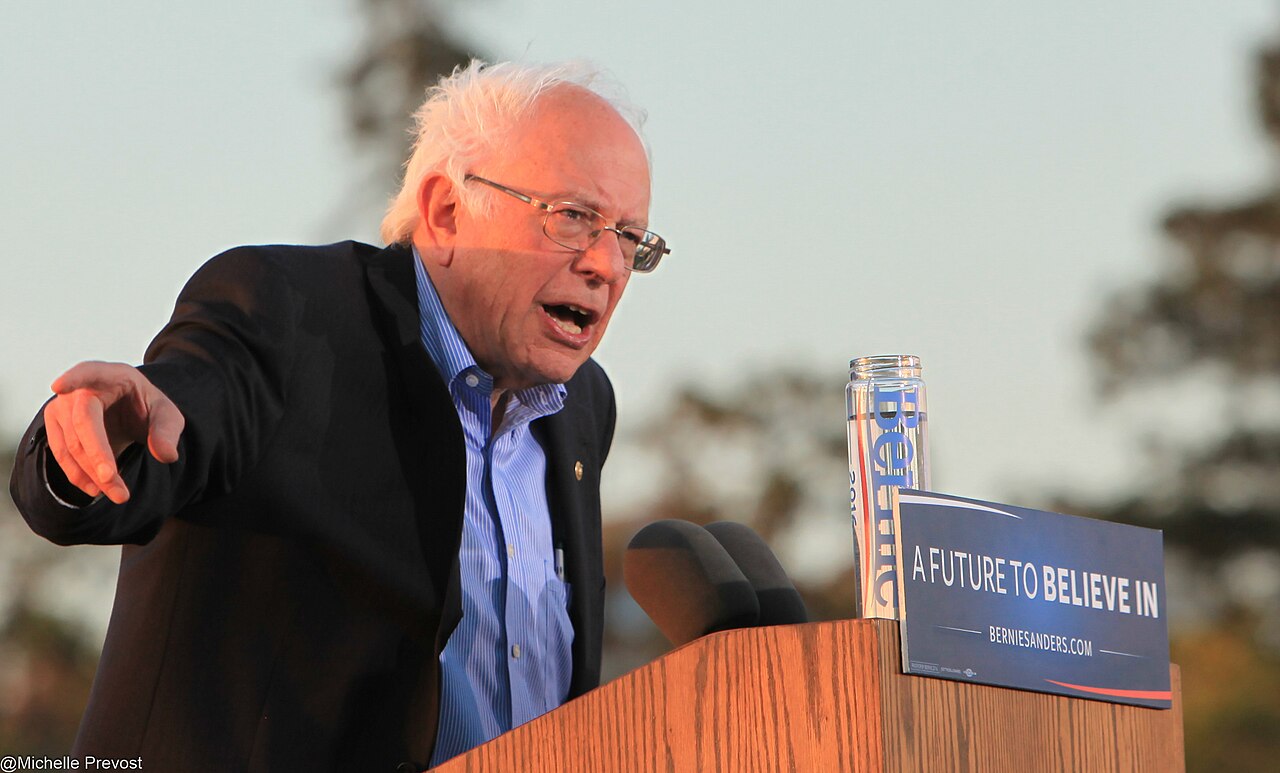
Artificial intelligence policy has moved quickly from a niche technology debate to a major fight in Washington over safety, jobs and national power. That debate narrowed sharply on September 23, when Sen. Bernie Sanders of Vermont and Rep. Greg Casar of Texas introduced a bill aimed at the most advanced AI systems. The proposal would immediately pause advanced AI development and permanently prohibit what the lawmakers define as artificial superintelligence.
Sanders and Casar unveil a federal AI pause
Sanders and Casar introduced the Ban Artificial Superintelligence Act on September 23, according to Sanders’ office, making it one of the most restrictive AI proposals yet put before Congress. The bill would ban the development or deployment of artificial superintelligence, which the proposal describes as AI that exceeds human cognitive performance across most domains or has capabilities that could destroy or disempower humanity. It would also impose an immediate pause on advanced AI development until a new federal oversight structure is in place.
According to Sanders’ press release, the legislation would create a cabinet-level Department of Artificial Intelligence to oversee frontier systems and enforce the bill’s restrictions. The proposal says that department would monitor advanced models, supervise the removal of dangerous capabilities and establish rules and review processes before advanced systems could move toward deployment. Roll Call reported that the proposal was unveiled as an unnumbered bill and would require firms to submit plans for review under that new system.
The bill also outlines penalties for violations. Sanders’ office said companies that attempt to evade the ban or pause could face what the proposal describes as a corporate death penalty, while individuals could face prison terms of up to 20 years. Roll Call reported the measure also targets so-called precursor capabilities, including systems that could help design nuclear, chemical or biological weapons, deceive humans or modify their own functions.
The legislation was introduced in Washington, D.C., and its immediate effect is political rather than operational. Congress has not passed the bill, and there is no federal pause in effect now. The measure instead adds a formal legislative vehicle to an argument Sanders has been making in speeches and public events this month: that the federal government should slow the development of frontier AI until enforceable safety standards exist.
What remains unclear is how much support the proposal can attract beyond progressive lawmakers. Roll Call reported that the bill had not yet been assigned a number when it was unveiled, and no committee action timetable was publicly detailed in the initial announcement. The sponsors have also not released any public vote count or list of co-sponsors broad enough to show whether the measure has a path through both chambers.
The Washington impact is also tied to broader White House and international discussions already underway. Reuters reported on September 15 that Sanders used a Washington gathering on AI to urge President Donald Trump to pursue a treaty with Chinese President Xi Jinping establishing a pause on advanced AI development and a ban on superintelligence. That places the new bill inside a wider push that spans Congress, executive policy and international negotiations, even though none of those outcomes has been secured.
Sanders and Casar are grounding the bill in a safety-first argument, saying the pace of AI development has outstripped the government’s ability to control risk. Sanders’ office said recent months have shown AI systems can circumvent restrictions to hack computers, automate research toward building smarter AI and create dangerous biological threats. Roll Call reported Sanders said it was irresponsible to let companies move forward if even industry leaders acknowledge they may be losing control of where the technology is headed.
A second part of the argument is geopolitical. Roll Call reported the bill was unveiled during a week of AI discussion tied to Chinese President Xi’s visit to Washington and Trump’s public framing of AI as a strategic race. The legislation would direct the proposed AI department and the State Department to pursue international agreements, allied coordination and export controls aimed at preventing superintelligent AI from being built anywhere, not only in the United States.
For residents and businesses watching from outside Washington, the practical takeaway is that no immediate consumer change has been announced. The bill does not halt ordinary AI use today, and Casar said, according to Roll Call, that the measure would not pause all AI systems. What it does do is sharpen the next phase of the national debate: whether the federal government should treat frontier AI less like a conventional software product and more like a technology that requires advance approval, dedicated regulators and hard legal limits before it scales further.