

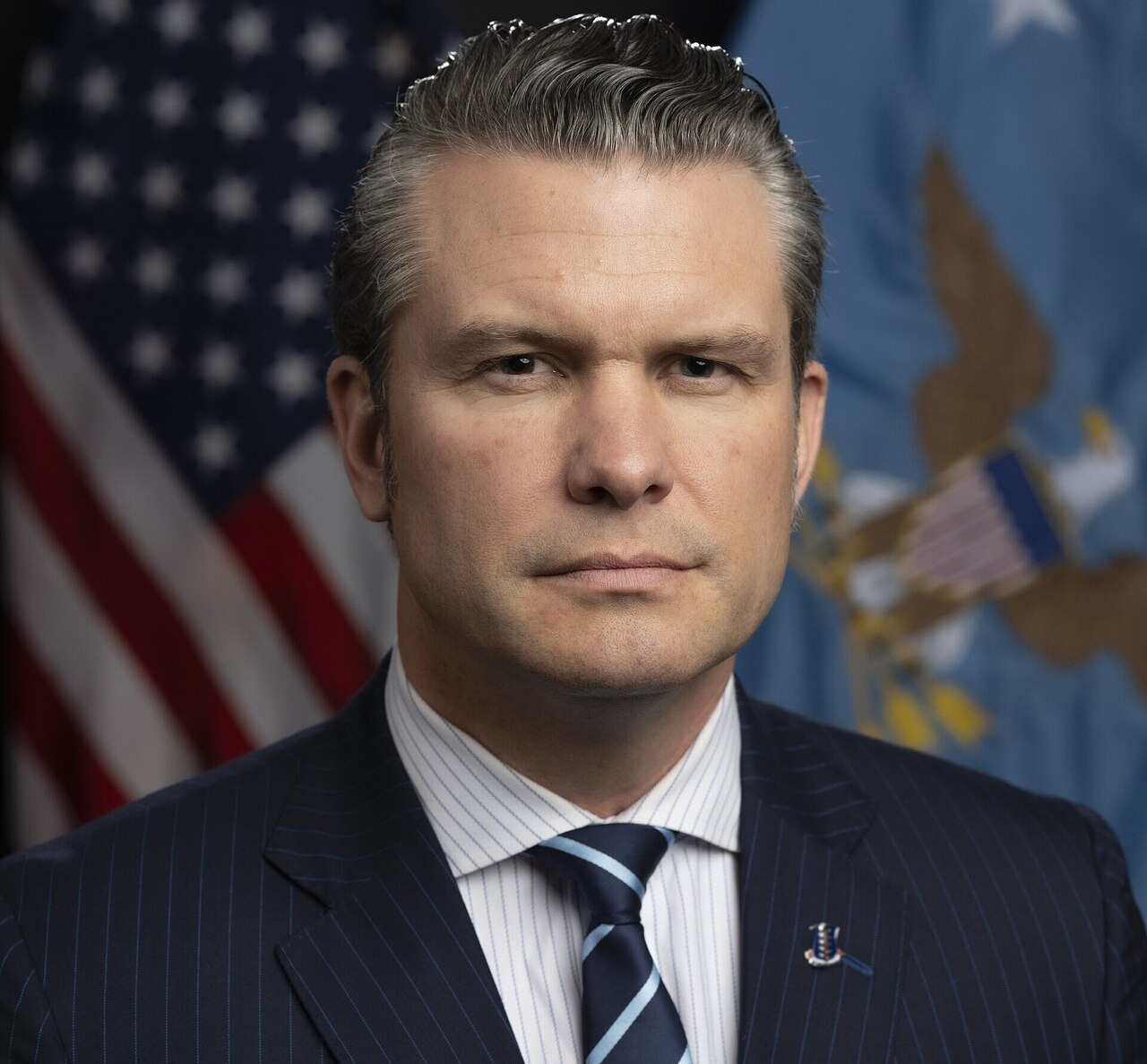
As religion and politics continue to shape public debate in Washington, questions about how senior officials use faith in government settings have become more visible. That debate has now narrowed to Defense Secretary Pete Hegseth, who has brought explicitly Christian language into speeches to troops, cadets and Pentagon staff. His remarks, delivered from official military platforms, are drawing attention because they come from the civilian leader of the U.S. armed forces.
Hegseth’s latest speeches tied military service to biblical language
Pete Hegseth’s latest example came on September 19, when he visited Texas A&M University in College Station as part of what local coverage and Defense Department scheduling described as his “Send Me Tour.” According to KBTX and Houston Chronicle reporting, the tour is aimed at outreach to military units, ROTC programs, Corps of Cadets groups and veteran resource centers, giving the Pentagon a defined campaign rather than a one-off appearance.
The phrase itself carries a biblical reference. Coverage published this week by Yahoo, citing Hegseth’s remarks, said he invoked Isaiah 6:8 by telling cadets, “Whom shall I send?” before answering with “Here am I. Send me.” That framing placed military service inside a Christian scriptural narrative, extending a pattern that had already surfaced in earlier Pentagon events this year.
That pattern is documented in prior reporting. Military Times reported in February that Hegseth welcomed Pastor Doug Wilson, described in that report as a self-identified Christian nationalist, to deliver a Pentagon devotional to hundreds of troops. The same report said Hegseth had also declared in a separate speech that “protecting our culture and our religion from godless ideologies and pagan religions is not political — it is biblical,” underscoring how explicitly religious language has entered his official message.
The most immediate geographic impact in this episode was in Texas, where Hegseth’s September 19 appearance put Texas A&M’s Corps of Cadets at the center of a national argument over religion in the military. KBTX reported that he addressed a packed audience in College Station, and local coverage described the visit as part of a broader Pentagon outreach effort connected to recruitment and military culture.
What remains unconfirmed is the full scope of the tour. The Defense Department has not publicly released a comprehensive nationwide itinerary in the material surfaced through current reporting, so it is not yet possible to say how many campuses, bases or veteran centers will be included. It is also not publicly clear whether future stops will use the same biblical framing as the Texas event.
Still, the Texas stop did not emerge in isolation. Reuters footage from a March 5 speech in Doral, Florida, showed Hegseth telling Latin American officials that their nations faced a test over whether they would “remain Western nations” and “Christian nations under God.” That earlier official appearance, combined with the Pentagon prayer services and the Texas A&M visit, shows the rhetoric crossing multiple venues rather than staying confined to a single state or audience.
The reason this is receiving attention now is that the Texas speech fits a documented line of conduct rather than a stray remark. Military Times reported that Hegseth instituted a monthly Christian gathering at the Pentagon, and AP reporting in March said he hosted Christian worship services there after the Iran war began. One of those services included a prayer for military force, with reports quoting him asking that “every round find its mark,” language that intensified criticism of how religion was being fused with war messaging.
His public remarks outside worship settings have also expanded that pattern. Reuters reported on April 16 that Hegseth cited biblical scripture while attacking the news media during a Pentagon briefing, comparing reporters to the adversaries of Jesus. That use of scripture in an official defense briefing showed the religious framing was not limited to prayer services or devotional settings.
For service members, cadets and Pentagon employees, the practical takeaway is that Hegseth is continuing to use overtly Christian references in official settings, from campus speeches to Pentagon events. What is not yet known is whether the Defense Department will issue clearer guidance on how those appearances fit with longstanding military norms around religious neutrality. For now, the record shows that the language is no longer occasional; it has become a recurring feature of the secretary’s public message.