

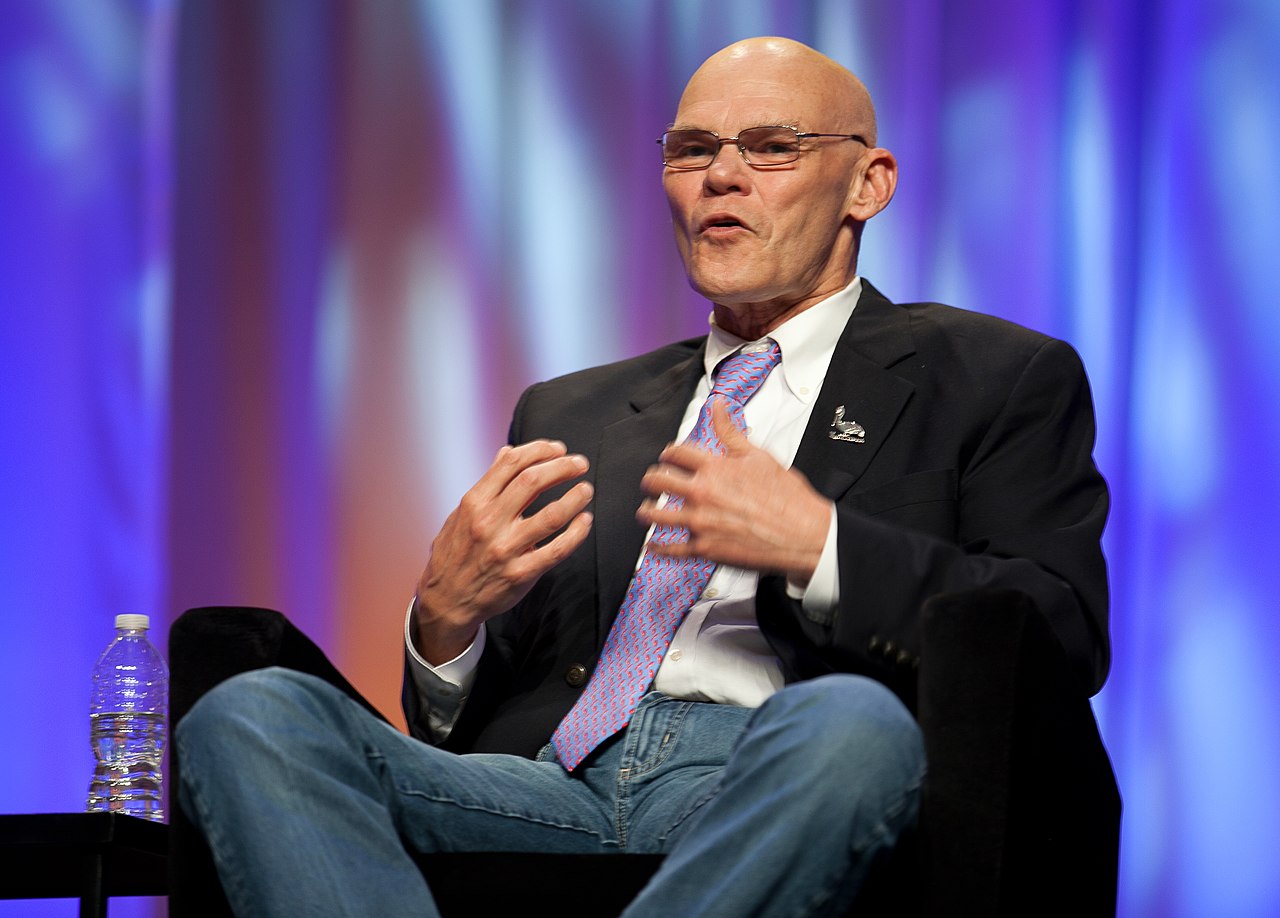
National political attention has remained fixed on the 2026 midterm cycle and on forecasts about how a divided Washington could affect the Trump administration. That focus sharpened again on August 27, when Democratic strategist James Carville renewed his prediction that President Donald Trump would leave office next year and said Vice President JD Vance would become what he called an “ineffective, babbling” president.
Carville renewed the forecast on his podcast and set a new timeline
Carville, a longtime Democratic strategist and former lead strategist for Bill Clinton’s 1992 presidential campaign, repeated the prediction during an August 27 episode of his Politicon podcast, according to Mediaite’s report on the show. Mediaite said Carville told listeners that Trump would be out of office next year and that Vance “will be president next April,” putting a narrower time frame on a theory he had floated several times earlier in 2026.
The new comments built on statements Carville had already made in June, when he said on another Politicon episode that he believed Trump would resign in spring 2027 rather than remain in office after a likely loss of political leverage, according to Mediaite and a June 26 YouTube posting from Politicon. Fox News separately summarized that earlier prediction as Carville’s view that Trump would resign by Easter 2027.
In the August 27 remarks, Mediaite reported that Carville said a Vance presidency would be short, politically constrained and weakened by expected Republican losses in Congress. There is no evidence that Trump has indicated any plan to resign, and Carville’s comments were presented as political opinion and forecasting, not as a report of an announced White House action.
There is no specific state or local operational impact tied to Carville’s August 27 remarks. Neither the White House nor Vice President Vance announced any change in duties, succession planning or campaign activity in connection with the comments, and no government action followed from the podcast segment based on the reporting currently available.
Still, the remarks matter in battleground states and media markets where both parties are shaping voter expectations ahead of the November 2026 midterms. Carville’s argument is rooted in the idea that Republican losses in the House and possibly the Senate would leave a future President Vance with limited governing power, a point he made directly in the podcast excerpt reported by Mediaite.
What is not yet known is whether Carville’s repeated prediction will become part of broader Democratic messaging in specific states or remain a high-profile but isolated media talking point. Publicly available reporting reviewed here does not show a coordinated state-level rollout tied to the August 27 comments, and no comprehensive campaign memo linked to the remarks has been released.
Carville’s comments fit into a broader 2026 political narrative centered on control of Congress, Trump’s standing inside the Republican Party and questions about what a midterm backlash could mean for the remainder of his term. In the June and August podcast discussions summarized by Mediaite and reflected in Politicon’s posted video descriptions, Carville argued that Trump’s influence would diminish if Republicans lost seats and if internal party rivals began positioning for the post-Trump era.
That theory also explains Carville’s description of a possible Vance presidency as weak from the start. Mediaite reported that Carville said Vance would take office for less than two years, potentially without control of both chambers of Congress, and would face immediate pressure from other Republican figures looking ahead to 2028.
For readers, the practical takeaway is that this remains a political prediction, not a confirmed transition plan. Trump remains president, Vance remains vice president, and no official action has been announced. The next concrete test of Carville’s theory will be the November 2026 midterm elections, which are likely to shape how both parties talk about power, succession and the final two years of the term.