

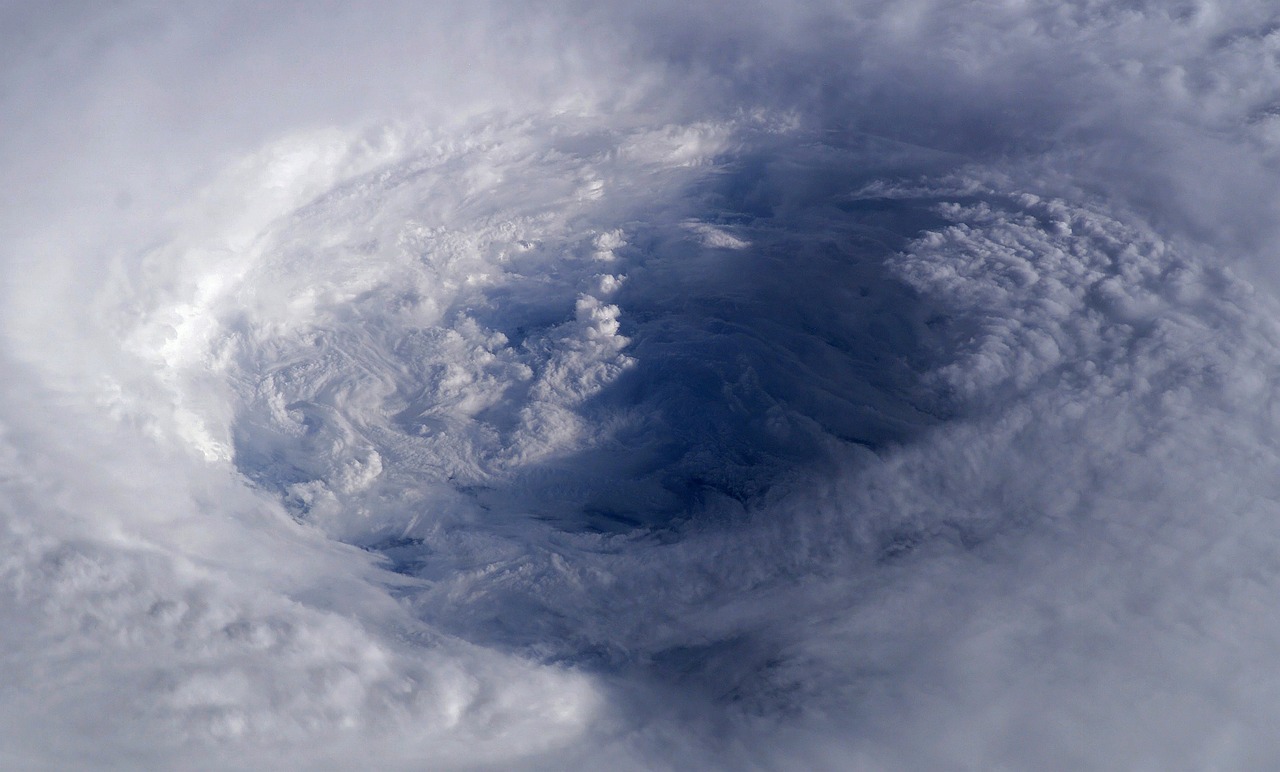
A storm far from shore can still command intense scrutiny. Tropical Storm Christina’s path across the Pacific is a reminder that distance does not reduce the scientific importance of a developing cyclone.
Why Christina Has Meteorologists Watching Closely

Forecasters monitor Pacific storms not only for immediate hazards, but also for what they reveal about the larger atmosphere and ocean. In the eastern North Pacific, systems can form quickly south or southwest of Mexico and then strengthen over very warm water before curving westward over the open ocean. Even when a storm appears unlikely to strike land directly, its structure, speed, and surrounding environment can change fast enough to alter the forecast in a matter of hours.
That helps explain why Tropical Storm Christina has become a focus for routine advisory updates and model analysis. The National Hurricane Center issues full tropical cyclone advisory packages at set intervals when a system is active, typically every 6 hours, with intermediate updates when conditions warrant. NOAA’s forecasting framework also relies heavily on satellite data in the eastern Pacific because storms there often remain far from land-based radar coverage. According to National Hurricane Center guidance documents, satellite imagery, intensity estimates, and track modeling are central tools in monitoring these oceanic systems.
Christina is also notable because it emerges early in the eastern Pacific season, which officially runs from May 15 through November 30. The basin often produces storms before the Atlantic becomes active, and those early systems can offer an initial read on environmental patterns such as sea-surface temperatures, mid-level moisture, and wind shear. The National Hurricane Center identifies the eastern Pacific as a separate forecast basin east of 140°W, with regular tropical outlooks and advisories during the season.
For the public, that means a storm like Christina should not be dismissed simply because it is over open water. Shipping interests, offshore operations, and coastal communities still watch for swells, rip current risks, and any unexpected shift toward land. For scientists, meanwhile, each advisory cycle becomes a real-time test of how well the latest models are handling storm motion and intensity in one of the world’s most active tropical cyclone regions.
The Forecast Challenge Over the Open Pacific

Tracking a tropical storm over the Pacific is often more complicated than people assume. Without dense networks of surface observations, meteorologists must infer a storm’s strength and internal structure from satellites, scatterometer passes, microwave imagery, and numerical models. That makes intensity forecasting especially difficult, because a storm can look healthy from above while dry air, shear, or internal eyewall changes are quietly limiting its growth.
The eastern Pacific can be particularly volatile for intensity changes. Warm waters may support strengthening, but the surrounding atmosphere has to cooperate. If Christina remains over sufficiently warm ocean water and encounters low wind shear, forecasters would normally watch for gradual strengthening. If drier air intrudes or the storm moves into a less favorable environment, weakening can begin quickly, even while the storm still appears organized on visible imagery.
Forecast cones also require careful interpretation. The cone shows the probable path of the storm’s center, not the full area where impacts can occur. Weather agencies have spent years emphasizing that wind, rain bands, and marine hazards can extend well beyond the center line. The National Hurricane Center has also updated and expanded its communication tools over recent seasons to improve how forecast uncertainty is displayed and understood.
In practical terms, that means Christina’s forecast is not just a question of where the center will be tomorrow. It is also about how the circulation evolves, how broad the wind field becomes, and whether the storm remains compact or grows in size. A weaker but larger storm can still generate hazardous seas across a wide area, while a compact storm may fluctuate sharply in strength without producing widespread marine impacts far from its core.
What Christina Could Mean for Coastal Areas and Marine Traffic

Even when an eastern Pacific storm stays offshore, coastal impacts are still possible. Long-period swells radiating away from the storm can reach beaches hundreds of miles away, increasing surf and rip current risk. For communities along parts of Mexico’s Pacific coast and for maritime traffic in nearby waters, that matters as much as the exact center track, especially if the storm intensifies while remaining parallel to the coast.
Marine operators tend to follow storms like Christina very closely because shipping routes and fishing activity can be affected well before any formal warning area is established. Stronger winds, rough seas, and sudden changes in wave height can create dangerous conditions over a broad area of ocean. Offshore interests typically depend on forecast updates, marine advisories, and evolving model guidance rather than waiting for a storm to approach land.
There is also a public-perception challenge with storms that remain over water. People often assume an offshore system is irrelevant if it never makes landfall, but forecasters know that swell impacts, localized heavy surf, and beach hazards can arrive independently of a direct hit. This is one reason weather agencies repeatedly stress that hazards extend beyond the center and beyond the cone. In the eastern Pacific, that message is especially important because so many storms spend most of their life cycle over open ocean.
Historically, storms named Cristina in the eastern Pacific have also followed offshore tracks without becoming major landfall events, though each system is different. Past National Hurricane Center reports on earlier Cristina storms show how these cyclones can intensify over open water and still have limited direct land impact. That history does not determine Christina’s future path, but it does illustrate why forecasters remain alert to marine and coastal side effects even when the primary forecast keeps the core offshore.
How Forecasters Build the Christina Outlook

The forecast process behind a storm like Christina is a layered operation that blends observation, modeling, and human judgment. Satellites provide the most consistent view, helping meteorologists estimate the storm’s center location, thunderstorm organization, cloud-top temperatures, and banding features. Microwave instruments can reveal structures hidden beneath high cloud tops, while scatterometer data can help estimate wind patterns over the ocean surface.
Numerical weather prediction models then simulate how Christina may move and change in strength. Some models emphasize large-scale steering currents, while others try to resolve the storm’s internal structure in more detail. Forecasters do not simply choose one model and publish its output. Instead, they compare multiple model families, examine how tightly they cluster, evaluate recent performance, and adjust their official forecast based on the broader environmental picture.
That official forecast is updated on a fixed advisory schedule. National Hurricane Center product guidance explains that tropical cyclone advisory packages are generally issued every 6 hours, with additional statements when watches, warnings, or significant forecast changes make faster communication necessary. In recent years, the agency has also refined product graphics and messaging tools to make hazards easier for the public and decision-makers to interpret.
There is an important human element in all of this. Forecasting is not just a computational exercise; it is also an exercise in communicating uncertainty responsibly. A slight shift in steering flow can move the expected track materially over 2 or 3 days. A small change in shear can mean the difference between a steady tropical storm and a more organized hurricane. Christina, like many eastern Pacific systems, is a case study in how modern forecasting blends increasingly sophisticated data with expert interpretation rather than replacing expert judgment.
Christina’s Broader Place in the 2026 Pacific Season

Christina is significant not only as an individual storm, but as part of the larger rhythm of the eastern Pacific season. Early-season storms often shape public awareness for the months ahead, especially when they highlight how active the basin can become before the Atlantic fully ramps up. They also give forecasters an early opportunity to evaluate model performance, advisory workflows, and communication strategies under real conditions rather than preseason exercises.
The National Hurricane Center notes that the eastern Pacific season begins on May 15, earlier than the Atlantic season’s June 1 start. That timing difference matters because it places the Pacific in the spotlight first and can create the impression that tropical activity is accelerating quickly across the hemisphere. In reality, each basin has its own climatology, and the eastern Pacific frequently generates named storms earlier in the year.
For the general public, Christina is also a useful reminder of what to watch in any tropical system: not just category or headline wind speed, but forecast trend, storm size, forward speed, and associated marine hazards. A storm can strengthen while moving away from land, weaken while producing dangerous surf, or change course enough to alter preparedness decisions. The best response is steady attention to official updates rather than reacting to a single model run or satellite image.
As Christina moves across the Pacific, forecasters will continue refining the track and intensity outlook with each advisory cycle. Whether the storm remains primarily an ocean event or produces broader coastal effects, its progress underscores the same lesson every tropical season teaches: distance offers no excuse for complacency, and good forecasting is as much about clear communication as it is about meteorology. In that sense, Christina is not just a storm to watch, but a real-time example of how modern weather science manages uncertainty in one of the planet’s most dynamic storm basins.