

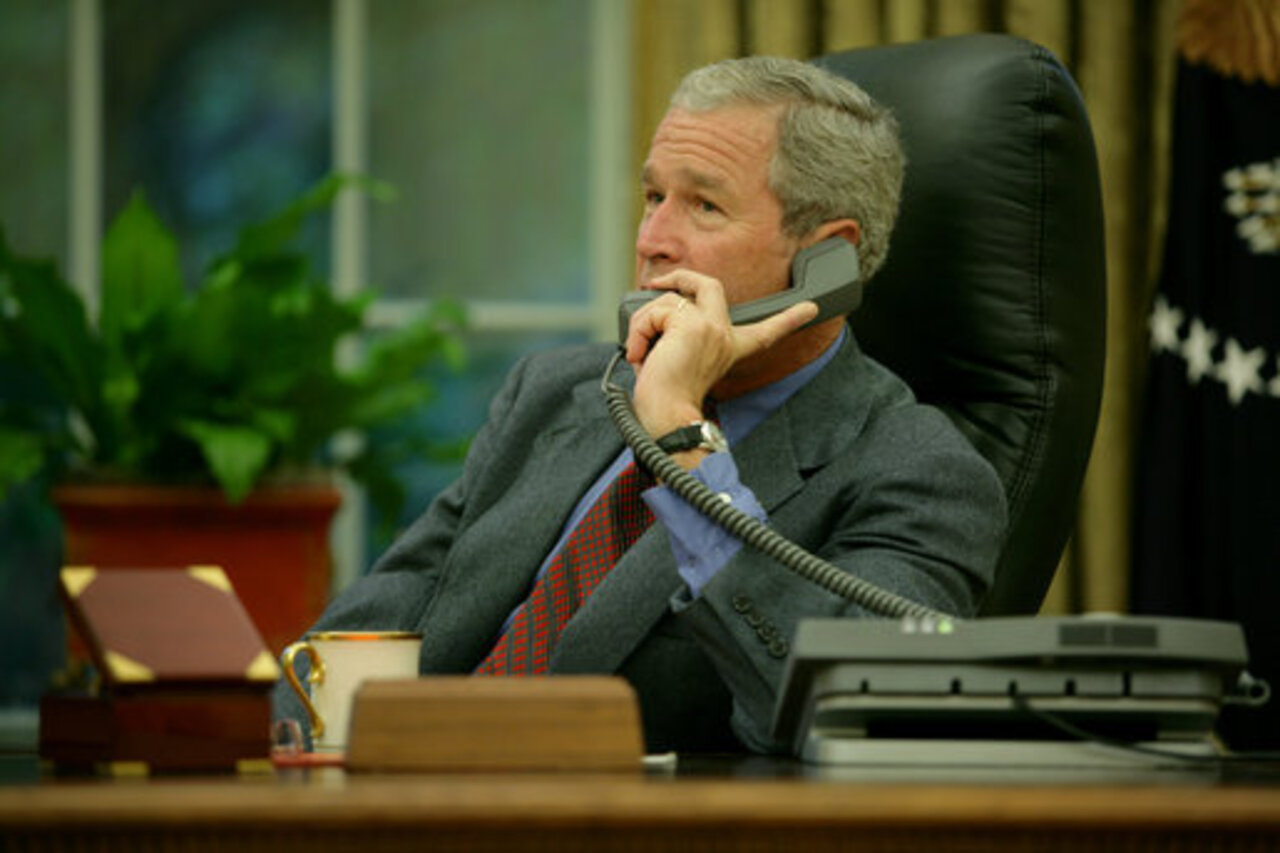
As the United States moves through its 250th-anniversary observances, public history projects are drawing former presidents back into civic debate through essays about the nation’s past. One of the highest-profile entries came from former President George W. Bush, who used an essay on George Washington to stress the importance of surrendering power. Though President Donald Trump was not named, the timing and emphasis placed the piece squarely in the current national conversation about presidential limits.
Bush’s essay centered on George Washington and the voluntary surrender of power
Bush’s essay was released on February 16, 2026, Presidents Day, as the opening installment of the In Pursuit project, a history and civics series organized by More Perfect in partnership with Substack, according to More Perfect and reporting from The Associated Press. The series is publishing essays on 43 presidents and 30 first ladies in weekly chronological order through December. Bush was assigned George Washington, the first president, and the essay quickly became one of the project’s most discussed entries, AP reported.
In the essay, Bush praised Washington not for battlefield success alone but for yielding authority twice: first by resigning as commander in chief of the Continental Army and later by stepping away after two presidential terms. More Perfect said Bush framed those decisions as defining acts of character. AP reported that Bush wrote that Washington “could have remained all-powerful” but chose not to, setting a standard later presidents were expected to follow.
The broader project was designed to avoid explicit partisanship, according to Colleen Shogan, the former U.S. archivist who is curating the series. Shogan told AP contributors were instructed not to be partisan or ideological, and she said they took that guidance seriously. Even so, AP noted that several essays have drawn attention because their themes overlap with present-day disputes over executive power, democratic norms and loyalty to the Constitution.
This development does not center on a state-based business opening, closure or policy change, and no local list of affected communities has been released because the event is a national essay publication rather than a geographic program rollout. What is confirmed is that In Pursuit is a nationwide initiative tied to the semiquincentennial period and backed by a bipartisan alliance of presidential centers and civic organizations, according to More Perfect. The essays are being distributed publicly online and paired with a podcast hosted by Shogan.
The national framing matters because the participants include figures from both parties and from multiple institutions. AP reported that contributors include Barack Obama on Abraham Lincoln, Bill Clinton on Theodore Roosevelt, Chief Justice John Roberts on William Howard Taft, Hillary Clinton on Eleanor Roosevelt and Michelle Obama on Jacqueline Kennedy. That roster has made the project part of a wider discussion about how former presidents are addressing present tensions indirectly through historical examples.
What is not yet known is whether the project will produce any formal in-person programming in specific states beyond events already announced by partner institutions. More Perfect has described the initiative as a broad public-facing effort, but it has not released a comprehensive state-by-state schedule in the material reviewed here. For readers, the immediate impact is informational rather than operational: the essays add historical context to an active national debate over the scope and restraint of presidential power.
AP’s reporting made clear why Bush’s essay drew outsized attention despite never mentioning Trump by name. The themes of humility, relinquishing authority and respecting constitutional boundaries arrived after years of debate over Trump’s refusal to accept his 2020 election loss and his public comments about serving beyond a traditional two-term limit. Bush’s focus on Washington’s willingness to step aside therefore landed as a historically framed statement about modern expectations for the presidency.
That same context runs through other entries in the series. AP reported that retired Gen. Stanley McChrystal, writing about Ulysses S. Grant, emphasized “law over loyalty” and warned against bending institutions toward personal power. Clinton’s contribution on Theodore Roosevelt also examined both achievement and exclusion, reflecting the project’s stated aim of presenting lessons from successes and failures rather than producing simple patriotic tribute.
For readers, the practical takeaway is that the project is likely to remain part of the public conversation through the end of 2026 as new essays are released weekly. More Perfect said the series is intended to help Americans draw lessons from 250 years of history, and AP reported that the essays and related media have already drawn large audiences. The article’s central fact remains straightforward: Bush chose to highlight a president remembered for giving up power willingly, and he did so at a moment when that act carries renewed political weight.