

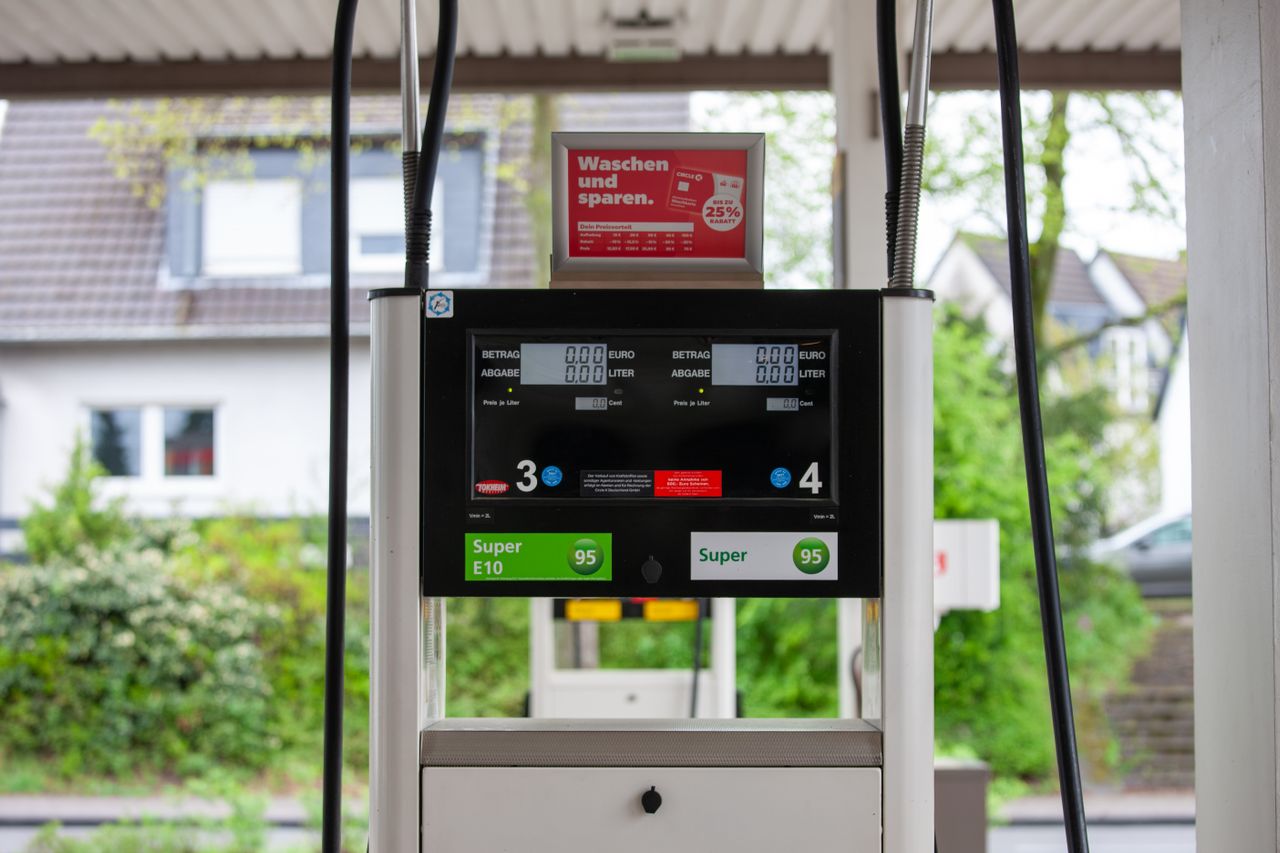
Gas prices remain a national political issue as drivers contend with costs that are still elevated from pre-spring levels. That debate sharpened on July 8, when the White House promoted a new “Freedom Fuel” gas station in the Philadelphia area and tied its $3.47-a-gallon price to President Donald Trump.
White House spotlights a private 25-station fuel network
The event at the center of the attention was the White House’s July 8 announcement of the first “Freedom Fuel” station in the Philadelphia area, with regular gasoline advertised at $3.47 a gallon. CBS News reported that a White House spokesperson said the company behind the Freedom Fuel Network is private, operates 25 filling stations across Pennsylvania and New Jersey, and is not being subsidized by the Trump administration.
The same spokesperson told CBS News the lower pricing comes from the stations reducing their profit margins. The White House also said the $3.47 figure was a reference to Trump as the 47th president. That framing made the rollout part retail promotion, part political message, even as the administration said it is not directly involved in operating the stations.
What is verifiable so far is limited but concrete. The Philadelphia Inquirer reported that a Freedom Fuel site in Dresher, Pennsylvania, was selling regular gas for $3.47 a gallon on July 7, compared with $3.79 at a nearby Citgo and $3.85 at a nearby Gulf. That shows a real, local discount at at least one location, though it does not by itself establish a broader market shift.
For Pennsylvania drivers, the local impact is easier to see than the national claim. CBS News published a station list showing 20 Pennsylvania addresses and five in New Jersey, including sites in Philadelphia, Bensalem, Brookhaven, Camp Hill, Dresher, Pottstown, Southampton and Warminster Township. The White House promotion has therefore been concentrated in southeastern Pennsylvania, with a smaller South Jersey footprint.
Still, key details remain unresolved. The Inquirer reported that the White House confirmed the Freedom Fuel website’s list of 25 locations was accurate, but did not confirm that all 25 were open. The newspaper also reported that it remained unclear which existing businesses were participating and how every site was able to undercut nearby competitors.
That uncertainty matters for consumers trying to judge whether the program meaningfully changes their fuel costs. CBS News reported Pennsylvania’s state average was $3.98 a gallon as of July 8, while the national average was $3.80, according to AAA data cited in that report. A $3.47 price is meaningfully below both figures, but the company has not released a fuller public accounting of how long the pricing will last or whether every listed station is offering the same discount.
The broader context is that gas prices in 2026 are being driven more by oil markets and supply-chain timing than by any single retail banner. According to the Associated Press, U.S. regular gas averaged about $3.93 a gallon in late June, while analysts said crude costs, taxes, refining expenses, distribution and retail margins all shape what drivers pay. The Energy Information Administration figures cited by AP said oil accounted for about 51% of a gallon’s price last year.
AP also reported that retailers do not automatically pass every oil-price movement through to motorists in real time. Rob Smith of S&P Global Energy told AP that stations often absorb some increases when crude jumps, then try to recover margin later. That means a discounted price at a Freedom Fuel site may reflect a business decision by individual operators more than a new structural drop in gasoline costs.
For customers, the practical takeaway is straightforward. Drivers near a participating station may see immediate savings at the pump, especially in Pennsylvania markets where average prices remain relatively high. But the company and the White House have not shown that the Freedom Fuel rollout is large enough to lower statewide prices, and industry analysts say the direction of gas costs will still depend primarily on crude prices, refinery economics and seasonal demand in the weeks ahead.