

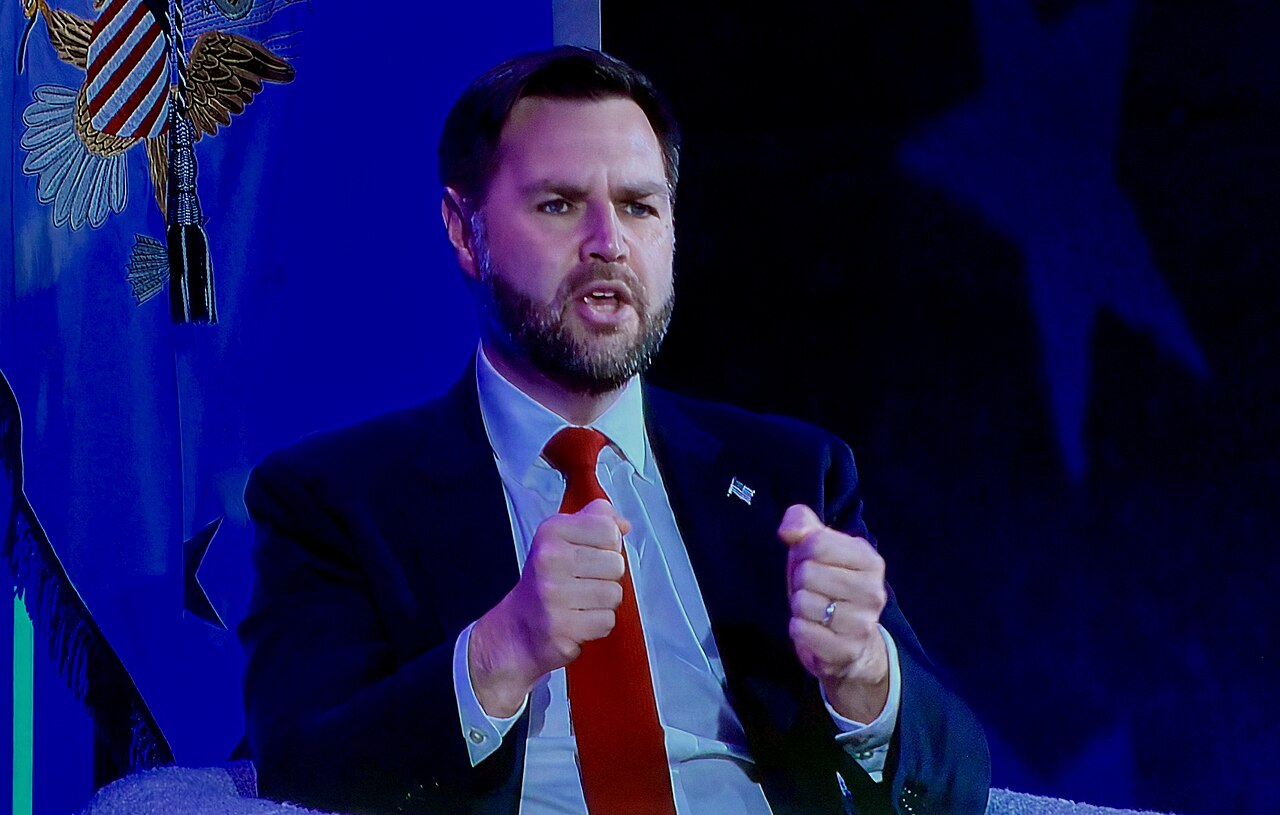
Tensions over U.S. policy in the Middle East have increasingly spilled into public disputes among top Republican figures and key American allies. That dynamic sharpened in mid-July when Vice President JD Vance publicly suggested that Israeli interests were behind an effort to undermine him through a former Trump political associate. The accusation drew attention because it came amid an already visible split between Vance and some pro-Israel voices over the Trump administration’s approach to Iran and regional diplomacy.
Vance’s remarks put a new accusation into public view
Vance made the comments in a July 16 television interview, according to CNN transcripts published that day, when he referred to criticism directed at him and raised the possibility that “Mossad or CIA or some other deep state” was involved. In a separate CNN transcript from the same date, anchors and correspondents discussed Vance’s assertion that people tied to a former Trump campaign figure had been paid by elements linked to Israel to mount attacks on him. No public filing, government report or disclosed contract reviewed in major coverage has confirmed that allegation.
What is verified is that Vance has recently sharpened his criticism of some Israeli officials and aligned commentators as debates over Iran policy intensified. The Associated Press reported last month that Vance lashed out at members of Israel’s government, saying Israel had become isolated and had failed to appreciate the scale of American support during a period of military and diplomatic strain. That exchange marked one of the clearest public signs of disagreement between Vance and some Israeli leaders, even as he continued to describe President Donald Trump as broadly supportive of Israel.
The scale of the accusation remains unclear because Vance did not release names, payment records or documentary evidence in the public remarks now available. Major outlets that covered the interview characterized the comments as part of a widening political dispute, not as a verified intelligence or campaign-finance finding. As of July 29, 2026, no publicly released federal case or official U.S. statement identified a confirmed Israeli-funded operation targeting Vance.
The immediate effect of Vance’s remarks is centered in Washington and the national Republican coalition, not in a single state or local jurisdiction. Publicly available reporting shows a dispute playing out among White House figures, conservative media personalities and foreign-policy advocates, but there is no verified list of local organizations, state party committees or geographic targets tied to the alleged campaign. No federal agency has publicly announced an investigation establishing that a covert foreign-funded attack effort against Vance took place in any U.S. state.
What is known is that Vance’s comments landed in the middle of active debate over the administration’s Iran strategy and the limits of U.S. support for Israeli military goals. Fox News reported last month that Vance, in a separate interview, challenged Israeli critics of the administration’s Iran deal to present an alternative plan. That public pushback gave additional context to the July 16 remarks and showed that criticism of Vance was already coming from factions upset with his position on diplomacy and military escalation.
What remains unknown is whether any formal complaint, intelligence referral or campaign-law review followed the accusation. Neither the White House nor publicly available reporting reviewed here has produced a comprehensive accounting of the people Vance appeared to reference. Without that documentation, the practical local impact is mostly political messaging rather than a confirmed operational matter affecting residents in a defined place.
The broader context is a growing divide inside Trump-aligned politics over how forcefully the United States should back Israeli military objectives and how quickly diplomacy with Iran should move forward. The Associated Press reported that disagreements surfaced after a preliminary April 8 ceasefire agreement, with Israeli Prime Minister Benjamin Netanyahu pushing to continue military operations while Trump moved toward winding down a conflict that had become unpopular in the United States. Vance’s recent criticism of Israeli officials fits within that larger policy divide.
That helps explain why Vance’s comments drew immediate notice even without public evidence to support the specific allegation. His accusation came after weeks of visible strain, in which he framed some critics as acting against both the administration’s diplomatic strategy and his own role within it. CNN’s July 16 transcript coverage shows those comments were interpreted in part through the lens of conspiracy-inflected language, especially because Vance referenced intelligence services and unnamed networks rather than documented public records.
For readers, the clearest takeaway is that the accusation has entered the public arena without verification from official documents or independently disclosed evidence. The confirmed development is the political rupture itself: Vance is publicly clashing with some Israel-aligned critics while defending the administration’s regional approach. Unless additional records, agency findings or campaign disclosures emerge, the matter remains a significant national political dispute rather than a substantiated foreign-influence case.