

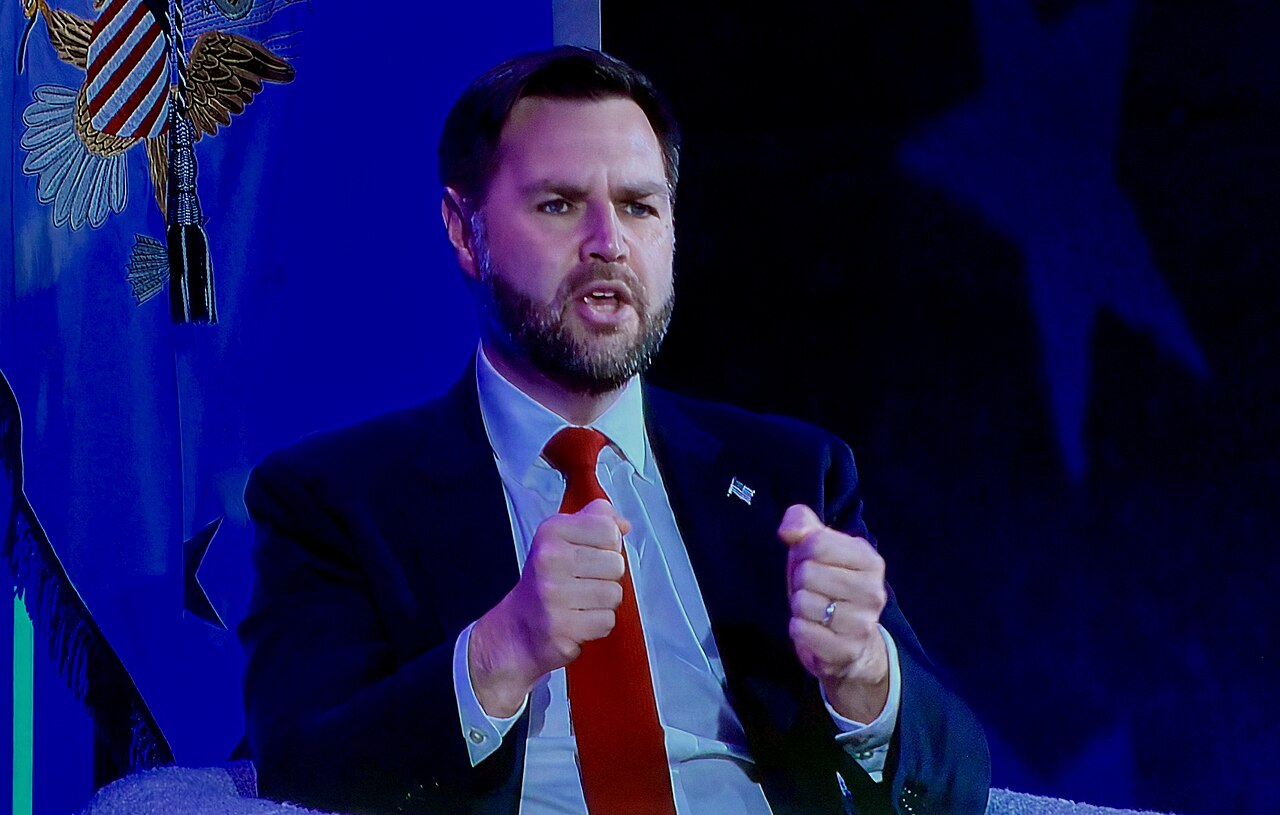
The Trump administration’s escalating clash with major news organizations has moved from political rhetoric into federal court. At the center of the latest dispute is a White House letter dated September 22, 2026, that cited a Politico report about Iran as an example of coverage that allegedly threatened national security, even though subsequent reporting identified Vice President JD Vance as the anonymous administration official behind the account. The episode has added a new wrinkle to a case already testing the boundaries of presidential control over White House press access.
White House filing put a Politico Iran report at the center of the dispute
The immediate event was the White House press office’s September 22 letter to Politico, which was made public through a federal court filing after CNN, MS NOW and Politico challenged their exclusion from White House grounds. In that letter, the administration listed six Politico stories it said had “threatened national security and/or spread falsehoods,” according to reporting by the Associated Press and other outlets covering the case. One of those entries pointed to a June 2026 Politico article that quoted a “senior administration official” estimating the chances of an Iran deal at 80% to 85%.
That detail became more significant a day later, when Status reported that the anonymous official in that June briefing was Vance. Other outlets, including The Independent and follow-up fact checks built around the court record, separately described the same sequence: the White House defended a ban on Politico by citing reporting that stemmed from an administration-authorized background call. The White House did not dispute the broad outline after the report circulated, and Vance has publicly said he supported Trump’s media ban.
The broader legal fight began after President Donald Trump announced on September 18 that CNN, MS NOW and Politico were barred from the White House. The three outlets sued on September 21, arguing the move was retaliation over coverage and violated the First Amendment and due process protections, according to the Associated Press and Reuters.
This story is rooted in Washington, D.C., because the ban affects daily access to the White House complex, the press briefing room and related events on the campus where national political coverage is produced. What is confirmed is that reporters from CNN, MS NOW and Politico were denied entry after Trump’s September 18 announcement, and that a federal judge heard arguments this week without immediately issuing a ruling, according to the Associated Press and Reuters.
What is not yet known is how long the restrictions will remain in place or whether the court will order immediate restoration of access. The administration has argued in court that entry to the White House is a privilege rather than an entitlement, while the news organizations say the government cannot selectively punish coverage it dislikes once it opens access to the press corps. That dispute now has direct implications for how reporters based in Washington cover the presidency on a daily basis.
The case also reaches beyond the three outlets named in the ban. Court filings drew support from the White House Correspondents’ Association, the Reporters Committee for Freedom of the Press and dozens of media organizations, which argued that excluding journalists from White House grounds harms the public’s access to information. No broader, permanent change to credentialing rules has been publicly finalized, and the White House has not released a comprehensive new policy governing future exclusions.
The context for the Vance revelation is the administration’s expanding use of national security language in disputes that are not limited to military or intelligence matters. Axios reported this week that Trump has increasingly invoked national security as a justification for executive actions, including the White House media ban. In this case, the administration’s own court filing tied that language to a Politico story sourced to one of its highest-ranking officials.
That contradiction matters because it undercuts one of the central factual premises the White House used to defend the ban. If the information in the Iran story came from an authorized background call involving the vice president, the dispute becomes less about an outside leak and more about whether the administration is punishing publication of information it helped place into circulation. That is an inference based on the court record and subsequent reporting, not a formal finding by the judge.
For readers and residents following the case, the practical next step is the court process. A ruling could determine whether the three outlets regain access in the short term, but the larger issue is whether future presidents can condition White House access on favorable coverage. For now, the public record shows that one of the Politico stories the White House highlighted in its September 22 filing was connected to Vance himself, and that fact is now part of the ongoing legal and political fight in Washington.