

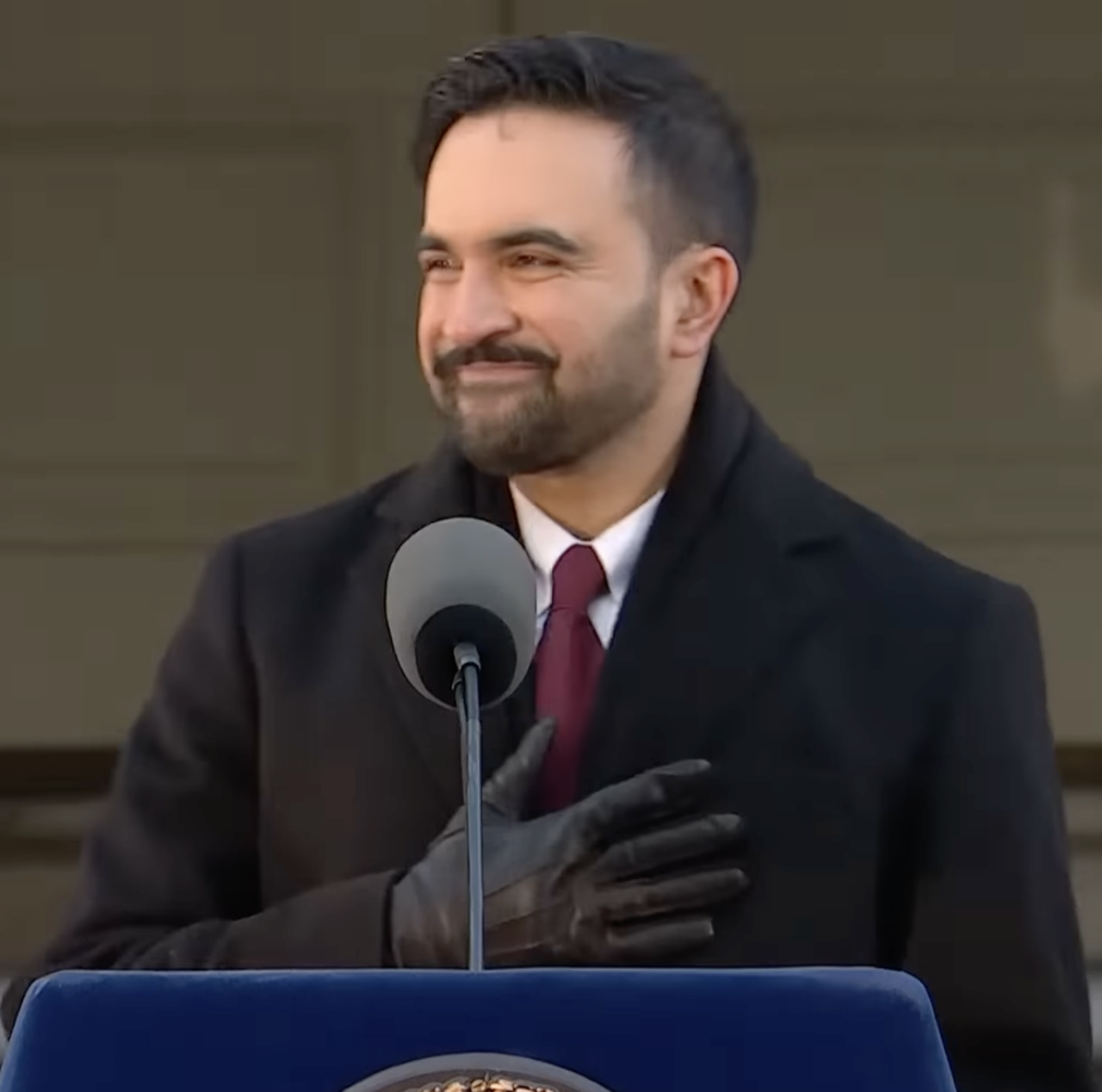
Foreign policy and international criminal law are generally handled by the federal government, even when world leaders travel through New York for the United Nations. That division of authority is now at the center of a local political and legal dispute after New York City Mayor Zohran Mamdani said he is still exploring whether the city could arrest Israeli Prime Minister Benjamin Netanyahu if he visits Manhattan in September.
Mamdani says the legal review is ongoing
Mamdani said on July 18 that his administration is in an “active conversation” with the New York City Law Department about whether he has the authority to direct the NYPD to detain Netanyahu if the Israeli leader comes to New York for the United Nations General Assembly, according to reporting that cited his appearance on The New York Times’ “The Interview” podcast. Reuters-based and other outlet reports said Mamdani framed the issue as a legal review rather than a final decision, while repeating his view that Netanyahu should face accountability tied to the International Criminal Court warrant issued in 2024.
The scale of the issue is larger than a routine city policing matter because it involves the mayor of the nation’s largest city, the NYPD, and the expected arrival of multiple heads of government for the U.N. session. U.N. scheduling materials show the General Assembly’s 81st session opens in New York on September 8, 2026, with the general debate scheduled to begin September 22. Netanyahu’s attendance had not been formally confirmed in the materials reviewed, but the possibility of his visit is the trigger for Mamdani’s legal consultation.
Mamdani also said he would follow whatever the law permits and would not “write” new laws to reach that outcome, according to interviews published July 18 and July 19. That distinction matters because no arrest order has been issued, and City Hall has not announced any operational plan involving the police commissioner or rank-and-file officers.
For New York, the confirmed fact is that the issue is being reviewed inside City Hall and has immediate relevance because the U.N. meets in Manhattan and foreign leaders regularly receive layered federal, international and local security coordination when they are in the city. The mayor oversees the NYPD, but the city has not released any memorandum, formal legal opinion or enforcement guidance spelling out what officers could be told to do if Netanyahu appears. The city also has not identified any scenario in which local police would act independently of federal authorities.
What is not yet known is whether the Law Department believes any city action would be lawful, whether federal agencies have been consulted, or whether Netanyahu will in fact travel to New York for the September meetings. Those unknowns are central because the dispute is not just political; it is about the boundary between municipal policing power and federal control over foreign affairs.
The local impact is therefore practical as much as symbolic. If Netanyahu attends the U.N. sessions, New Yorkers should expect extensive security planning around Turtle Bay regardless of this debate, because the annual gathering routinely brings major traffic restrictions, police deployments and federal protective measures to Midtown.
The main reason Mamdani’s position faces legal headwinds is that federal law sharply limits cooperation with the ICC. The American Servicemembers’ Protection Act states that no agency or entity of the United States government or of any state or local government, including courts, may provide support or respond to certain ICC cooperation requests, according to the statute text published by GovInfo and explanatory summaries in the U.S. Code. Legal analyses have long described that language as a broad barrier to state and local assistance tied to ICC enforcement.
The Justice Department reiterated that position on July 2, 2026, saying Congress in 2002 expressly repudiated ICC jurisdiction over U.S. persons and that the statute prohibits cooperation with the court. The Trump administration has also maintained sanctions-related pressure on the ICC through executive actions and related federal notices issued since 2025, underscoring that Washington’s posture toward the court remains hostile rather than cooperative.
For residents, that means the next concrete development is likely to be legal, not operational. Unless City Hall releases a formal opinion or federal officials intervene publicly, the matter remains a live but unresolved question tied to a possible September visit. As of July 20, 2026, Mamdani has said only that the review is continuing and that his administration will act within the law.