


The 2026 World Cup is supposed to be a celebration of football on an unprecedented scale. Instead, it is increasingly becoming a test of whether the sport’s governing body can protect people from heat that may be as dangerous as the competition is intense.
Scientists, player advocates, and medical experts are now warning that roughly a quarter of the tournament’s matches could unfold in conditions that exceed recommended safety thresholds. That has turned heat from a scheduling inconvenience into one of the defining stories of the tournament before a ball is even kicked.
Why the 2026 World Cup heat warning matters so much

The warning is not vague, and it is not theoretical. A recent analysis by World Weather Attribution concluded that about 26 of the 104 matches scheduled for the 2026 FIFA World Cup are likely to be played in conditions above the safety limits recommended by FIFPRO, the global players’ union. Researchers used Wet Bulb Globe Temperature, or WBGT, a more meaningful measure than standard air temperature because it accounts for humidity, sun exposure, and wind, all of which shape how effectively the body can cool itself.
That distinction matters because football is played at sustained physical intensity. A player can seem to be competing in “only” warm weather while actually facing a far more dangerous physiological burden. High WBGT conditions raise the risk of dehydration, overheating, dizziness, impaired decision-making, muscle breakdown, and, in severe cases, heat stroke. Match officials are vulnerable too, as are supporters in uncovered seating areas who do not have elite conditioning, medical teams, or controlled recovery routines.
The scale of the event magnifies the problem. This will be the first 48-team men’s World Cup, expanded to 104 matches and spread across 16 host cities in the United States, Mexico, and Canada from June 11 to July 19, 2026. More matches mean more midday and afternoon windows, more travel complications, and fewer easy opportunities to avoid the hottest parts of the day. The problem is not confined to one city or one week; it is embedded in the tournament calendar itself.
What makes the warning more striking is that it comes even after years of concern about heat in elite football. The 2022 World Cup in Qatar was famously moved from summer to winter because of temperature risk. Yet now, despite that recent lesson, the men’s game is returning to a North American summer with a schedule that still places some major fixtures in open-air venues where heat and humidity can become punishing. In other words, football has already acknowledged that climate can force structural change. The current debate is about whether FIFA has changed enough.
Which matches and host cities face the greatest risk
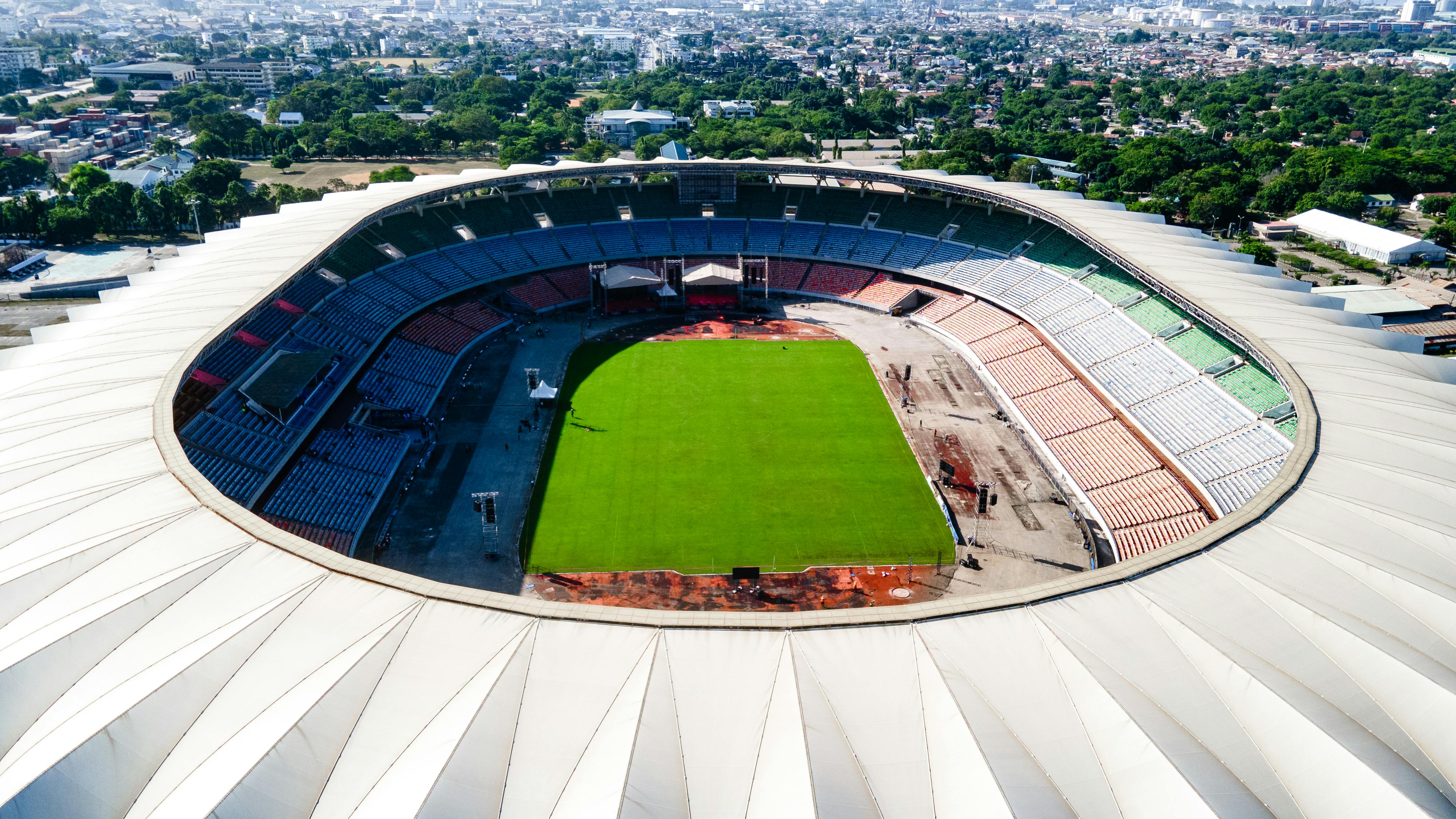
Not every host city carries the same exposure, but several stand out immediately. Miami has drawn the most concern because of its combination of high humidity, intense sun, and the near certainty of oppressive summer conditions. Scientific American, summarizing the World Weather Attribution findings, reported that six open-air matches in Miami have a near-certain probability of exceeding a WBGT of 26°C, a level associated with meaningful health risk. That makes Miami less of an outlier event and more of a recurring stress point on the tournament map.
Other cities in the southern United States and parts of Mexico also face close scrutiny. Research cited by TIME and other outlets has highlighted Atlanta, Dallas, Houston, Kansas City, Miami, and Monterrey as locations where afternoon matches can create an extremely high risk of heat stress injury. Even cities not stereotypically associated with tropical weather can become dangerous under the right mix of direct sunlight, stagnant air, and humidity, especially when kickoffs fall in the early afternoon rather than late evening.
The concern extends all the way to the biggest occasion of the tournament. The World Weather Attribution analysis found that the final, scheduled for July 19, 2026 at New York New Jersey Stadium, carries a measurable risk of severe heat despite the venue’s northeastern location. That is significant because it undercuts the assumption that only southern venues are problematic. A July afternoon in the New York metropolitan area can produce punishing heat loads, particularly inside a stadium environment where radiant heat and crowd density can intensify discomfort.
Recent reporting has also pointed to specific scheduling choices that invite criticism. NPR’s analysis found that more than 1 in 3 World Cup matches face high risk from dangerously hot and humid conditions, and it raised direct questions about why the final is set for a 3 p.m. local kickoff in an uncovered stadium. That detail matters because heat exposure is not only a matter of geography but of timing. A city that is manageable at 8 p.m. can be hazardous at 3 p.m. FIFA may have limited daytime scheduling in some outdoor venues, but the most controversial examples suggest television and commercial considerations are still shaping the calendar alongside safety concerns.
Why players, fans, and officials are all vulnerable

Heat risk in football is often framed as a player welfare issue, but the reality is broader. Players are pushing through repeated sprints, decelerations, tactical concentration, and emotional stress while wearing match kits under direct sun. When body temperature climbs too high, performance drops before collapse occurs. Passing accuracy, reaction speed, and defensive tracking can all deteriorate. That creates both a medical problem and a sporting integrity problem, because extreme heat can influence outcomes as much as talent or tactics.
Officials may be even less protected in certain moments. Assistant referees cover long distances without the substitution options available to players, and central referees must maintain constant positioning and concentration. The danger is not abstract. In June 2024, assistant referee Humberto Panjoj fainted during a Copa América match in the Kansas City area, an incident widely cited in later heat-risk discussions about the 2026 tournament. It became an unmistakable example of how quickly conditions can overwhelm even trained professionals on a major stage.
Fans represent another layer of risk that can be underestimated in elite-sport planning. Spectators may spend hours traveling to stadiums, waiting in security lines, standing on hot pavement, and sitting in direct sunlight before and during matches. Many will be drinking alcohol, managing long days with children, or arriving from cooler climates without acclimatization. Unlike players, they are not monitored by medical staff or following hydration protocols designed for heat stress. A heat-safe tournament therefore requires more than in-game pauses; it requires crowd management, shade access, water availability, transport planning, and clear public messaging.
Medical specialists have argued that existing thresholds remain too permissive. FIFPRO has long maintained that football should take stronger action at lower WBGT levels than some governing bodies currently require. Its guidance argues that once WBGT rises into the 28°C-32°C range, cooling breaks should be routine, and above 32°C training and matches should be postponed. The debate here is crucial: waiting until conditions become obviously dangerous may mean waiting too long, because athletes often compensate by reducing intensity, masking the severity of physiological strain until symptoms escalate quickly.
What FIFA is doing, and why critics say it may not be enough

FIFA is not ignoring the problem. The organization has said it carried out technical heat-risk analyses for all host venues and, in a notable shift, announced that every 2026 World Cup match will include a mandatory three-minute hydration break in each half, regardless of temperature, roof status, or country. That universal rule is significant because it acknowledges that heat management should not rely solely on match-day discretion. FIFA has also said it has tried to limit daytime kickoffs in hotter outdoor venues.
Those steps reflect lessons learned from recent tournaments, including intense heat episodes at the Club World Cup and broader debates across elite football. Hydration breaks, extra water access, towels, ice, and revised operational plans are sensible measures. They may reduce immediate thermal strain and create predictable pauses for monitoring. On paper, they show an organization trying to adapt rather than simply defend the status quo.
But critics argue that mitigation is not the same as prevention. A three-minute break does not fundamentally solve the problem of scheduling elite competition in hours and places where the environment is unsafe. If a match begins in conditions close to or above dangerous WBGT levels, short pauses may only soften the edges of the risk. The deeper question is whether FIFA is willing to move marquee games, resist broadcaster preferences, and accept the commercial cost of safer scheduling.
That is where the pressure intensifies. Researchers, unions, and some journalists have pointed out that a number of the riskiest scenarios are foreseeable well in advance. Miami in late June is not a surprise. An afternoon final in mid-July in the New York area is not a surprise either. When known risks remain embedded in the tournament design, criticism naturally shifts from weather to governance. The central issue becomes whether football’s leadership is treating heat as a medical reality or as a manageable public-relations challenge.
What this says about climate change and the future of global sport
The 2026 World Cup heat debate is ultimately larger than one tournament. It is an early, highly visible example of how climate change is reshaping the practical conditions under which global sport takes place. According to World Weather Attribution, players and fans face a much higher risk of grueling heat and humidity at the 2026 tournament than they would have during the 1994 World Cup on the same continent. That comparison is powerful because it ties present-day scheduling challenges to a longer climatic shift rather than a one-off weather anomaly.
Football is especially exposed because its calendar is crowded, its global footprint is enormous, and many of its most commercially valuable events happen in months that already bring high heat stress. But the implications stretch well beyond football. Tennis, athletics, cricket, and marathon running are all confronting similar questions about start times, rest rules, venue design, and the health limits of athletes competing for commercialized entertainment. The old assumption that elite sport can simply adapt around the margins is becoming harder to defend.
That means the future may require structural changes once considered extraordinary. More matches may need to start later in the evening. Stadium design may have to prioritize shade, ventilation, and cooling infrastructure. Tournament hosting decisions could increasingly hinge on seasonal climate suitability rather than market size alone. Governing bodies may also need clearer, lower, and more transparent heat thresholds that trigger automatic delays, postponements, or schedule rewrites rather than leaving the final call to improvised judgment.
For FIFA, the stakes are immediate and reputational. If the 2026 World Cup proceeds smoothly, the organization will argue that planning and adaptation worked. If players stagger through visible distress, if supporters are treated for heat illness, or if a major match becomes defined by dangerous weather, the criticism will be far harsher because the warnings were so public and so specific. In that sense, the tournament is not only a sporting event. It is a global stress test for whether the world’s biggest game is prepared for a hotter world.