

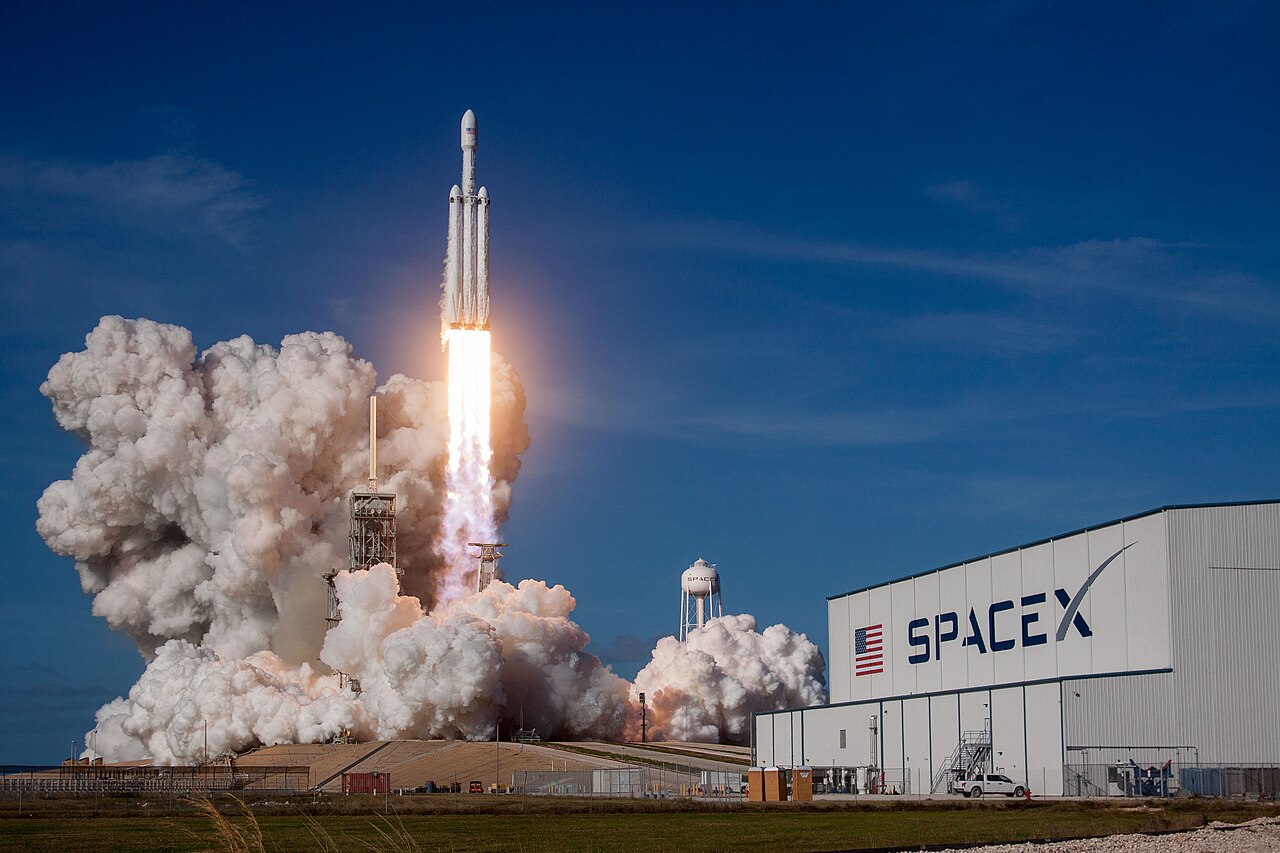
Two ideas can be true at once: SpaceX may be one of the most extraordinary companies ever built, and its public offering may still be a dangerous bet. That tension is exactly why this IPO has become one of the most watched financial events of 2026.
Why SpaceX Going Public Is Such a Big Deal

SpaceX has spent years as the ultimate private-market trophy: a company with dominant launch capabilities, a fast-growing satellite internet business, and a founder whose name alone can move markets. For much of its history, Elon Musk resisted taking it public, arguing that quarterly earnings pressure could interfere with the long timelines required for Mars ambitions and heavy launch investment. That is why the company’s planned 2026 IPO has landed with such force. According to Reuters, SpaceX has been preparing to raise more than $25 billion, and earlier reporting suggested the listing could support a valuation above $1 trillion, putting it in rare territory even before trading begins. Reuters also reported that internal filing details pointed at an even more ambitious target near $1.75 trillion with a potential $75 billion raise, numbers that would make this the largest IPO on record.
The timing matters almost as much as the scale. The IPO market has been recovering after a long drought, and bankers have been hungry for a blockbuster capable of re-energizing equity issuance. SpaceX arrives with a story that combines industrial power, geopolitical relevance, consumer broadband, defense exposure, and futuristic branding all in one package. Axios reported on June 9, 2026, that SpaceX is expected to make its public market debut on Friday, June 12, turning this week into a referendum not just on Musk’s appeal but on investor appetite for giant growth offerings.
There is also a powerful scarcity effect at work. For years, ordinary investors were largely locked out while private funds, institutions, and insiders captured most of the value creation. Reuters reported that SpaceX is considering allocating as much as 30% of the IPO to individual investors, an unusually large retail share for a deal of this size. That approach fits Musk’s populist market instincts and could create enormous first-day demand, but it also raises the odds of speculative trading rather than disciplined long-term ownership.
In other words, this is not just another tech float. It is a test of whether a company built on engineering audacity and private capital freedom can preserve its edge under the glare of public markets. If it works, SpaceX could rewrite the IPO playbook. If it stumbles, it will become a cautionary tale about what happens when the market tries to price ambition at planetary scale.
The Business Behind the Hype Is More Than Rockets
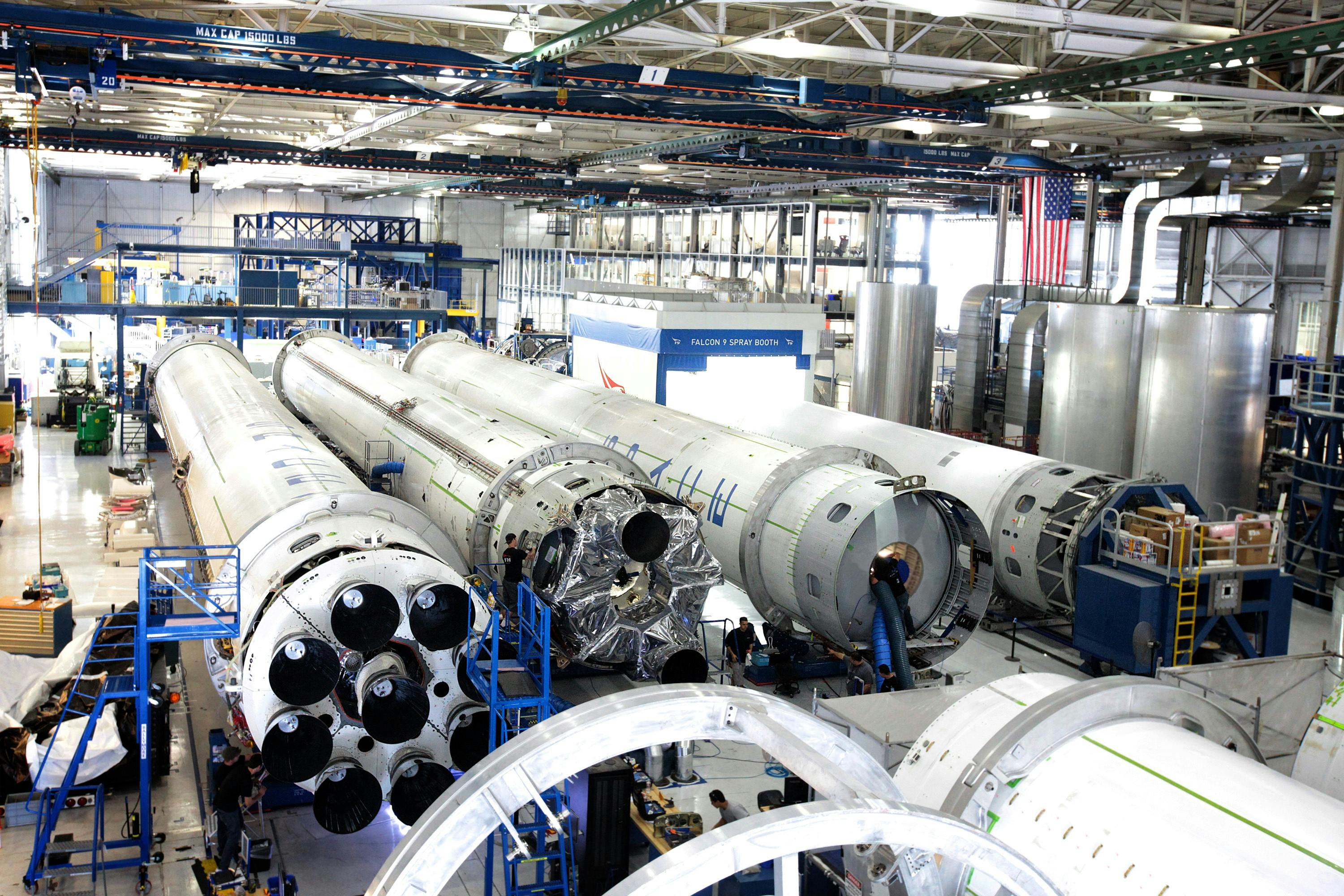
What makes SpaceX so different from past market darlings is that investors are not buying a single business. They are buying a stack of businesses tied together by launch infrastructure, communications networks, defense contracts, and Musk’s broader strategic vision. The launch side remains the symbolic core of the company, with reusable rockets giving SpaceX a cost and cadence advantage that traditional aerospace rivals have struggled to match. Yet the center of gravity financially has shifted toward Starlink, the satellite internet operation that has turned orbital infrastructure into a recurring-revenue machine. Reuters has reported that Starlink generated billions in profit last year, a crucial detail because it suggests SpaceX is no longer simply a moonshot story but a company with a large commercial engine underneath the spectacle.
That matters for valuation. Public investors can tolerate massive capital spending if they believe one segment is mature enough to fund the rest. Starlink offers that narrative. It sells broadband to households, enterprises, governments, and increasingly mobility users such as airlines and maritime operators. Reuters also noted that direct-to-mobile service plans are part of the growth case, widening the addressable market far beyond rural home internet. A rocket company alone would likely trade on cyclical contracts and long development timelines; a communications platform with global subscription revenue can command a far richer multiple.
But complexity cuts both ways. Reuters reported that SpaceX’s recent structure also reflects the impact of buying Musk’s social media and artificial intelligence company xAI, and that losses inherited from that combination have complicated the financial picture. Capital expenditure at the AI segment reportedly surged to $12.7 billion, helping push total capex above $20.7 billion. That means investors are not evaluating a clean aerospace pure play. They are assessing a capital-intensive conglomerate with extraordinary assets, yes, but also with expanding strategic sprawl.
This is the heart of the gamble. SpaceX has real businesses, real technological advantages, and real profit centers. It also has a founder who tends to connect companies, missions, and balance sheets in ways that can create upside at breathtaking speed or blur risks just as quickly. The public market loves vision, but only when it can eventually be translated into understandable cash flow. SpaceX must now prove that its empire is not just impressive, but investable.
Why Musk’s Control Could Be the Real Story

For all the talk about rockets and valuation, governance may end up being the decisive issue. Reuters reported in April that SpaceX planned a share structure designed to cement Musk’s control after the IPO, granting him and a small circle of insiders super-voting shares that outweigh the influence of ordinary investors. Reuters separately reported that Musk controls 85.1% of the company’s voting power and owns 12.3% of Class A shares, while agreeing not to sell stock for about a year after listing. In practical terms, that means public shareholders may get economic exposure without meaningful authority over corporate direction.
That model is not unheard of in modern markets, but the scale here is unusual. Investors are being asked to trust not only Musk’s operational genius but also his judgment across a web of connected businesses, political controversies, and personal brand volatility. A conventional public company can replace a CEO if confidence breaks down. Reuters’ review of SpaceX’s filing details suggested the structure would effectively make it nearly impossible for anyone other than Musk to force such a change. For supporters, that protects long-term innovation. For critics, it removes one of the market’s most basic safeguards.
There is another twist. Reuters reported that 5% of IPO shares were reserved for selected employees and individuals chosen by executives, with those recipients exempted from standard post-IPO lock-up restrictions. That is a highly unconventional feature for a mega-offering, because lock-ups are usually designed to prevent immediate selling pressure and reassure new investors that insiders are committed. SpaceX appears to be using the IPO not only to raise capital but also to reward a curated circle of loyal stakeholders and shape early trading dynamics.
Musk’s defenders will argue that none of this is hidden. The bargain is explicit: if you want exposure to one of the world’s most innovative companies, you accept founder control as the price of admission. That argument has worked before in Silicon Valley. The difference is that SpaceX is not a social app or ad platform. It sits at the intersection of national security, communications infrastructure, launch services, and frontier technology. In a company with that much strategic weight, governance is not a side issue. It may be the investment thesis.
The Case for the IPO and the Case Against It
The bullish case is easy to understand. SpaceX has a market-leading launch business, a fast-growing satellite network, deep relationships with government and defense customers, and a brand that few industrial companies can match. It also enters public markets at a moment when investors are once again rewarding scale, narrative, and scarcity. If Starlink keeps expanding margins while launch dominance holds, the company could justify a valuation that once sounded absurd. The best bulls see a hybrid of aerospace leader, telecom disruptor, and strategic infrastructure provider, all wrapped in one equity story.
The bearish case is more sobering. Reuters-reported details cited by other outlets suggest SpaceX lost $4.3 billion in the first quarter of 2026, even as it sought a valuation approaching $1.8 trillion. That kind of mismatch between current earnings and public-market pricing would be aggressive under any circumstances. It becomes even more fraught when the company is spending heavily on next-generation rockets, satellite deployment, AI infrastructure, and other ventures whose payoff timeline is uncertain. Investors may admire the ambition while still balking at the math.
There is also a market-structure issue. Axios reported that even with the IPO’s importance, S&P would not fast-track rule changes to get SpaceX into the S&P 500 quickly, meaning many index investors may have to wait. That removes one automatic source of demand in the early phase and could make initial trading more dependent on active funds, momentum buyers, and retail enthusiasm. If sentiment turns, the absence of immediate index inclusion could amplify volatility rather than dampen it.
Then there is Musk himself. His ability to command attention is an asset until it becomes a liability. Every political dispute, social media clash, or cross-company transaction can spill into valuation. Public investors are not only betting on launch cadence or subscriber growth. They are betting that Musk can remain the central engine of value creation without becoming the central source of discount. That is a bigger leap than many first-day buyers may realize.
What This Gamble Means for Investors and for Musk

If SpaceX prices well and trades strongly after its expected debut on June 12, 2026, the immediate winners will be obvious: Musk, employees, early investors, and banks that helped pull off a historic offering. But the implications would reach further. A successful deal could reopen the market for other giant private companies that have delayed listings for years. It would also strengthen the idea that public investors are still willing to fund massive, founder-led, capital-intensive visions if the underlying platform looks dominant enough. SpaceX would not just be a company going public. It would be a signal that the market is ready again for grand-scale risk.
For Musk personally, the stakes are extraordinary. Reuters reported that the offering could value SpaceX at more than $1 trillion, and other reporting has framed the IPO as large enough to push his wealth into territory no entrepreneur has ever reached. Yet that wealth would come with a new kind of exposure. Private-market mystique allows for patience, opacity, and selective storytelling. Public ownership imposes daily judgment. Every quarterly result, capital expenditure plan, launch setback, regulatory issue, and subscriber update becomes part of an endless referendum.
That is why this could plausibly be the biggest gamble of Musk’s career, even if he has not framed it in exactly those words in every public setting. Going public unlocks capital, legitimacy, and liquidity. It also exposes SpaceX to scrutiny that cannot be engineered away. The company will no longer be valued mainly by believers in closed rooms. It will be priced in real time by millions of investors with different time horizons, risk tolerances, and political opinions.
In the end, SpaceX may be worth every bit of the excitement. It may also prove that even the most extraordinary private company becomes a different creature once it enters the stock market. That is the wager at the center of this moment: not whether SpaceX is impressive, but whether greatness on the ground and in orbit can survive the gravitational pull of Wall Street.