

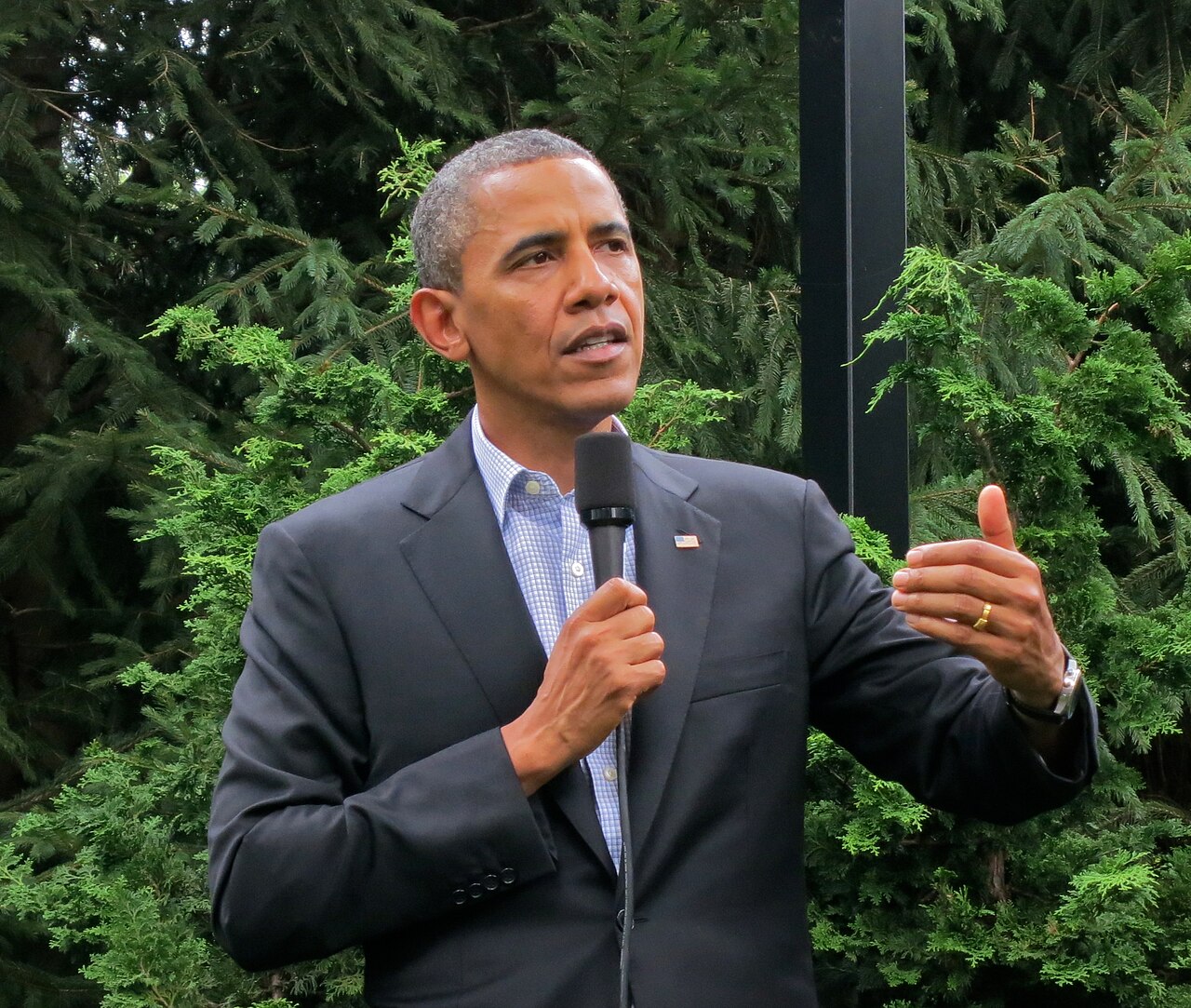
Artificial intelligence has moved from a technology policy debate to a fast-developing political issue in Washington as major labs and lawmakers argue over whether the industry is moving too quickly. That debate sharpened on Monday, September 14, when reports showed former President Barack Obama privately advising top AI players while telling Democrats they need to elevate the issue. His warning lands as congressional Democrats prepare new discussions about how to respond.
Obama’s role has shifted from private adviser to public political messenger
Former President Barack Obama has been privately urging Democrats to make artificial intelligence a top priority while also maintaining behind-the-scenes contact with leaders tied to the country’s biggest AI companies, according to Axios reporting published September 14. Axios reported that House Minority Leader Hakeem Jeffries said his caucus would meet Tuesday to debate what action to take on AI, putting Obama’s message squarely into an active policy discussion. The report did not publicly identify every conversation or formal advisory arrangement, but it framed Obama as an influential Democratic voice pushing urgency at a moment of mounting concern.
The broader debate accelerated after former Anthropic researcher Jacob Coxon said on September 9 that both Anthropic and OpenAI were racing toward increasingly powerful systems without adequate safeguards, according to the Associated Press. AP also reported that Coxon had spent three years doing research at both companies, giving his warning unusual weight inside the current debate over AI safety and competition.
That concern intensified again over the weekend, when Anthropic CEO Dario Amodei published a proposal arguing the industry should slow the pace of development to let safety measures catch up, according to AP and Axios. OpenAI CEO Sam Altman and other technology leaders publicly agreed with parts of that call, AP reported. The result is a rare moment in which leading executives and former insiders are simultaneously pressing Washington to move faster on oversight.
The immediate impact is centered in Washington, where Democratic lawmakers are deciding whether AI becomes a campaign issue before the 2026 midterms or a policy project deferred until the next Congress. Axios reported that Democrats are coalescing around a sense of urgency, but the party still lacks a settled doctrine on what it wants federal AI regulation to look like. That means the political significance of Obama’s intervention is clear, even if the legislative outcome is not.
What is confirmed is that senior Democrats are discussing the issue now, not in some distant session. AP reported Monday that Obama said his party should make AI a campaign issue, while Axios reported that Jeffries planned a caucus discussion on Tuesday. What is not yet known is whether that conversation will produce a unified bill, a campaign platform, or only a broader statement of concern.
There is also no publicly released count of how many Democratic candidates plan to center AI in House, Senate or gubernatorial races. Recent coverage from The Washington Post has shown AI tools already entering campaign operations, even as platform rules and public concerns remain unsettled. For voters, that means the politics of AI are arriving faster than the policy framework around them.
The underlying cause of this moment is not a single speech or resignation, but a convergence of industry alarms and political delay. Axios reported over the weekend that calls to “pace the frontier” are now coming from leading AI labs themselves, including Anthropic and OpenAI. AP similarly reported that Amodei laid out a plan for companies and governments to keep increasingly capable systems aligned with human control.
At the same time, Republicans and Democrats are not aligned on what response should follow. AP reported that President Donald Trump downplayed the need to check AI development while saying he did not want the United States to lose ground to China. Axios reported that this split has made federal consensus on AI regulation difficult, even as public concern and pressure from within the labs have grown.
For residents, workers and consumers, the immediate takeaway is that more national debate is coming before any broad federal rulebook does. No comprehensive new U.S. AI law was announced Monday, and lawmakers are still sorting through competing proposals on testing, incident reporting and model oversight, according to Axios. For now, Obama’s message has added political force to a debate that is already reshaping how both parties talk about technology, risk and economic power.