

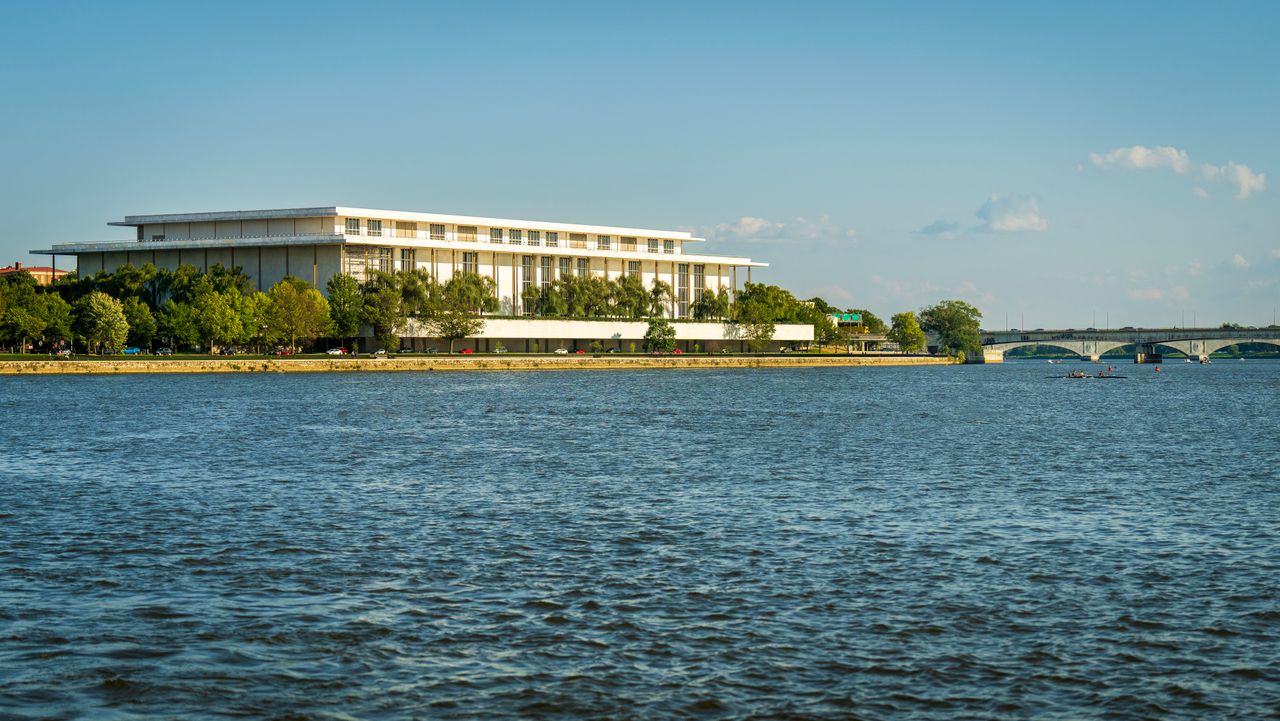
The future of major U.S. cultural institutions is increasingly shaped by legal fights, donor pressure and post-pandemic revenue strain. In Washington, that broader tension is now centered on the John F. Kennedy Center for the Performing Arts, where a board document tied an urgent bankruptcy warning to a renewed push to put President Donald Trump’s name back on the building. The issue surfaced just before a special board meeting set for Sept. 15, placing the Kennedy Center’s finances and governance at the center of a national political dispute.
Kennedy Center packet linked closure risk to a signage dispute
A 57-page packet prepared for Kennedy Center trustees ahead of the Sept. 15 meeting warned the institution faced “certain fiscal collapse” and could soon be unable to cover payroll and maintenance, according to reporting by The Washington Post and The New York Times cited by USA Today. The same draft resolution also laid out 10 options for returning Trump’s name to the facade and said the board believed that without that recognition, Trump was unlikely to lead what it described as the center’s fiscal rescue.
That pairing of financial alarm and naming strategy is unusual for a federally chartered arts institution that serves as the nation’s cultural center. According to USA Today’s account of the document, trustees argued the center could face bankruptcy within weeks and said Trump had offered to help raise the funds needed to keep it operating through a planned renovation. The Kennedy Center did not immediately provide public confirmation of the full packet’s contents in the referenced reports.
The naming dispute has been moving through court for months. The Washington Post and Associated Press previously reported that Trump’s name was added to the exterior in December 2025, then removed in June 2026 after a federal judge ruled that the board could not legally rename the institution without congressional authorization. Reuters also reported in August 2026 that the board voted again to inscribe Trump’s name on the building, prompting another round of legal challenges.
Because the Kennedy Center is in Washington, D.C., the immediate local impact is concentrated there: on the performing arts campus, its employees, resident companies, audiences and nearby businesses that depend on event traffic. What is confirmed is that court filings and board resolutions have described severe financial stress, while the center has also pursued a major renovation expected to cost more than $250 million, according to USA Today and Reuters.
What remains unclear is the precise current cash position of the center and how many jobs or programs would be affected if the financial warnings in the board document become reality. Public reporting has described the risk in stark terms, but the Kennedy Center has not publicly released a comprehensive breakdown of which positions, maintenance contracts, performances or educational programs would be affected first if funds run short.
The dispute is also unusually local because it concerns the official name and facade of one of Washington’s most recognizable federal cultural landmarks. Court rulings cited by Associated Press and The Washington Post have made clear that the building’s legal identity remains tied to the memorial Congress created for President John F. Kennedy. That means any attempt to alter exterior signage carries consequences beyond branding, extending into governance, federal law and the city’s civic landscape.
The available reporting points to several overlapping causes. Financially, The Washington Post reported in August that ticket sales and fundraising fell sharply after Trump’s name was added to the building, even as center leaders publicly described a turnaround. That suggests the institution’s strain is not tied to a single court order, but to a broader collapse in earned revenue and donations during a period of political upheaval.
Legally, the center’s leadership has been constrained by a federal ruling that only Congress can rename the Kennedy Center, according to Associated Press and The Washington Post. Even so, government lawyers have argued in court that restoring Trump’s name in some form could help unlock donor support for renovation work. Reuters reported that administration lawyers defended the plan by arguing the signage would recognize Trump’s role in the project rather than formally change the institution’s name.
For residents, patrons and workers in Washington, the practical takeaway is that the Kennedy Center remains open while its finances, renovation plans and naming dispute continue to be litigated. No public notice in the cited reports confirms a shutdown date, though the Sept. 15 board material described closure as a near-term possibility. The next concrete developments are likely to come through court proceedings, board action or additional financial disclosures rather than through changes already visible on the facade.