

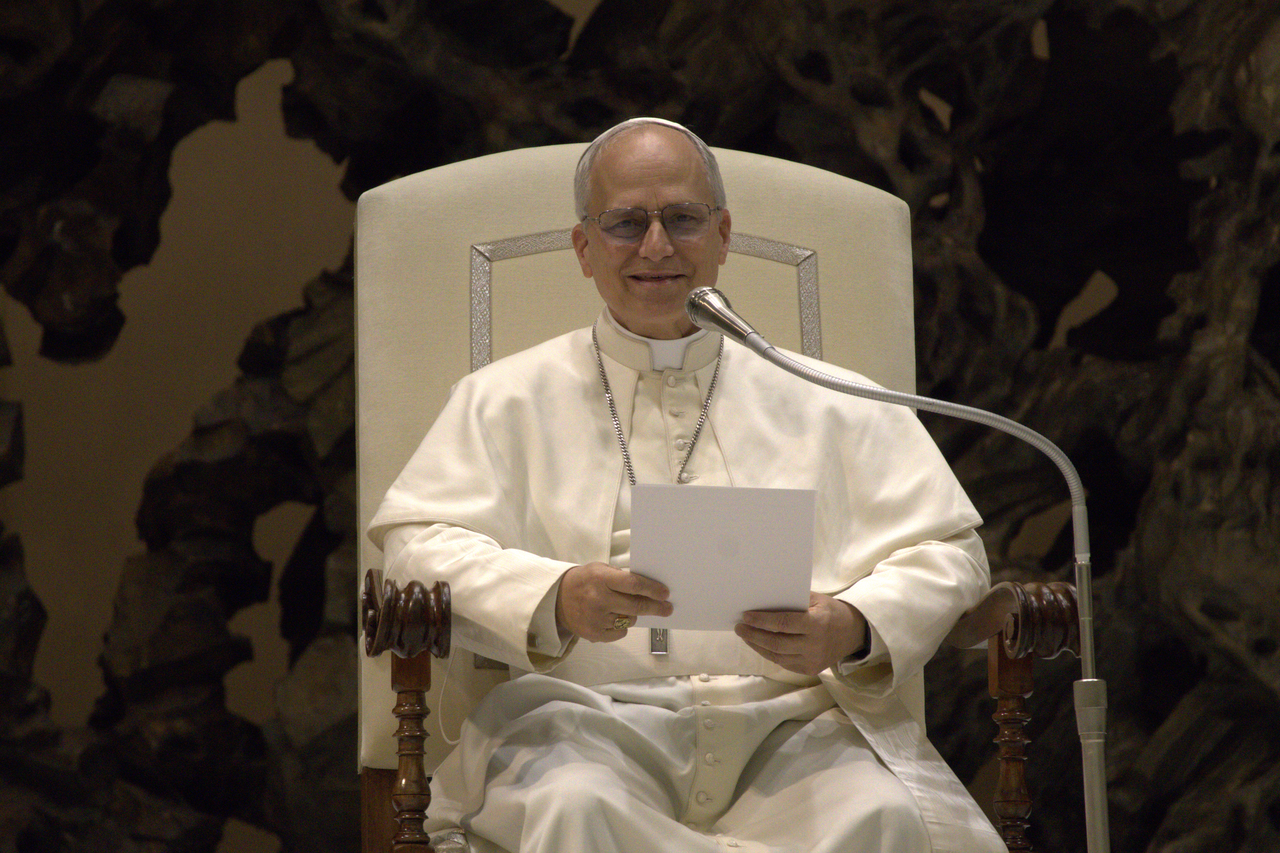
Artificial intelligence has become a central policy and ethics debate for governments, tech companies and religious institutions as its influence spreads across work, education and daily life. Pope Leo XIV brought that debate into sharper focus this week, warning from the Vatican that AI could disrupt families and become a vehicle for what he called “ideological or economic colonialism.” His remarks add to a broader series of Vatican interventions pressing for tighter moral scrutiny of emerging technologies.
Pope Leo tied AI concerns directly to family life in a Vatican address
Pope Leo XIV made the comments on August 21 during an address to the International Catholic Legislators Network at the Vatican, according to Vatican News. In that speech, the pope said families remain “the first school of humanity” and warned lawmakers to examine how artificial intelligence may affect children, relationships and the basic structure of social life. He also cautioned that innovation must not become another channel for “ideological or economic colonialism,” language the Vatican has increasingly used when discussing power imbalances tied to technology and development.
The remarks were part of a broader appeal for public officials to place human dignity at the center of policymaking. Vatican coverage said Leo framed the family as a foundational institution that should guide ethical decisions about technological change, especially when new tools reshape how people learn, work and interact. While the pope did not attach a numerical estimate to AI’s possible effects, he explicitly linked the issue to long-term social stability and the well-being of younger generations.
Leo has raised similar concerns before. In a June 17, 2025 message to participants at a Vatican-linked conference on artificial intelligence, ethics and corporate governance, he said AI’s rapid development raises urgent questions about whether the technology is being used to build a more just and human society, according to the Vatican press office.
Because Leo is the first U.S.-born pope, his comments often draw close attention in American political, religious and technology circles. This latest warning is global in scope and did not name a specific U.S. state, city or company, but the concerns he described map onto active debates in the United States over children’s screen use, AI in classrooms, job displacement and the concentration of technological power among a small number of firms. No new Vatican policy directed at U.S. dioceses, schools or lawmakers was announced alongside the speech.
What is confirmed is that the pope addressed legislators directly and asked them to stay vigilant about how innovation affects the human person, according to Vatican News. What is not yet known is whether his latest comments will translate into a new Vatican policy document, a formal lobbying effort, or specific guidance for Catholic institutions in the United States. The Vatican has not released any country-by-country implementation plan tied to the August 21 address.
The issue is likely to resonate in U.S. communities where families and schools are already weighing how quickly AI tools should enter daily life. Catholic institutions, including schools and universities, have been part of that discussion, but the pope’s latest address functioned primarily as a moral and legislative appeal rather than an operational directive.
The pope’s comments fit into a broader Vatican framework that treats AI as both promising and risky. In his encyclical Magnifica Humanitas, dated May 15, 2026 and later presented publicly by the Vatican, Leo argued that AI must serve humanity rather than concentrate power or reduce people to instruments of production. Vatican News said the document connected AI to labor, social inequality and even new forms of slavery tied to the extraction systems and economic structures behind digital technology.
Associated Press reported that the encyclical warned profit-seeking cannot justify systematically sacrificing jobs and said employment remains a primary good for families and societies. In that same body of teaching, Leo tied the digital economy to newer forms of colonialism, suggesting that the benefits and burdens of AI may be distributed unevenly between wealthy countries and poorer ones. That concern reflects a wider Church critique of systems that centralize wealth, data and decision-making power far from affected communities.
For readers, the practical takeaway is that the Vatican is signaling continued engagement with AI not only as a technical issue, but as a family, labor and governance issue. The pope’s latest speech indicates that future church statements are likely to keep focusing on how AI affects children, work and the global balance of economic power, even as governments and companies continue setting the rules for its use.