

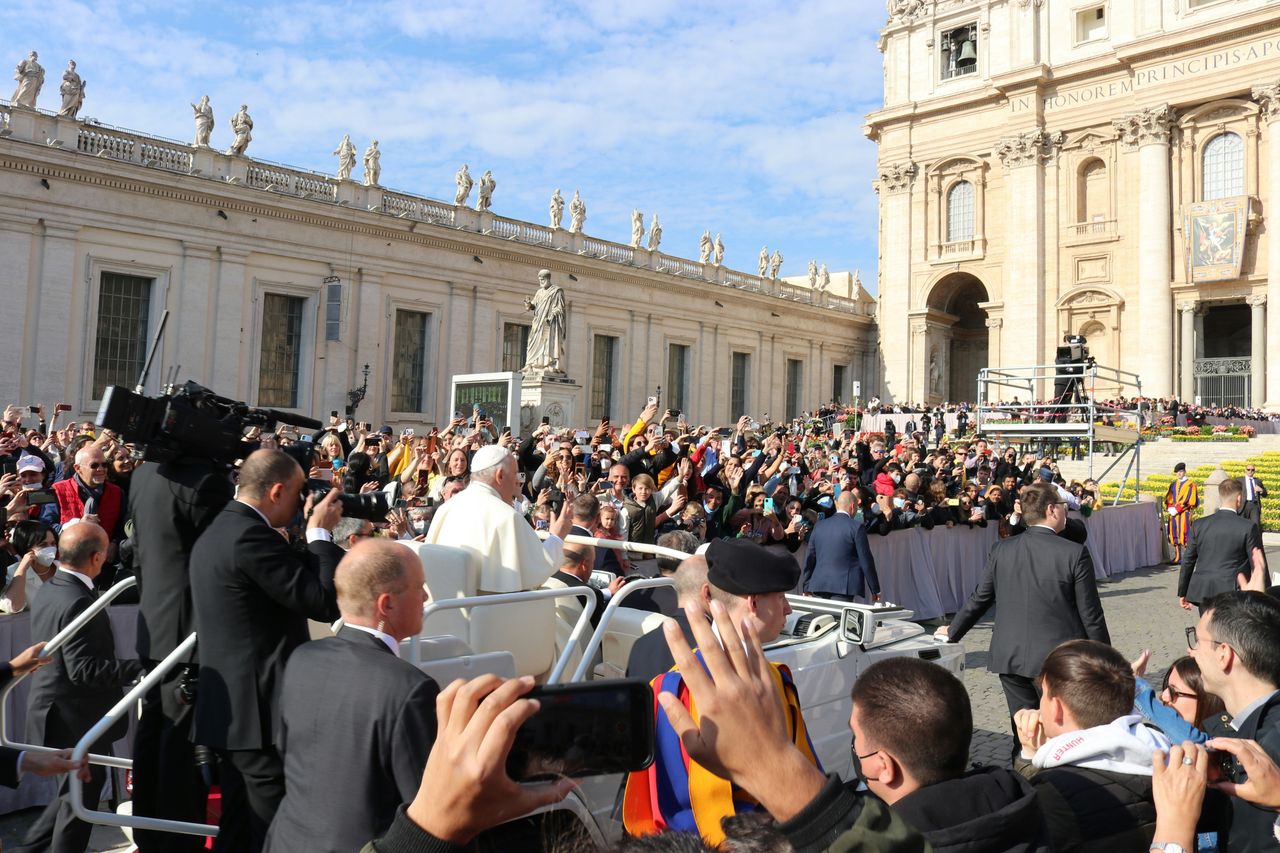
The words were brief, but their weight was enormous. With a formal plea for pardon, Pope Leo XIV pushed the Catholic Church into one of the most consequential acts of historical self-examination in its modern era.
A papal apology that broke new ground

Pope Leo XIV’s apology, released on May 25, 2026, was historic not simply because it condemned slavery, but because it acknowledged the Holy See’s own role in legitimizing it. That distinction matters. Previous popes had denounced slavery as a moral evil and asked forgiveness for the actions of Christians who participated in the slave trade, yet they stopped short of directly admitting that earlier popes themselves had authorized forms of conquest and enslavement that helped shape the transatlantic system.
The apology came in Leo’s first encyclical, Magnifica Humanitas, a sweeping document focused on human dignity in the age of artificial intelligence. According to Vatican News, the text renews the Church’s “firm condemnation of every form of slavery” and says the pope “sincerely asks forgiveness” for how late the Church was in condemning the “scourge of slavery.” Associated Press and National Catholic Reporter both noted that Leo went further than any previous pontiff by explicitly recognizing the role of papal authority in sanctioning subjugation and enslavement during the colonial era.
That made the statement more than symbolic rhetoric. In the encyclical, Leo tied the Church’s historical failures to present-day moral dangers, warning that technological change can create new forms of exploitation if human dignity is reduced to profit, labor extraction, or control. By placing slavery within a broader reflection on the ethics of power, the pope suggested that the Church’s reckoning with the past is inseparable from its responsibility in the present.
The timing also amplified the significance of the moment. Leo XIV is the first U.S.-born pope, and reports from AP and other outlets noted that his own family history includes both enslaved people and slave owners. That biographical dimension did not create the apology, but it sharpened its human force. What emerged was not a vague institutional regret, but a pointed admission that Christian memory itself has been wounded by the Church’s delayed and compromised witness.
The long history behind the Vatican’s complicity

To understand why this apology is so significant, it is necessary to revisit the legal and theological architecture that helped European empires justify slavery and conquest. Historians have long pointed to a set of 15th-century papal bulls that granted Christian rulers, especially the Portuguese crown, authority to conquer non-Christian lands and reduce people to servitude. These decrees did not create the slave trade on their own, but they gave moral and political cover to imperial expansion that became deeply entangled with human bondage.
One of the most frequently cited documents is Dum Diversas, issued by Pope Nicholas V in 1452. As summarized by AP and National Catholic Reporter, it granted the Portuguese king the right to invade, conquer, and subjugate non-Christians and to reduce them to perpetual slavery. A second bull, Romanus Pontifex, issued in 1455, reinforced Portuguese claims and became part of the legal tradition later associated with the so-called Doctrine of Discovery. That framework was used for centuries to justify colonial seizures of land in Africa and the Americas.
The implications were not limited to a single papacy. According to reporting that cites Jesuit scholar Christopher J. Kellerman, permissions first issued under Nicholas V were later confirmed or renewed by Pope Callixtus III in 1456, Pope Sixtus IV in 1481, and Pope Leo X in 1514. Spanish rulers received analogous authority in the Americas. The broader point is that papal involvement was not an isolated anomaly. It became part of a pattern in which ecclesiastical power was drawn into imperial expansion and racial hierarchy.
The Vatican has long argued that later teaching moved in a different direction. A frequently cited example is Sublimis Deus in 1537, which affirmed that Indigenous peoples should not be deprived of liberty or property and were not to be enslaved. Yet that later corrective never erased the damage done by earlier documents, nor did it fully prevent Catholic powers and institutions from participating in slaveholding systems. In 2023, the Vatican formally repudiated the Doctrine of Discovery, but it still did not rescind the original bulls themselves. Leo’s apology enters precisely into that unresolved space between partial correction and full historical accountability.
Why Leo XIV’s language matters so much

What distinguishes Leo XIV’s statement is not only the fact of apology, but the precision of its language. National Catholic Reporter reported that the pope wrote that the Apostolic See of Rome had intervened “to regulate and legitimize forms of subjugation” and in some cases the enslavement of “infidels.” He also said the Church took far too long to recognize slavery’s full incompatibility with Christian teaching, calling that delay “a wound in Christian memory.” This was not evasive language designed to diffuse responsibility. It was language calibrated to admit institutional failure.
That matters in Catholicism, where words in magisterial documents carry theological and historical weight. Encyclicals are not casual remarks or passing interviews. They are among the most important written teaching instruments of a papacy. By placing this apology in his first encyclical, Leo elevated the issue beyond a pastoral aside or diplomatic gesture. He embedded it in the formal teaching record of his pontificate, giving future debates about slavery, racism, colonialism, and reparative justice a new point of reference.
The response from scholars and Black Catholic voices reflects that importance. Associated Press reported that historian Shannen Dee Williams of the University of Dayton called the apology a “monumental step” in truth-telling and reparation. Her broader point was that Black Catholics have waited generations for the Vatican to speak honestly about the Church’s leading roles in the transatlantic slave trade and chattel slavery. That reaction captures why the moment resonates beyond ecclesiastical circles. For communities shaped by the afterlives of slavery, acknowledgment is not the end of justice, but it is a necessary beginning.
Leo also made a notable interpretive move by linking the slave trade to new forms of exploitation emerging in the digital era. Vatican News highlighted his warning about labor abuses tied to the extraction of rare earth elements used in technology. In effect, Leo argued that institutions fail morally when they normalize dehumanization in the name of progress, efficiency, or wealth. The lesson of slavery, in his telling, is not confined to the past. It is a warning about what happens whenever systems of power treat some human beings as expendable.
The broader Catholic reckoning with slavery and colonialism

Leo XIV’s apology did not emerge in a vacuum. The Catholic Church has spent decades moving, often unevenly and under pressure, toward a more candid reckoning with slavery, colonialism, and racism. St. John Paul II asked forgiveness in Africa for the role Christians played in the slave trade, and during a 1992 visit to Gorée Island in Senegal he condemned slavery as a tragedy of a civilization that called itself Christian. Those were meaningful gestures, but they did not directly confront the role of the papacy itself in authorizing systems of domination.
In recent years, demands for deeper accountability intensified. Indigenous advocates pushed the Vatican to repudiate the Doctrine of Discovery, arguing that the legal and moral ideas it helped inspire had enduring consequences for land theft, forced conversion, and cultural destruction. In 2023, the Vatican formally repudiated that doctrine, an important milestone but one critics viewed as incomplete because the original bulls remained untouched. Black Catholic scholars and activists likewise pressed Rome to move beyond generalized regret and acknowledge the Church’s entanglement with anti-Black slavery more explicitly.
Leo’s apology therefore lands in the middle of a wider debate over what repentance should entail. For some Catholics, the statement itself is a watershed because it names what had long been minimized or sidestepped. For others, it raises immediate practical questions. Will the Vatican open more archives, support deeper historical research, encourage dioceses and religious orders to investigate their own links to slavery, or back material forms of repair? In many countries, Catholic institutions owned enslaved people, benefited from slave economies, or failed to challenge racist systems even after formal abolition.
There is also a global dimension to this reckoning. The transatlantic slave trade connected Europe, Africa, the Americas, and the Caribbean in a system that reshaped demography, wealth, and political power across centuries. The Church’s role varied by place and period, but its moral authority often intersected with empire in ways that cannot be reduced to isolated abuses. Leo’s statement acknowledges that Christian universalism was too often compromised by exclusionary hierarchies. That recognition may open space for a more honest Catholic memory, one in which sanctity and sin are not falsely separated by institutional convenience.
What happens after the apology

The most important question now is whether this moment changes anything beyond headlines. Historic apologies can become turning points, but only if institutions allow them to alter priorities, research, education, and public witness. In that sense, Leo XIV’s words create obligations. If the Vatican now acknowledges its role in legitimizing slavery, then Catholic universities, dioceses, religious orders, and lay organizations will face greater pressure to examine their own archives and histories with similar candor.
One likely consequence is renewed attention to reparative practices inside the Church. That does not necessarily mean one single model of reparations. It could include funding for scholarship on Black Catholic history, support for descendant communities, memorialization projects, liturgical acts of remembrance, curriculum changes in seminaries and schools, and more transparent accounting of institutional wealth derived from slaveholding or colonial structures. In countries such as the United States, where universities and religious orders have already begun investigating ties to slavery, the pope’s apology may strengthen the moral case for broader action.
The apology may also shape the global image of Leo’s papacy. His first major encyclical was centered on artificial intelligence, yet the slavery section ensured that his debut as a teaching pope was also about memory, accountability, and the ethics of power. That combination is striking. Leo appears to be arguing that the Church cannot speak credibly about future threats unless it also confesses how it failed in the past. In that framework, historical repentance is not a distraction from modern issues. It is the condition for moral seriousness about them.
Still, expectations should remain realistic. A single papal statement cannot undo centuries of violence, nor can it resolve scholarly and political disputes over the meaning of repentance. But it can change the terms of debate. Before May 25, 2026, the Vatican had repudiated related doctrines and condemned slavery in principle without fully owning the papacy’s role in legitimizing it. After Leo’s apology, that line is harder to maintain. The Church has spoken more plainly than before. The challenge now is whether plain speech becomes institutional transformation.