

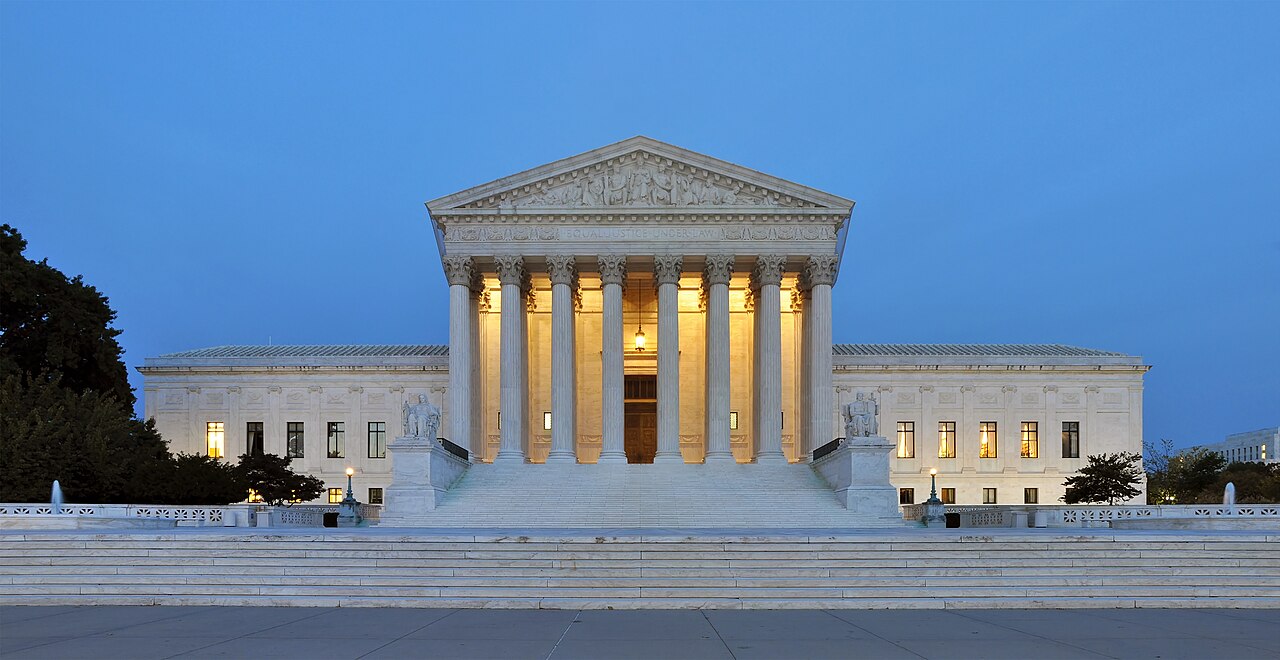
The U.S. Supreme Court heard arguments Monday in a case that could decide whether Boulder County, the city of Boulder and San Miguel County can keep suing ExxonMobil and Suncor in Colorado state court over the local costs of climate change. The case, Suncor Energy (U.S.A.) Inc. v. County Commissioners of Boulder County, was argued Oct. 5, the first day of the court’s new term, according to the Supreme Court docket.
At stake is whether local governments can use state law claims to seek money from oil and gas companies for damage tied to floods, wildfires and other disasters. The case arrives as similar lawsuits have been filed by dozens of jurisdictions across the United States, with potentially billions of dollars on the line, according to The Associated Press.
Justices press both sides in Boulder lawsuit
The Supreme Court docket shows lawyers for the energy companies argued first, with Kannon K. Shanmugam appearing for the petitioners and Principal Deputy Solicitor General Sarah M. Harris arguing for the United States as amicus curiae. Kevin K. Russell argued for the Boulder-area governments. The case was argued without Justice Samuel Alito, who the AP reported recused himself a week before arguments because he owns stock in oil companies.
During arguments, several justices signaled concern about how far climate liability suits could reach. Chief Justice John Roberts told Boulder’s lawyer, “Presumably, if you prevail, the next day, a municipality in every single state will file a lawsuit,” then asked, “How do you think that will work out on the ground?” AP reported.
Justice Brett Kavanaugh raised the prospect of wider exposure for defendants, saying a win for Boulder could bankrupt oil companies and other businesses. Justice Elena Kagan, by contrast, compared the case to earlier state-based litigation against tobacco and opioid companies. “This is Chapter 3,” she said, according to AP. Ketanji Brown Jackson appeared open to a narrower path, asking why the court should not wait until the state courts finish with the claims.
The underlying lawsuit was filed in 2018 by Boulder County, the city of Boulder and San Miguel County, according to AP and the Supreme Court docket. The local governments argue that Suncor and ExxonMobil violated state law by misleading the public about their contribution to climate change and should help cover the cost of worsening disasters in Colorado.
The local backdrop is stark. AP reported that the 2021 Marshall Fire destroyed nearly 1,100 homes, killed two people and caused an estimated $2 billion in damage, making it the costliest wildfire in Colorado history. The lawsuit predates that fire, but Boulder officials point to disasters like floods and wildfires as evidence that climate impacts carry heavy costs for local governments and residents.
What is not yet known is whether Boulder or other local governments will ever get to test those claims on the merits in state court. Monday’s argument focused on whether those claims belong there at all, not on whether ExxonMobil or Suncor are legally liable for any specific damage.
The energy companies argue that climate change is a global issue that cannot be handled through a patchwork of state court cases. AP reported that Suncor and Exxon argue the Clean Air Act gives the federal government, not the states, the power to regulate emissions. The Trump administration backed that position, arguing the lawsuits are an unconstitutional attempt to regulate planet-warming emissions beyond Colorado’s borders.
Boulder’s side says the case is narrower than that. Russell told the justices that the local governments are not trying to regulate greenhouse gas emissions or shut down oil and gas production. Instead, he said, they are trying to use state law to recover for damage in Colorado and to hold the companies accountable for allegedly misleading the public about fossil fuels’ role in global warming.
A decision that favors the companies could shut down dozens of similar cases filed in recent years, AP reported. A tie vote is also possible because Alito did not participate. AP reported that a deadlock would leave in place the Colorado Supreme Court decision that allowed the case to move forward.