

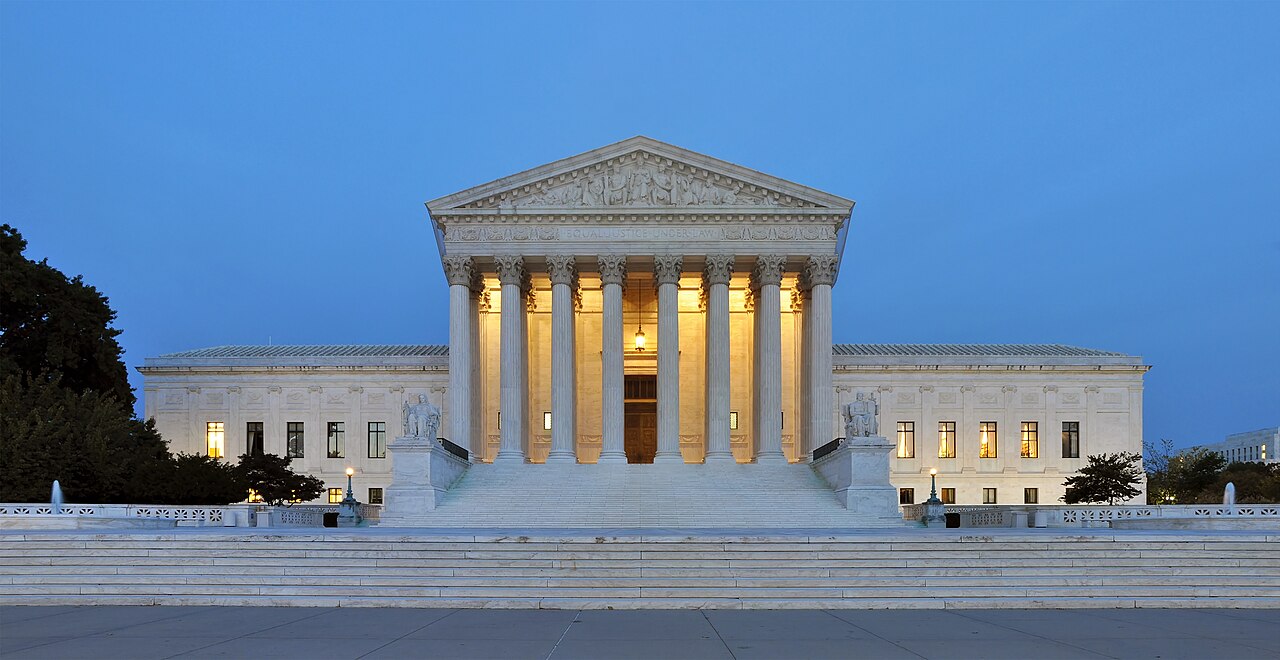
The U.S. Supreme Court issued a major election ruling on June 29, preserving mail ballot rules used across multiple states in federal elections. The decision specifically upheld Mississippi’s deadline extension for mailed ballots and clarified that states may continue counting some ballots received after Election Day if state law allows it.
The court’s decision in Watson v. RNC
In a 5-4 ruling on June 29, the Supreme Court held in Watson v. Republican National Committee that federal election-day laws do not bar states from counting mailed ballots that are postmarked by Election Day but received later under state deadlines. According to the Associated Press and CBS News, Justice Amy Coney Barrett wrote the majority opinion, joined by Chief Justice John Roberts and the court’s three liberal justices. The case grew out of a challenge to Mississippi’s law, which allows absentee ballots to be counted if they arrive up to five business days after Election Day.
The Republican National Committee, the Mississippi Republican Party and other challengers had argued that federal law requires ballots in federal races to be both cast and received by Election Day. The court rejected that reading. As the Associated Press reported, Barrett wrote that nothing in the federal election-day statutes requires ballots to be received by Election Day, a conclusion that preserved existing state grace periods just months before the 2026 midterm elections.
The ruling was narrow. Reports from AP, NCSL and court coverage indicate the justices focused on whether federal statutes setting a national Election Day override state ballot-receipt rules. The decision did not create a nationwide mail voting policy, and it did not require any state to adopt a post-Election Day receipt window. It left those deadlines in place where state law already provides them.
The immediate impact falls on the states that already count some late-arriving mail ballots. AP reported that, in addition to Mississippi, states including Alaska, California, Illinois, Maryland, Massachusetts, Nevada, New Jersey, New York, Oregon, Texas, Virginia, Washington and West Virginia allow regular mailed ballots received after Election Day to count under certain conditions. In more than half the states affected by the broader case, grace periods apply at least to military and overseas voters.
For voters, the practical rule has not changed overnight: state law still controls the deadline, and those deadlines differ. Mississippi’s law allows ballots received within five business days after Election Day. Other states use shorter or longer windows, and some states require ballots to arrive by Election Day regardless of postmark. The ruling means election officials in states with grace periods do not have to rewrite those rules immediately before the midterms.
What remains unclear nationally is whether Congress will revisit the issue. AP reported that President Donald Trump responded by renewing support for federal legislation he has promoted to tighten election rules, while election administrators in states with grace periods avoided a last-minute compliance scramble. The court’s decision resolves this dispute for now, but it leaves the broader policy debate over mail voting to lawmakers and state officials.
The case mattered because a ruling against Mississippi could have forced changes in election administration across a wide range of states in the middle of a federal election cycle. According to AP and coverage from state-focused election groups, election offices had been preparing for the possibility that long-standing receipt deadlines would be struck down. In Illinois, for example, officials had budgeted voter education spending in case mail ballot rules changed before the midterms.
Supporters of Mississippi’s law argued that late-arriving ballots can still be timely votes when they are mailed by Election Day, especially for voters facing mail delays. Public statements cited by the Brennan Center and ACLU said military voters, Americans living overseas, rural residents, Native voters and some voters with disabilities can be especially affected by receipt deadlines because they rely more heavily on mail delivery.
For residents, the ruling means there is no nationwide new deadline created by the Supreme Court. Voters in states with grace periods should still expect their own state’s ballot receipt rules to apply, while voters in states without them still face stricter deadlines. The decision keeps the existing map in place as the 2026 election calendar continues, with state election officials still responsible for explaining the rules that apply in their jurisdictions.