

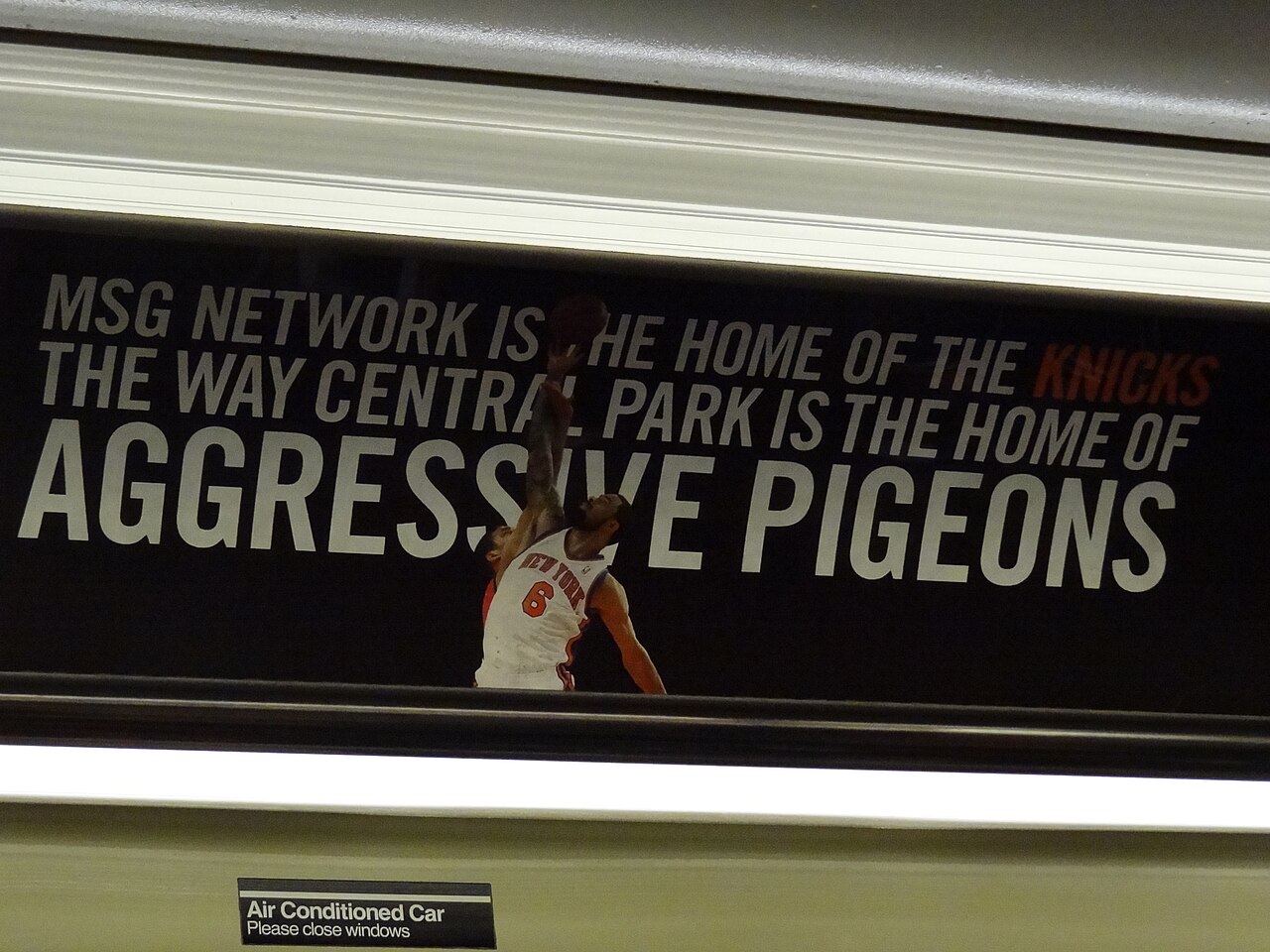
It felt less like a playoff run than a citywide condition. Every block, every bar, every subway car seemed to carry the same question: could this finally be the year?
A city vibrating on the edge of history

For New York, the Knicks are never just a basketball team. They are a civic mood, a piece of local mythology, and a test of how much disappointment a fan base can metabolize without losing its appetite for belief. That is why the idea of the Knicks sitting one win away from a championship breakthrough hit the city with such force. The franchise has not won an NBA title since 1973, a drought that spans generations of fans and stretches across entirely different versions of New York itself.
That drought is not merely a number. It covers the post-Willis Reed decades, the bruising Patrick Ewing years, the sudden 1999 Finals run, the long slide into irrelevance, and the more recent climb back to seriousness under Jalen Brunson. According to Reuters, the Knicks’ deep playoff push had electrified the city and moved the team within reach of ending one of the league’s longest championship waits. The emotional charge came from more than proximity to a trophy. It came from the possibility of closing a historical wound that had shaped the identity of the franchise for half a century.
By May 2025, the Knicks had returned to the Eastern Conference finals for the first time since 2000, a landmark that already carried weight in a city starved for postseason validation. The Associated Press noted that the club had finally gotten over the conference-finals hump after years of false starts, near misses, and humiliations. When a team with that kind of history gets close, sleep becomes optional. Fans are not simply watching games. They are bargaining with memory, superstition, and the fear that hope itself might be dangerous.
That is why the frenzy felt so distinctly New York. This city does not process anticipation quietly. It amplifies it. It turns each possession into a referendum on legacy, each morning headline into a public therapy session, and each victory into evidence that fate may finally be reconsidering its grudge. The Knicks were not just trying to win. They were trying to rescue decades of longing from the archive and drag it into the present.
How the Knicks got close enough to make the city dream
The road to that fever pitch was not accidental. The Knicks earned it by becoming a far more complete, resilient, and dangerous team than the franchise had fielded in years. Brunson supplied the calm and shot creation of a true offensive engine, while the roster around him gave New York a harder edge. This was not a novelty act feeding off Madison Square Garden noise. It was a team with real playoff substance, one that had learned how to survive ugly games and still impose itself physically.
The breakthrough to the conference finals was itself a signal. The Knicks eliminated Boston with a 119-81 Game 6 rout to secure their first trip to that round in 25 years, according to the Associated Press. That sort of result changes the tone of a postseason instantly. It tells a city not merely that its team is alive, but that it may be capable of overwhelming elite opposition. New York did not stumble into relevance. It arrived with force, and fans responded by treating each game as a public event rather than a private viewing experience.
Then came the Eastern Conference finals against Indiana, a matchup loaded with old rivalry energy and fresh volatility. The series quickly became a stress test. The Pacers stole Game 1 at Madison Square Garden after New York blew a late 17-point lead, a collapse so dramatic that it felt like the city’s worst fears had been written into a single quarter. Time described the loss as an anatomy of a collapse, and it was exactly that: the kind of defeat that lingers in a fan base’s bloodstream even after the next tipoff.
Yet the Knicks kept dragging themselves back into the fight. After falling behind 3-1 in the series, they won Game 5 at home, 111-94, forcing a Game 6 in Indianapolis and restoring belief. At that moment, the logic of the city took over. If they could survive one more night, they would force Game 7 back at the Garden, where history, desperation, and volume would all be on their side. The insomnia came from that possibility. New York was not celebrating yet. It was rehearsing what celebration might feel like.
Why New York responds to the Knicks like no other team

The city’s reaction only makes sense if you understand what the Knicks represent when they matter. New York has plenty of teams and no shortage of championships in other sports, but the Knicks occupy a different emotional territory. The franchise is tied to Manhattan itself, to the spectacle of Madison Square Garden, to the idea that the center of basketball culture should naturally live in the center of the city. When the Knicks are good, they seem to restore some cosmic order that fans have long felt was missing.
That symbolism intensifies because of the Garden’s role as a theater of recognition. Celebrities do not merely attend Knicks games; they become part of the visual language of the event. Reuters highlighted long-time courtside regulars such as Spike Lee, Ben Stiller, and Timothée Chalamet as visible markers of how the run had captured the city. Those faces matter not because fame validates fandom, but because they signal that a Knicks surge spills beyond sports pages and into culture, fashion, nightlife, and daily conversation. In New York, basketball excellence can become social weather.
The Knicks also inspire a peculiar combination of toughness and vulnerability in their supporters. Yankees fans can demand titles with imperial confidence. Giants fans can retreat into old glory. Knicks fans live closer to exposed nerve endings. Their relationship with the team is built on memory of absence. That is why one step from history can feel more exhausting than joyful. The city does not trust easy outcomes, especially not with this franchise. Even optimism arrives dressed as a warning.
In practical terms, that emotional intensity translates into a total takeover of local life. Restaurants time service around tipoff. Offices become postgame debate clubs the next morning. Strangers on sidewalks exchange scouting reports. The Knicks turn a massive city into something that briefly resembles a neighborhood. Because the drought has lasted so long, the fan base now includes grandparents who remember the 1973 title, parents raised on the Ewing era, and younger fans experiencing their first real brush with greatness. One playoff run can connect all of them at once.
That is what people mean when they say New York cannot sleep. It is not merely that fans stay up late after games. It is that the team suspends the city’s normal emotional schedule. People become more alert, more reactive, more superstitious. They check injury updates compulsively. They replay possessions in their minds on the train. The Knicks do not just occupy attention. At their peak, they reorder it.
The series that sharpened hope and fear at the same time

What made this moment so consuming was the shape of the series itself. It offered enough evidence for belief and enough warning for dread. Indiana led 3-2 after the first five games, with the Knicks’ missed opportunity in Game 1 hanging over everything. ESPN framed Game 6 as a crucial inflection point, and that was an understatement. For the Pacers, it was a chance to finish the job at home. For New York, it was a chance to transform a wounded series into a legendary comeback.
The matchup exposed both the Knicks’ strengths and their fragility. New York could grind, score in difficult stretches, and feed off Brunson’s command. But Indiana’s pace, shooting, and ball movement repeatedly stressed the Knicks’ margins for error. By the end of the series, that pressure broke through. NBA.com reported that the Pacers beat New York 125-108 in Game 6 to claim the East and reach the NBA Finals for the first time since 2000. Pascal Siakam scored 31 points, and Tyrese Haliburton added 21 points and 13 assists, underscoring how much Indiana’s creators controlled the decisive moments.
In hindsight, the insomnia of New York reads almost tragically. The city was not wrong to believe. The Knicks were good enough to make the dream rational. They won twice in Indianapolis during the postseason path that led them here, and they had just extended the series with a convincing Game 5 performance. But playoff history is not written by sentiment. It is written by execution under pressure, and Indiana proved more stable across the full series arc.
That is what makes the phrase “one win away” so powerful and so cruel. It captures genuine nearness without promising completion. For a fan base carrying 53 years of waiting, that distance is microscopic and enormous at once. One win is a short basketball concept. In emotional terms, it can be an abyss. New York lived in that abyss for several days, wide awake, imagining a parade route that never became necessary.
What this run means, even without the ending New York wanted
The cleanest interpretation would be that the season ended in failure because the drought remains intact. But that is too small. The Knicks did not end the story they wanted, yet they changed the franchise’s trajectory and the city’s expectations. Making the conference finals for the first time in a quarter century was not cosmetic progress. It was proof that the team had moved from entertaining revival to authentic contender status. That matters in the NBA, where legitimacy is often built in stages before it is rewarded in June.
There is also something revealing about how New York reacted. The lack of sleep, the overanalysis, the emotional whiplash all signaled that the Knicks had restored something essential: stakes. The city was not merely happy to be included. It was emotionally invested at a championship level. That is a major shift from the years when competence alone felt like a victory. A contender changes what fans accept, what management must chase, and how the rest of the league reads the franchise.
Reuters’ reporting on the Knicks entering the 2026 Finals suggests that the organization carried forward the force of that breakthrough season rather than collapsing under it. That is the larger lesson of the near miss. Teams that matter deep into May and June learn painful things in public. They discover the line between dramatic survival and championship control. They learn which possessions define them. They learn how little distance separates delirium from heartbreak.
So yes, New York could not sleep when the Knicks stood on the doorstep of ending a 53-year drought. It could not sleep because history felt available, because the city recognized itself in the tension, and because the team had finally become worthy of that kind of emotional risk. The drought was not erased in that moment. But the old numbness was. For the Knicks, and for the city that loves them hardest, that may be the beginning every true ending requires.